
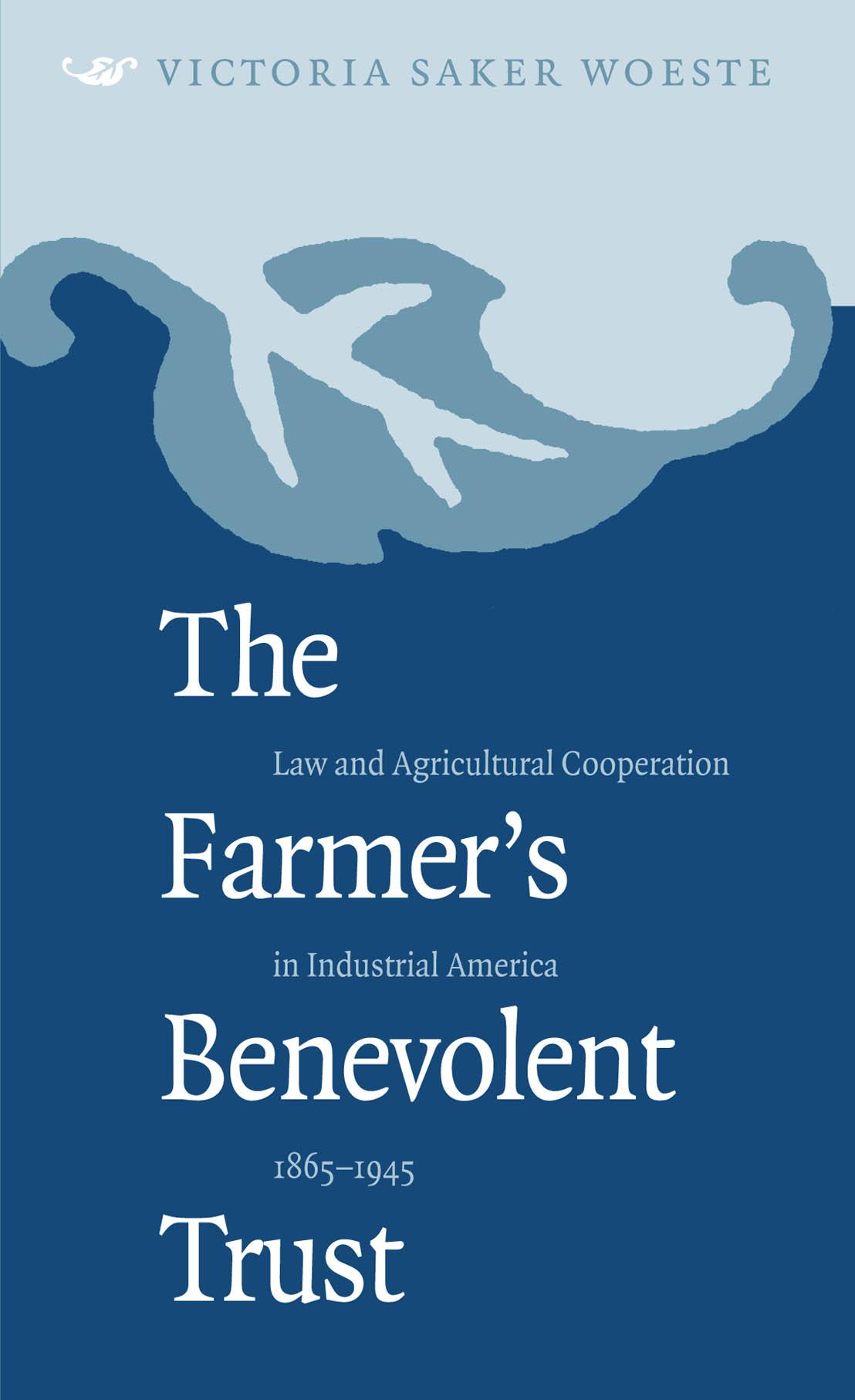
Americans have always regarded farming as a special calling, one
imbued with the Jeffersonian values of individualism and self-
sufficiency. As Victoria Saker Woeste demonstrates, farming’s
cultural image continued to shape Americans' expectations of
rural society long after industrialization radically transformed
the business of agriculture. Even as farmers enthusiastically
embraced cooperative marketing to create unprecedented industry-
wide monopolies and control prices, they claimed they were simply
preserving their traditional place in society. In fact, the new
legal form of cooperation far outpaced judicial and legislative
developments at both the state and federal levels, resulting in a
legal and political struggle to redefine the place of agriculture
in the industrial market.
Woeste shows that farmers were adept at both borrowing such
legal forms as the corporate trust for their own purposes and
obtaining legislative recognition of the new cooperative style.
In the process, however, the first rule of capitalism — every
person for him- or herself — trumped the traditional principle of
cooperation. After 1922, state and federal law wholly endorsed
cooperation’s new form. Indeed, says Woeste, because of its
corporate roots, this model of cooperation fit so neatly with the
regulatory paradigms of the first half of the twentieth century
that it became an essential policy of the modern administrative
state.
imbued with the Jeffersonian values of individualism and self-
sufficiency. As Victoria Saker Woeste demonstrates, farming’s
cultural image continued to shape Americans' expectations of
rural society long after industrialization radically transformed
the business of agriculture. Even as farmers enthusiastically
embraced cooperative marketing to create unprecedented industry-
wide monopolies and control prices, they claimed they were simply
preserving their traditional place in society. In fact, the new
legal form of cooperation far outpaced judicial and legislative
developments at both the state and federal levels, resulting in a
legal and political struggle to redefine the place of agriculture
in the industrial market.
Woeste shows that farmers were adept at both borrowing such
legal forms as the corporate trust for their own purposes and
obtaining legislative recognition of the new cooperative style.
In the process, however, the first rule of capitalism — every
person for him- or herself — trumped the traditional principle of
cooperation. After 1922, state and federal law wholly endorsed
cooperation’s new form. Indeed, says Woeste, because of its
corporate roots, this model of cooperation fit so neatly with the
regulatory paradigms of the first half of the twentieth century
that it became an essential policy of the modern administrative
state.
Betala smidigt med kort, Klarna, Apple Pay eller Google Pay. Är du inte nöjd har du alltid 14 dagars ångerrätt. Läs mer i våra villkor. Har du några frågor, mejla oss på hello@memmo.org.
Memmo gör det enklare att plugga – var du än är i världen. Hos oss samlar du kursböcker och smarta studieverktyg på ett och samma ställe: sammanfattningar, quiz, poddar och flashcards. Och så Ted, din studiekompis som svarar på allt du undrar. Över 50 000 studenter pluggar redan här – byggt för att du ska lära dig snabbare och stressa mindre.
Du kanske också gillar
Köp boken0