
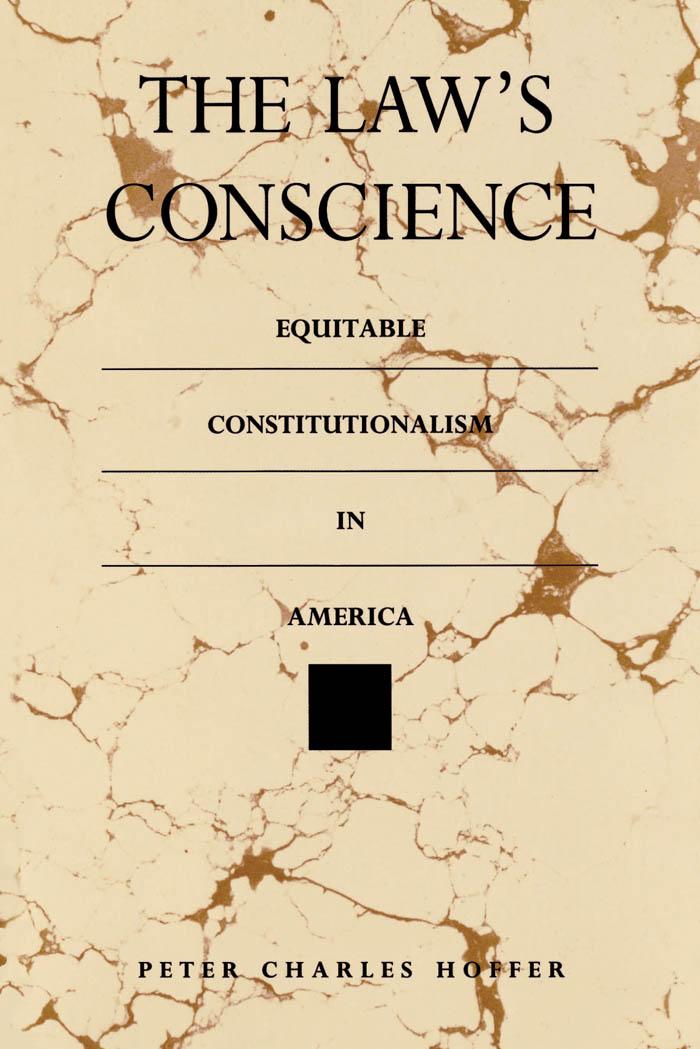
The Law’s Conscience is a history of equity in Anglo-American juris-prudence from the inception of the chancellor’s court in medieval England to the recent civil rights and affirmative action decisions of the United States Supreme Court. Peter Hoffer argues that equity embodies a way of looking at law, including constitutions, based on ideas of mutual fairness, public trusteeship, and equal protection. His central theme is the tension between the ideal of equity and the actual availability of equitable remedies.
Hoffer examines this tension in the trusteeship constitutionalism of John Locke and Thomas Jefferson; the incorporation of equity in the first American constitutions; the antebellum controversy over slavery; the fortunes of the Freedmen’s Bureau after the Civil War; the emergence of the doctrine of “Balance of Equity” in twentieth-century public-interest law; and the desegregation and reverse discrimination cases of the past thirty-five years. Brown v. Board of Education (1954) was the most important equity suit in American history, and Hoffer begins and ends his book with a new interpretation of its lessons.
Betala smidigt med kort, Klarna, Apple Pay eller Google Pay. Är du inte nöjd har du alltid 14 dagars ångerrätt. Läs mer i våra villkor. Har du några frågor, mejla oss på hello@memmo.org.
Memmo gör det enklare att plugga – var du än är i världen. Hos oss samlar du kursböcker och smarta studieverktyg på ett och samma ställe: sammanfattningar, quiz, poddar och flashcards. Och så Ted, din studiekompis som svarar på allt du undrar. Över 50 000 studenter pluggar redan här – byggt för att du ska lära dig snabbare och stressa mindre.