
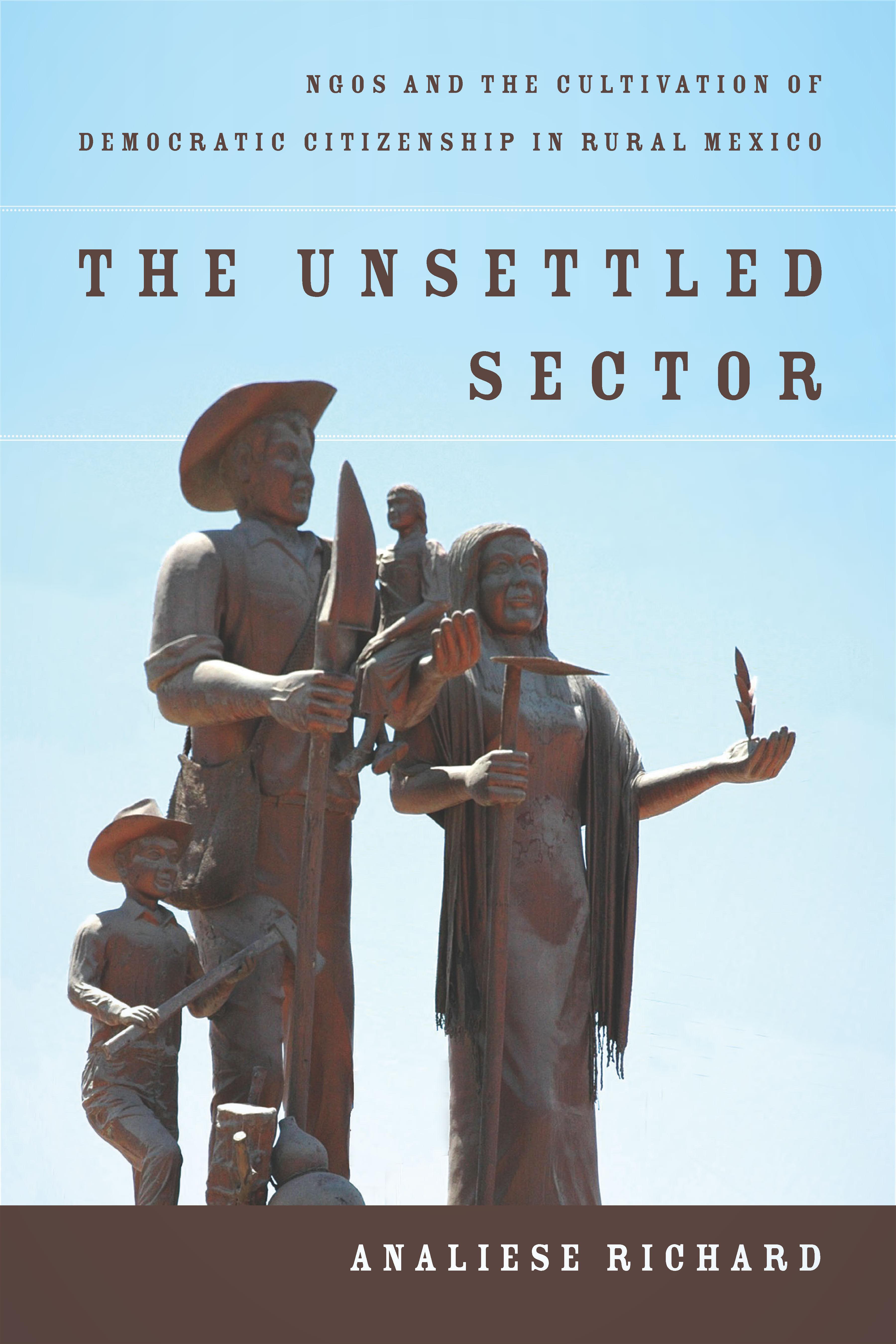
In late twentieth century Mexico, the NGO boom was hailed as an harbinger of social change and democratic transition, with NGOs poised to transform the relationship between states and civil society on a global scale. And yet, great as the expectations were for NGOs to empower the poor and disenfranchised, their work is rooted in much older civic and cultural traditions. Arguably, they are just as much an accomplice in neoliberal governance. Analiese Richard seeks to determine what the growth of NGOs means for the future of citizenship and activism in neoliberal democracies, where a widening chasm between rich and poor threatens democratic ideals and institutions.
Analyzing the growth of NGOs in Tulancingo, Hidalgo, from the 1970s to the present, The Unsettled Sector explores the NGOs' evolving network of relationships with donors, target communities, international partners, state agencies, and political actors. It reaches beyond the campesinos and farmlands of Tulancingo to make sense of the NGO as an institutional form. Richard argues that only if we see NGOs as they are—bridges between formal politics and public morality—can we understand the opportunities and limits for social solidarity and citizenship in an era of neoliberal retrenchment.
Betala smidigt med kort, Klarna, Apple Pay eller Google Pay. Är du inte nöjd har du alltid 14 dagars ångerrätt. Läs mer i våra villkor. Har du några frågor, mejla oss på hello@memmo.org.
Memmo gör det enklare att plugga – var du än är i världen. Hos oss samlar du kursböcker och smarta studieverktyg på ett och samma ställe: sammanfattningar, quiz, poddar och flashcards. Och så Ted, din studiekompis som svarar på allt du undrar. Över 50 000 studenter pluggar redan här – byggt för att du ska lära dig snabbare och stressa mindre.