
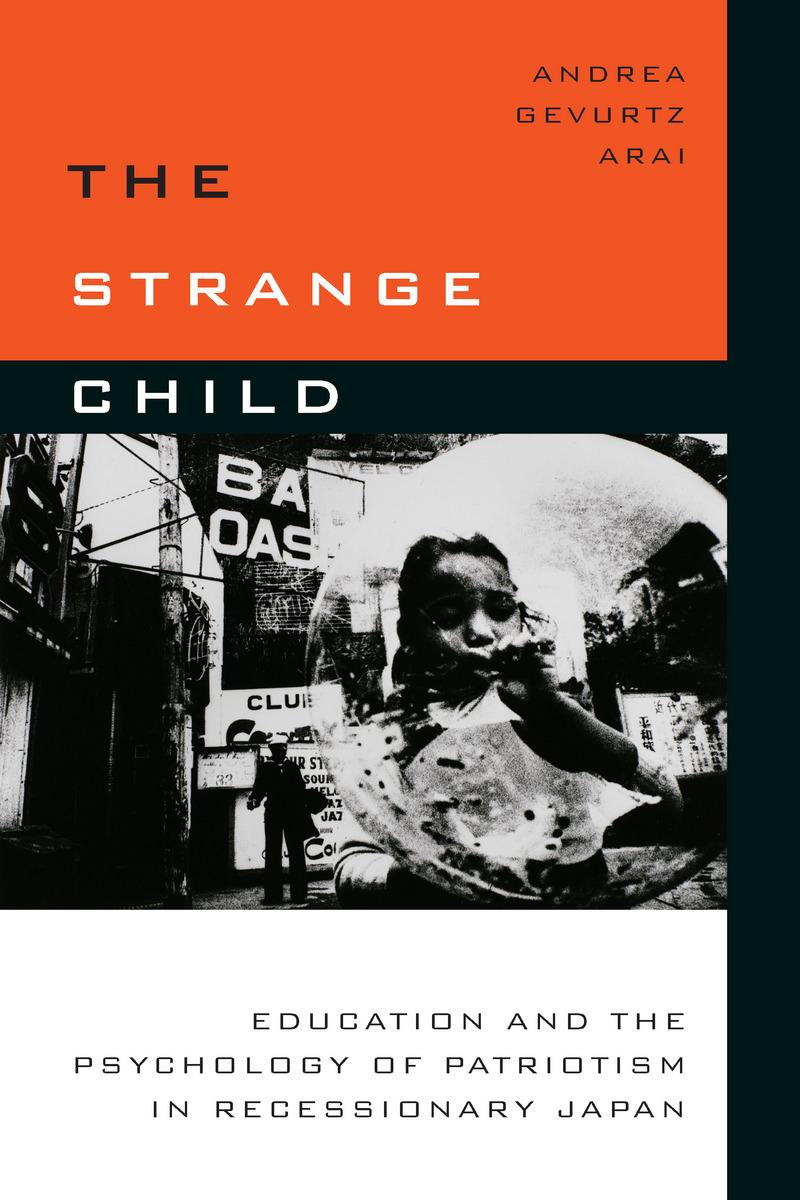
The Strange Child examines how the Japanese financial crisis of the 1990s gave rise to "the child problem," a powerful discourse of social anxiety that refocused concerns about precarious economic futures and shifting ideologies of national identity onto the young.
Andrea Gevurtz Arai's ethnography details the different forms of social and cultural dislocation that erupted in Japan starting in the late 1990s. Arai reveals the effects of shifting educational practices; increased privatization of social services; recessionary vocabulary of self-development and independence; and the neoliberalization of patriotism. Arai argues that the child problem and the social unease out of which it emerged provided a rationale for reimagining governance in education, liberalizing the job market, and a new role for psychology in the overturning of national-cultural ideologies. The Strange Child uncovers the state of nationalism in contemporary Japan, the politics of distraction around the child, and the altered life conditions of—and alternatives created by—the recessionary generation.
Betala smidigt med kort, Klarna, Apple Pay eller Google Pay. Är du inte nöjd har du alltid 14 dagars ångerrätt. Läs mer i våra villkor. Har du några frågor, mejla oss på hello@memmo.org.
Memmo gör det enklare att plugga – var du än är i världen. Hos oss samlar du kursböcker och smarta studieverktyg på ett och samma ställe: sammanfattningar, quiz, poddar och flashcards. Och så Ted, din studiekompis som svarar på allt du undrar. Över 50 000 studenter pluggar redan här – byggt för att du ska lära dig snabbare och stressa mindre.