
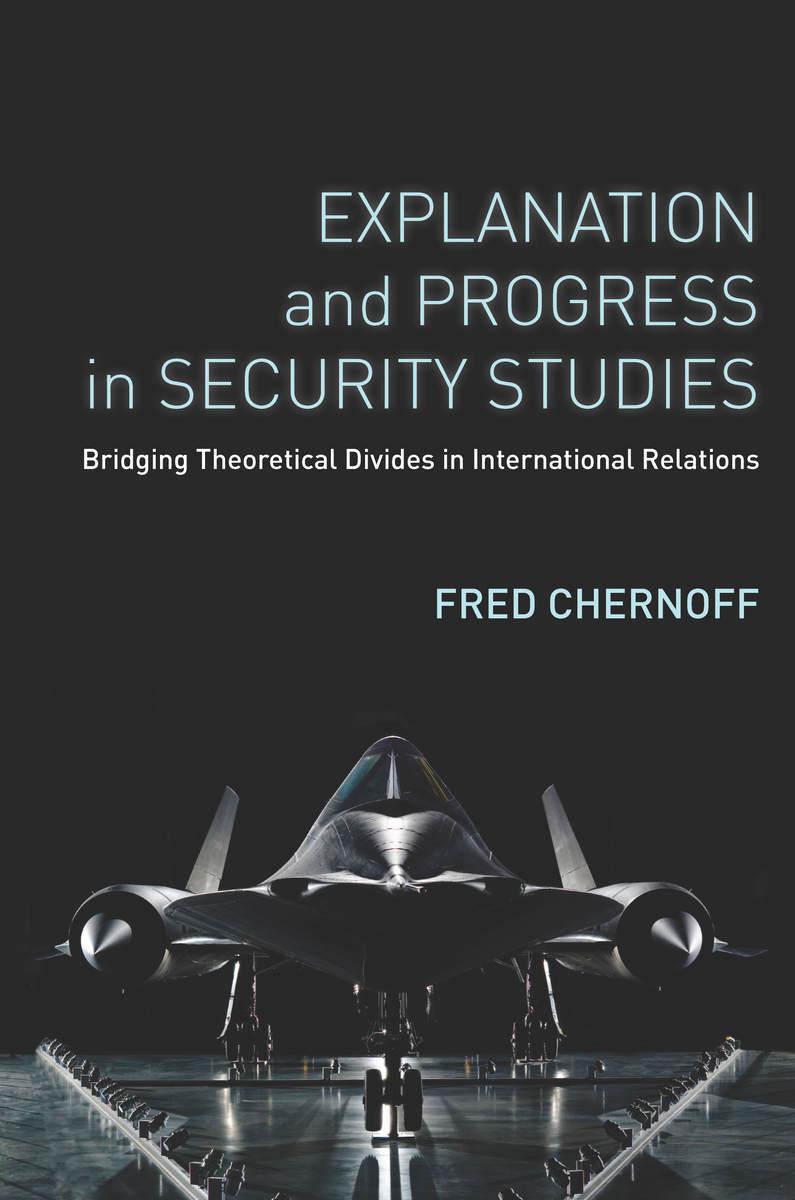
Explanation and Progress in Security Studies asks why Security Studies, as a central area of International Relations, has not experienced scientific progress in the way natural sciences have—and answers by arguing that the underlying reason is that scholars in Security Studies have advanced a range of different notions of "explanation" or different criteria of "explanatory superiority" to show that their positions are better than rival positions.
To demonstrate this, the author engages in in-depth content analysis of the generally recognized exemplars of explanation and explanatory superiority in three of the core debates in the disciplines: Why do states pursue policies of nuclear proliferation? Why do states choose to form the alliances they do? And why do liberal democratic states behave the way they do toward other liberal democracies?
The book reveals that authors in the debates that have shown the most progress use similar criteria in arguing for and against the key explanations. In the nuclear proliferation debate, there is wide divergence in the criteria the most visible authors use, and there is wide divergence in the explanations offered. In the alliance formation/balance-of-power debate, there is some overlap of criteria the most important authors use, and there has been some limited movement toward consensus. In the democratic peace debate there has been much more overlap of criteria the most prominent authors use, and there is agreement on both some positive and negative conclusions.
Betala smidigt med kort, Klarna, Apple Pay eller Google Pay. Är du inte nöjd har du alltid 14 dagars ångerrätt. Läs mer i våra villkor. Har du några frågor, mejla oss på hello@memmo.org.
Memmo gör det enklare att plugga – var du än är i världen. Hos oss samlar du kursböcker och smarta studieverktyg på ett och samma ställe: sammanfattningar, quiz, poddar och flashcards. Och så Ted, din studiekompis som svarar på allt du undrar. Över 50 000 studenter pluggar redan här – byggt för att du ska lära dig snabbare och stressa mindre.