
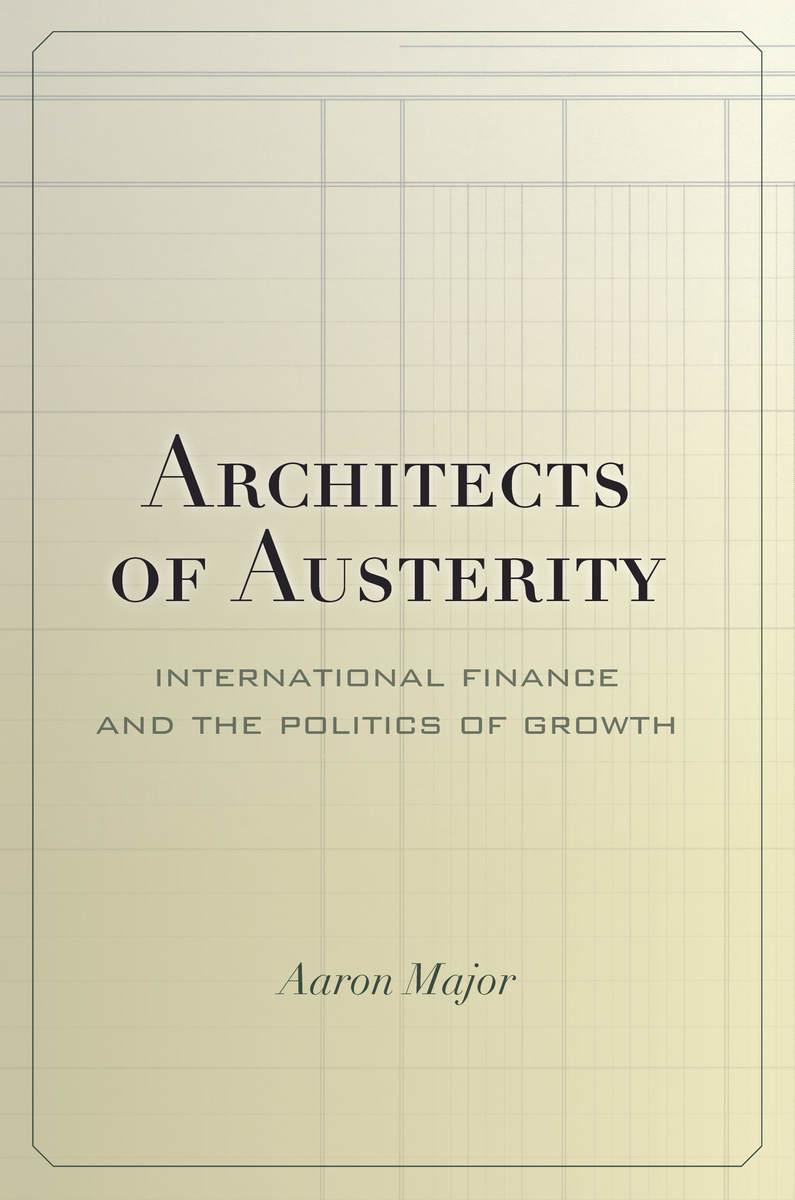
Architects of Austerity argues that the seeds of neoliberal politics were sown in the 1950s and 1960s. Suggesting that the postwar era was less socially democratic than we think, Aaron Major presents a comparative-historical analysis of economic policy in the United States, the United Kingdom, and Italy during the early 1960s. In each of these cases, domestic politics shifted to the left and national governments repudiated the conservative economic policies of the past, promising a new way forward. Yet, these social democratic experiments were short-lived and deeply compromised. Why did the parties of change become the parties of austerity?
Studies of social welfare policy in these countries have emphasized domestic factors. However, Major reveals that international social forces profoundly shaped national decisions in these cases. The turn toward more conservative economic policies resulted from two critical shifts on the international stage. International monetary organizations converged around an orthodox set of ideas, and a set of institutional transformations within the Bretton Woods system made the monetary community more central to financial management. These changes gave central banks and treasuries the capacity to impose their ideas on national governments.
Architects of Austerity encourages us to critically consider the power that we vest in public financial authorities, which have taken on an ever larger role in international economic regulation.
Betala smidigt med kort, Klarna, Apple Pay eller Google Pay. Är du inte nöjd har du alltid 14 dagars ångerrätt. Läs mer i våra villkor. Har du några frågor, mejla oss på hello@memmo.org.
Memmo gör det enklare att plugga – var du än är i världen. Hos oss samlar du kursböcker och smarta studieverktyg på ett och samma ställe: sammanfattningar, quiz, poddar och flashcards. Och så Ted, din studiekompis som svarar på allt du undrar. Över 50 000 studenter pluggar redan här – byggt för att du ska lära dig snabbare och stressa mindre.