
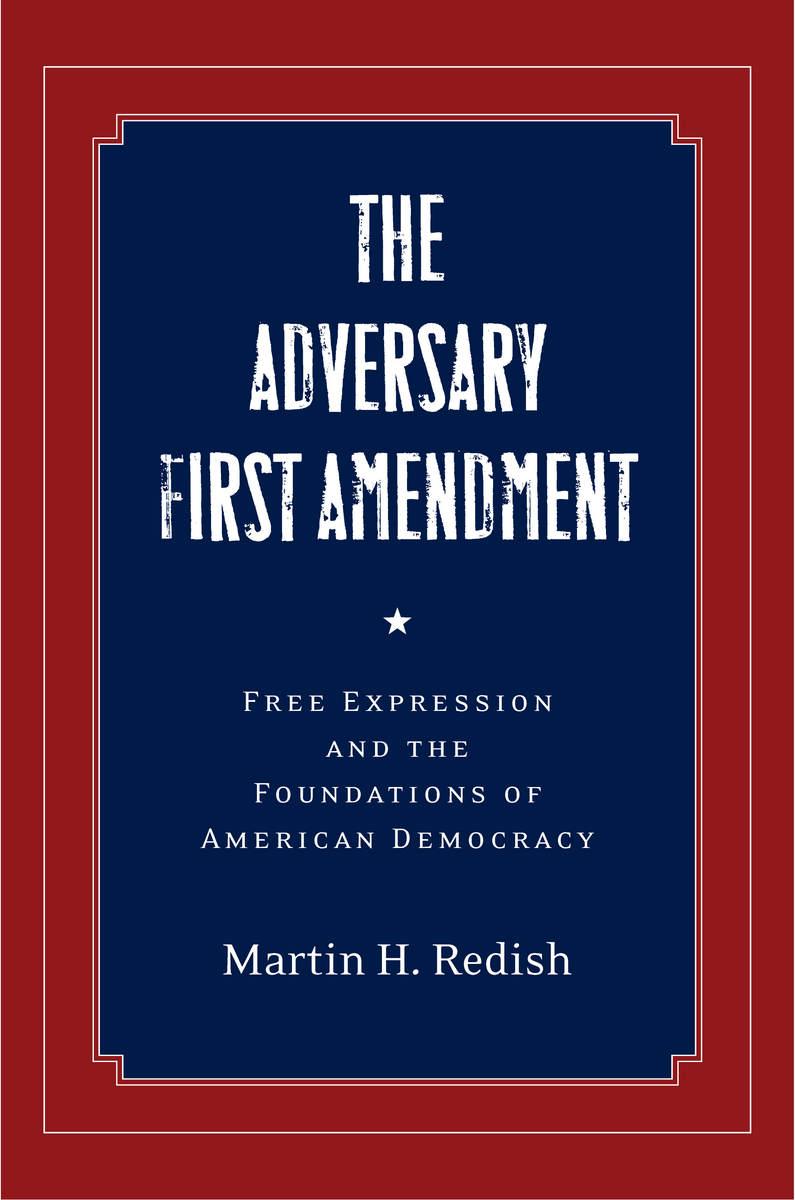
The Adversary First Amendment presents a unique and controversial rethinking of modern American democratic theory and free speech. Most free speech scholars understand the First Amendment as a vehicle for or protection of democracy itself, relying upon cooperative or collectivist theories of democracy. Martin Redish reconsiders free speech in the context of adversary democracy, arguing that individuals should have the opportunity to affect the outcomes of collective decision-making according to their own values and interests.
Adversary democracy recognizes the inevitability of conflict within a democratic society, as well as the need for regulation of that conflict to prevent the onset of tyranny. In doing so, it embraces pluralism, diversity, and the individual growth and development deriving from the promotion of individual interests. Drawing on previous free speech scholarship and case studies of controversial speech, Redish advances a theory of free expression grounded in democratic notions of self-promotion and controlled adversary conflict, making a strong case for its application across such areas as commercial speech, campaign spending, and anonymous speech.
Betala smidigt med kort, Klarna, Apple Pay eller Google Pay. Är du inte nöjd har du alltid 14 dagars ångerrätt. Läs mer i våra villkor. Har du några frågor, mejla oss på hello@memmo.org.
Memmo gör det enklare att plugga – var du än är i världen. Hos oss samlar du kursböcker och smarta studieverktyg på ett och samma ställe: sammanfattningar, quiz, poddar och flashcards. Och så Ted, din studiekompis som svarar på allt du undrar. Över 50 000 studenter pluggar redan här – byggt för att du ska lära dig snabbare och stressa mindre.