
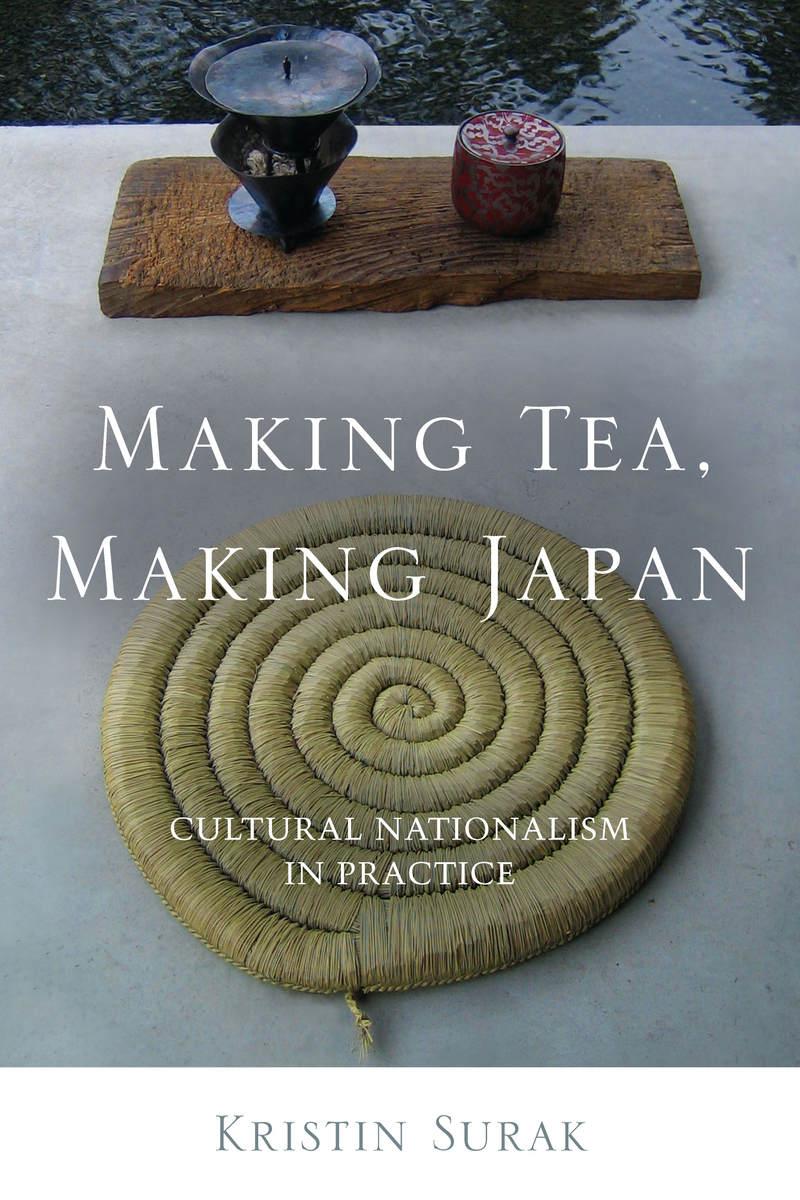
The tea ceremony persists as one of the most evocative symbols of Japan. Originally a pastime of elite warriors in premodern society, it was later recast as an emblem of the modern Japanese state, only to be transformed again into its current incarnation, largely the hobby of middle-class housewives. How does the cultural practice of a few come to represent a nation as a whole?
Although few non-Japanese scholars have peered behind the walls of a tea room, sociologist Kristin Surak came to know the inner workings of the tea world over the course of ten years of tea training. Here she offers the first comprehensive analysis of the practice that includes new material on its historical changes, a detailed excavation of its institutional organization, and a careful examination of what she terms "nation-work"—the labor that connects the national meanings of a cultural practice and the actual experience and enactment of it. She concludes by placing tea ceremony in comparative perspective, drawing on other expressions of nation-work, such as gymnastics and music, in Europe and Asia.
Taking readers on a rare journey into the elusive world of tea ceremony, Surak offers an insightful account of the fundamental processes of modernity—the work of making nations.
Betala smidigt med kort, Klarna, Apple Pay eller Google Pay. Är du inte nöjd har du alltid 14 dagars ångerrätt. Läs mer i våra villkor. Har du några frågor, mejla oss på hello@memmo.org.
Memmo gör det enklare att plugga – var du än är i världen. Hos oss samlar du kursböcker och smarta studieverktyg på ett och samma ställe: sammanfattningar, quiz, poddar och flashcards. Och så Ted, din studiekompis som svarar på allt du undrar. Över 50 000 studenter pluggar redan här – byggt för att du ska lära dig snabbare och stressa mindre.