
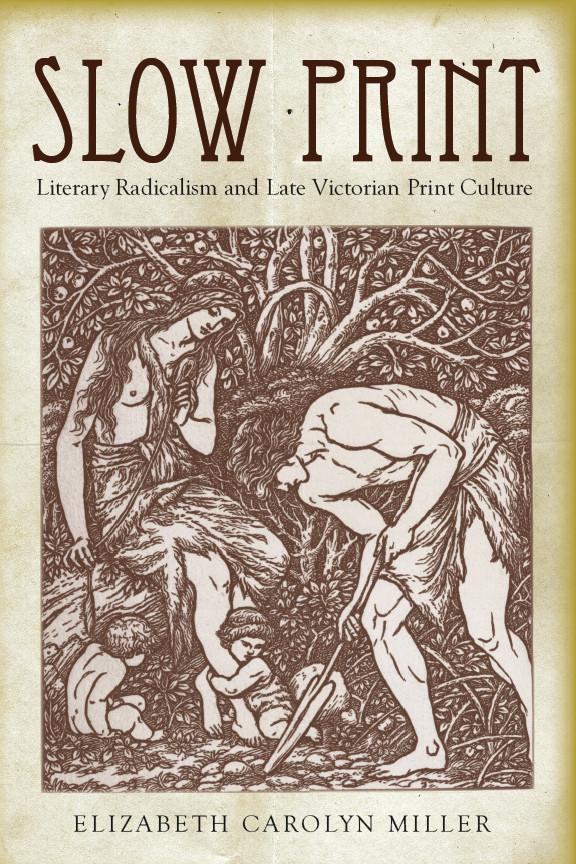
This book explores the literary culture of Britain's radical press from 1880 to 1910, a time that saw a flourishing of radical political activity as well as the emergence of a mass print industry. While Enlightenment radicals and their heirs had seen free print as an agent of revolutionary transformation, socialist, anarchist and other radicals of this later period suspected that a mass public could not exist outside the capitalist system. In response, they purposely reduced the scale of print by appealing to a small, counter-cultural audience. "Slow print," like "slow food" today, actively resisted industrial production and the commercialization of new domains of life.
Drawing on under-studied periodicals and archives, this book uncovers a largely forgotten literary-political context. It looks at the extensive debate within the radical press over how to situate radical values within an evolving media ecology, debates that engaged some of the most famous writers of the era (William Morris and George Bernard Shaw), a host of lesser-known figures (theosophical socialist and birth control reformer Annie Besant, gay rights pioneer Edward Carpenter, and proto-modernist editor Alfred Orage), and countless anonymous others.
Betala smidigt med kort, Klarna, Apple Pay eller Google Pay. Är du inte nöjd har du alltid 14 dagars ångerrätt. Läs mer i våra villkor. Har du några frågor, mejla oss på hello@memmo.org.
Memmo gör det enklare att plugga – var du än är i världen. Hos oss samlar du kursböcker och smarta studieverktyg på ett och samma ställe: sammanfattningar, quiz, poddar och flashcards. Och så Ted, din studiekompis som svarar på allt du undrar. Över 50 000 studenter pluggar redan här – byggt för att du ska lära dig snabbare och stressa mindre.