
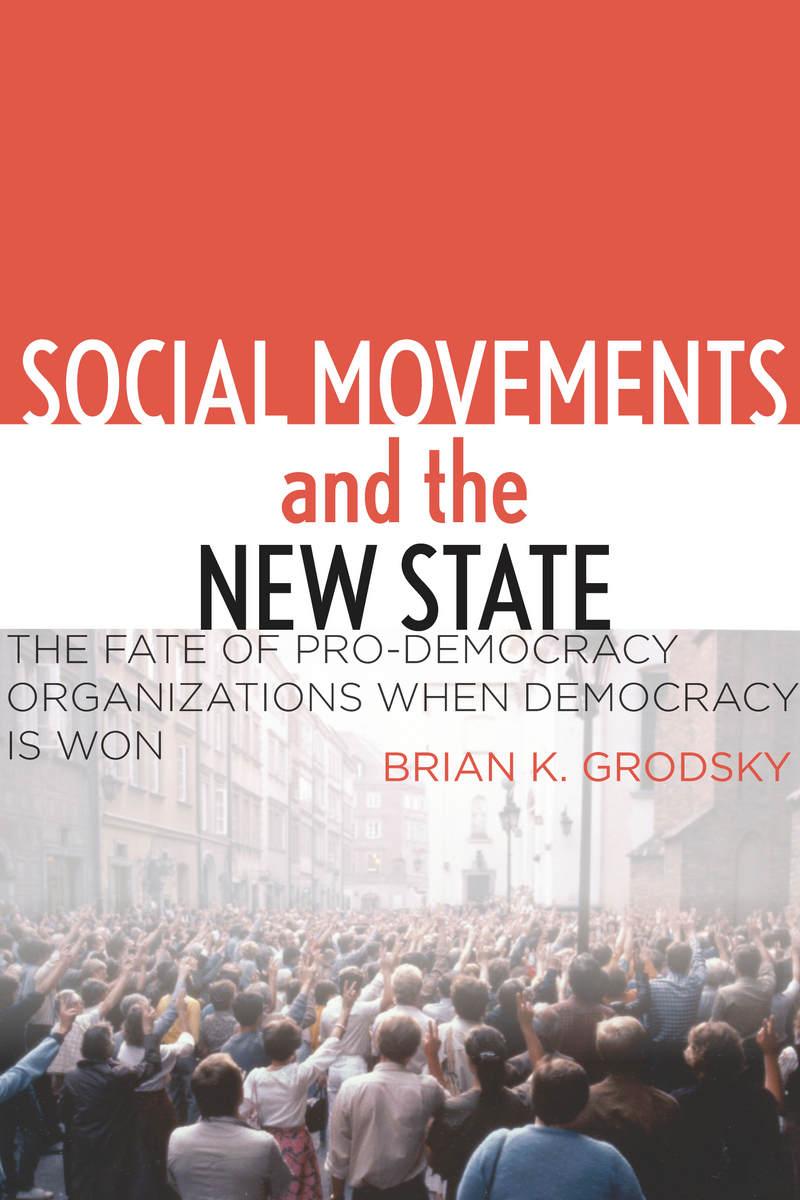
The world's democracies cheered as the social movements of the Arab Spring ended the reigns of longstanding dictators and ushered in the possibility of democracy. Yet these unique transitions also fit into a broader pattern of democratic breakthroughs around the globe, where political leaders emerge from the pro-democracy movement that helped affect change. In Social Movements and the New State, Brian Grodsky examines the relationships between new political elites and the civil society organizations that brought them to power in three culturally and geographically disparate countries—Poland, South Africa, and Georgia.
This book argues that the identities and personal networks developed during the struggle provide "movement activists" with opportunities to influence minor issues, but that new and differing institutional pressures create schisms on broader policy that can turn prior bonds into a liability rather than an asset. Drawing on media analyses and more than 150 elite interviews, Grodsky offers a rare empirical assessment of the degree to which social movement organizations shape activists' beliefs and actions over the long term.
Betala smidigt med kort, Klarna, Apple Pay eller Google Pay. Är du inte nöjd har du alltid 14 dagars ångerrätt. Läs mer i våra villkor. Har du några frågor, mejla oss på hello@memmo.org.
Memmo gör det enklare att plugga – var du än är i världen. Hos oss samlar du kursböcker och smarta studieverktyg på ett och samma ställe: sammanfattningar, quiz, poddar och flashcards. Och så Ted, din studiekompis som svarar på allt du undrar. Över 50 000 studenter pluggar redan här – byggt för att du ska lära dig snabbare och stressa mindre.