
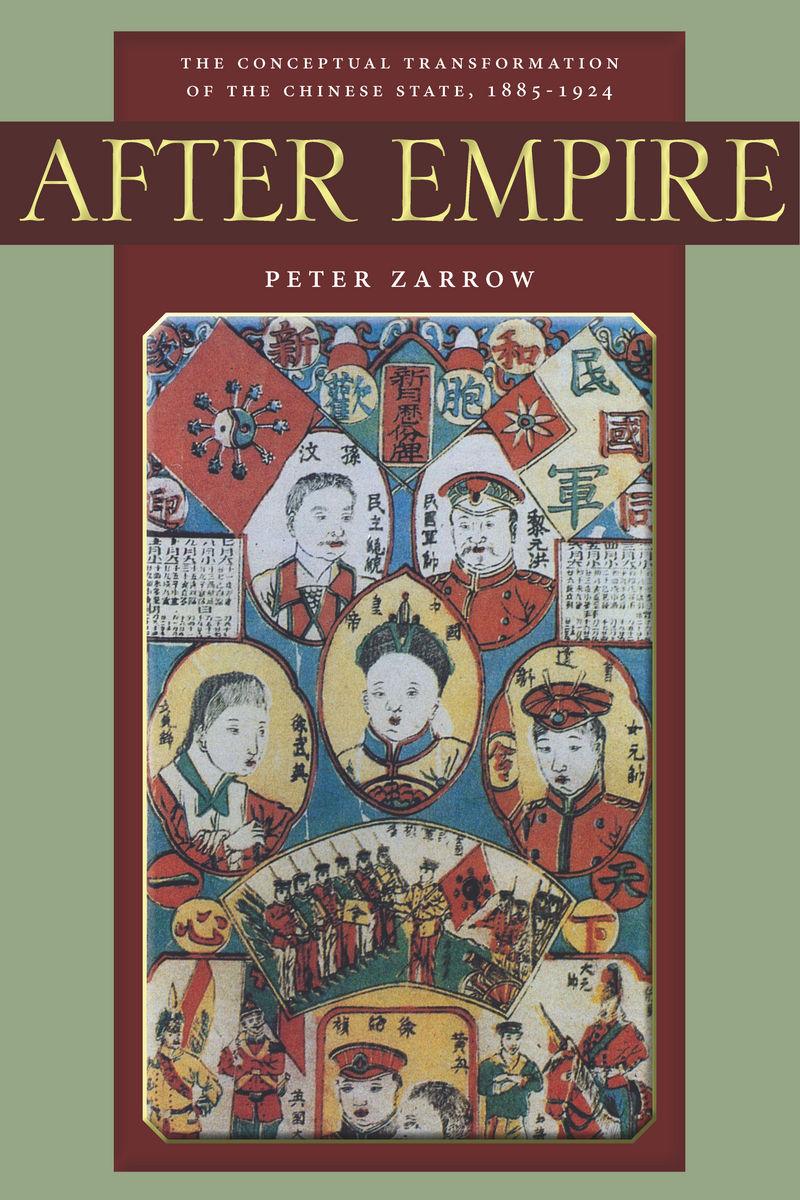
From 1885–1924, China underwent a period of acute political struggle and cultural change, brought on by a radical change in thought: after over 2,000 years of monarchical rule, the Chinese people stopped believing in the emperor. These forty years saw the collapse of Confucian political orthodoxy and the struggle among competing definitions of modern citizenship and the state. What made it possible to suddenly imagine a world without the emperor?
After Empire traces the formation of the modern Chinese idea of the state through the radical reform programs of the late Qing (1885–1911), the Revolution of 1911, and the first years of the Republic through the final expulsion of the last emperor of the Qing from the Forbidden City in 1924. It contributes to longstanding debates on modern Chinese nationalism by highlighting the evolving ideas of major political thinkers and the views reflected in the general political culture.
Zarrow uses a wide range of sources to show how "statism" became a hegemonic discourse that continues to shape China today. Essential to this process were the notions of citizenship and sovereignty, which were consciously adopted and modified from Western discourses on legal theory and international state practices on the basis of Chinese needs and understandings. This text provides fresh interpretations and keen insights into China's pivotal transition from dynasty to republic.
Betala smidigt med kort, Klarna, Apple Pay eller Google Pay. Är du inte nöjd har du alltid 14 dagars ångerrätt. Läs mer i våra villkor. Har du några frågor, mejla oss på hello@memmo.org.
Memmo gör det enklare att plugga – var du än är i världen. Hos oss samlar du kursböcker och smarta studieverktyg på ett och samma ställe: sammanfattningar, quiz, poddar och flashcards. Och så Ted, din studiekompis som svarar på allt du undrar. Över 50 000 studenter pluggar redan här – byggt för att du ska lära dig snabbare och stressa mindre.