
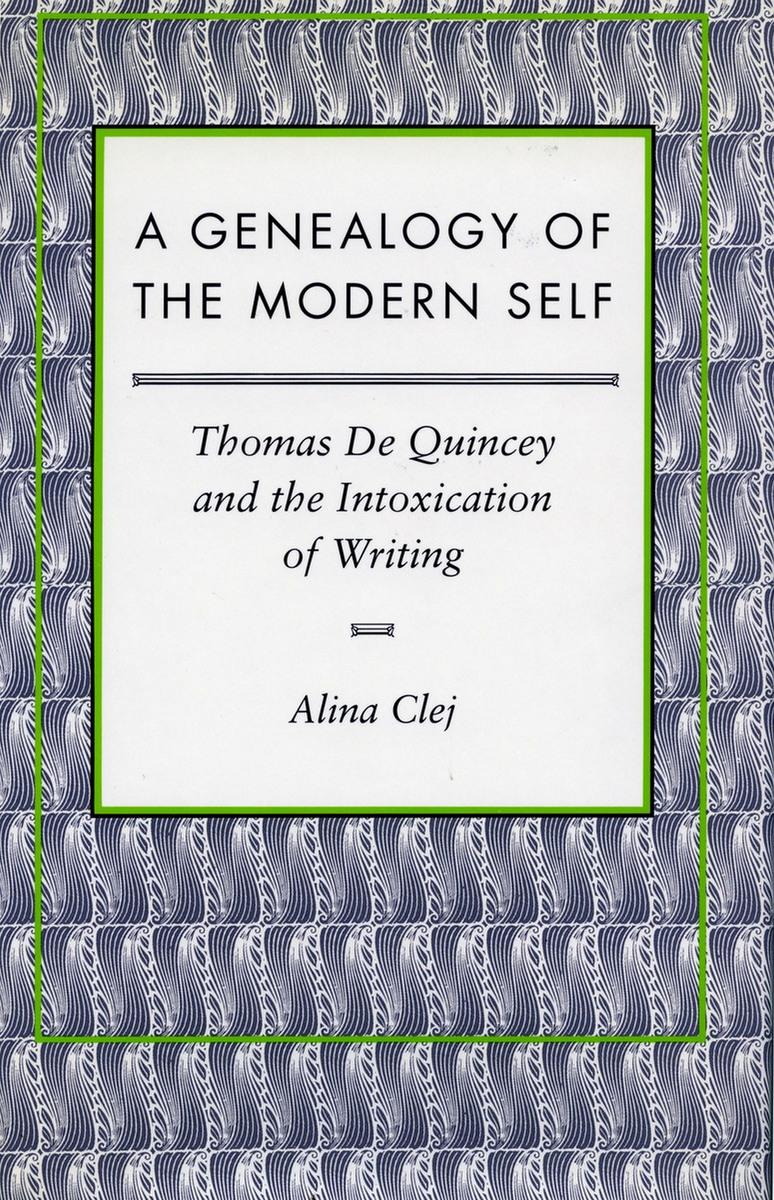
As this book's title suggests, its main argument is that Thomas De Quincey's literary output, which is both a symptom and an effect of his addictions to opium and writing, plays an important and mostly unacknowledged role in the development of modern and modernist forms of subjectivity. At the same time, the book shows that intoxication, whether in the strict medical sense or in its less technical meaning ("strong excitement," "trance," "ecstasy"), is central to the ways in which modernity, and literary modernity in particular, functions and defines itself. In both its theoretical and practical implications, intoxication symbolizes and often comes to constitute the condition of the alienated artist in the age of the market. The book also offers new readings of the Confessions and some of De Quincey's posthumous writings, as well as an extended analysis of his relatively neglected diary. The discussion of De Quincey's work also elicits new insights into his relationship with William and Dorothy Wordsworth, as well as his imaginary investment in Coleridge.
Betala smidigt med kort, Klarna, Apple Pay eller Google Pay. Är du inte nöjd har du alltid 14 dagars ångerrätt. Läs mer i våra villkor. Har du några frågor, mejla oss på hello@memmo.org.
Memmo gör det enklare att plugga – var du än är i världen. Hos oss samlar du kursböcker och smarta studieverktyg på ett och samma ställe: sammanfattningar, quiz, poddar och flashcards. Och så Ted, din studiekompis som svarar på allt du undrar. Över 50 000 studenter pluggar redan här – byggt för att du ska lära dig snabbare och stressa mindre.