
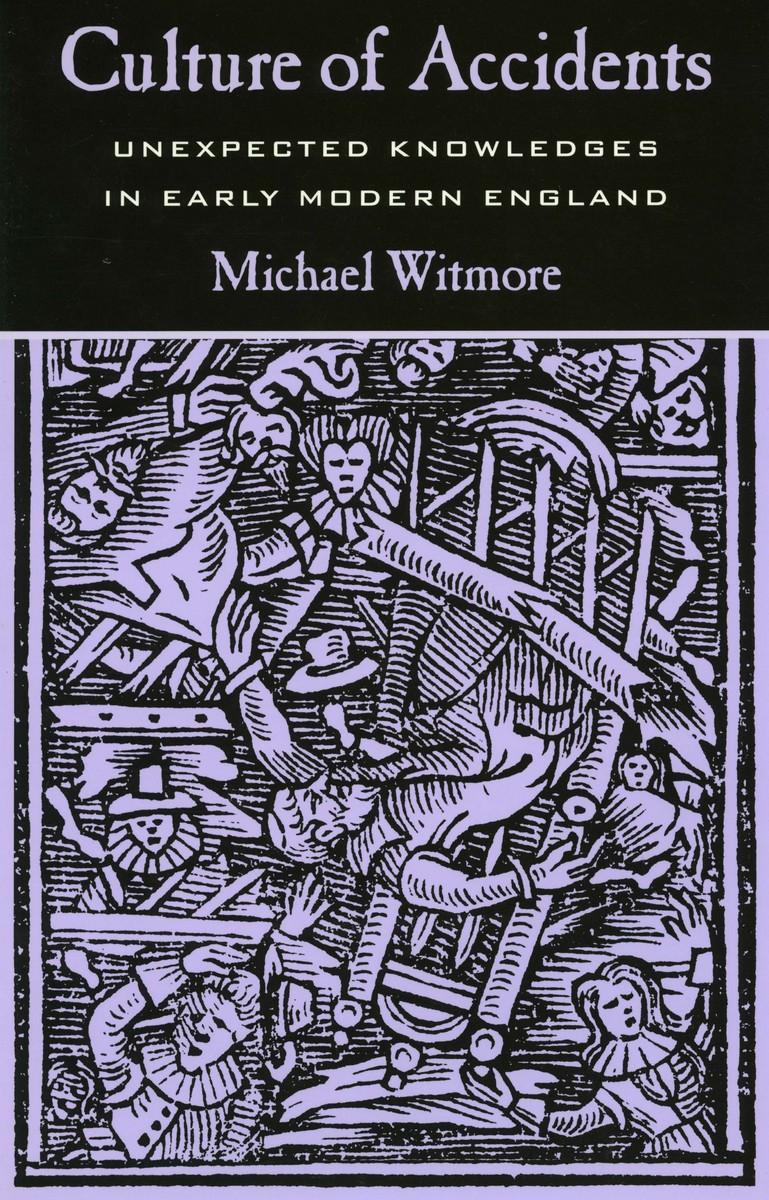
Collapsing buildings, unexpected meetings in the marketplace, monstrous births, encounters with pirates at sea—these and other unforeseen “accidents” at the turn of the seventeenth century in England acquired unprecedented significance in the early modern philosophical and cultural imagination. Drawing on intellectual history, cultural criticism, and rhetorical theory, this book chronicles the narrative transformation of “accident” from a philosophical dead end to an astonishing occasion for revelation and wonder in early modern religious life, dramatic practice, and experimental philosophy.
Embracing the notion that accident was a concept with both learned and popular appeal, the book traces its evolution through Aristotelian, Scholastic, and Calvinist thought into a range of early modern texts. It suggests that for many English writers, accidental events raised fundamental questions about the nature of order in the world and the way that order should be apprehended.
Alongside texts by such canonical figures as Shakespeare and Bacon, this study draws on several lesser-known authors of sensational news accounts about accidents that occurred around the turn of the seventeenth century. The result is a cultural anatomy of accidents as philosophical problem, theatrical conceit, spiritual landmark, and even a prototype for Baconian “experiment,” one that provides a fresh interpretation of the early modern engagement with contingency in intellectual and cultural terms.
Betala smidigt med kort, Klarna, Apple Pay eller Google Pay. Är du inte nöjd har du alltid 14 dagars ångerrätt. Läs mer i våra villkor. Har du några frågor, mejla oss på hello@memmo.org.
Memmo gör det enklare att plugga – var du än är i världen. Hos oss samlar du kursböcker och smarta studieverktyg på ett och samma ställe: sammanfattningar, quiz, poddar och flashcards. Och så Ted, din studiekompis som svarar på allt du undrar. Över 50 000 studenter pluggar redan här – byggt för att du ska lära dig snabbare och stressa mindre.