
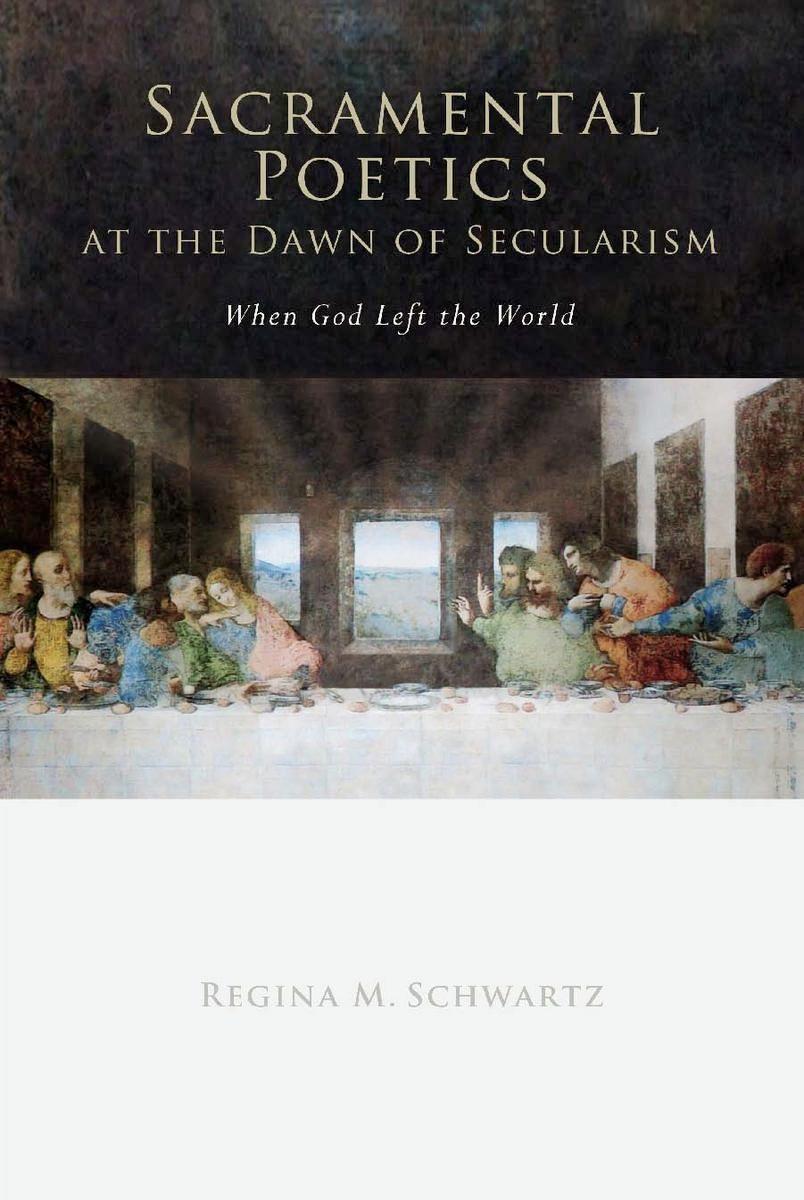
Sacramental Poetics at the Dawn of Secularism asks what happened when the world was shaken by challenges to the sacred order as people had known it, an order that regulated both their actions and beliefs. When Reformers gave up the doctrine of transubstantiation (even as they held onto revised forms of the Eucharist), they lost a doctrine that infuses all materiality, spirituality, and signification with the presence of God. That presence guaranteed the cleansing of human fault, the establishment of justice, the success of communication, the possibility of union with God and another, and love. These longings were not lost but displaced, Schwartz argues, onto other cultural forms in a movement from ritual to the arts, from the sacrament to the sacramental. Investigating the relationship of the arts to the sacred, Schwartz returns to the primary meaning of "sacramental" as "sign making," noting that because the sign always points beyond itself, it participates in transcendence, and this evocation of transcendence, of mystery, is the work of a sacramental poetics.
Betala smidigt med kort, Klarna, Apple Pay eller Google Pay. Är du inte nöjd har du alltid 14 dagars ångerrätt. Läs mer i våra villkor. Har du några frågor, mejla oss på hello@memmo.org.
Memmo gör det enklare att plugga – var du än är i världen. Hos oss samlar du kursböcker och smarta studieverktyg på ett och samma ställe: sammanfattningar, quiz, poddar och flashcards. Och så Ted, din studiekompis som svarar på allt du undrar. Över 50 000 studenter pluggar redan här – byggt för att du ska lära dig snabbare och stressa mindre.