
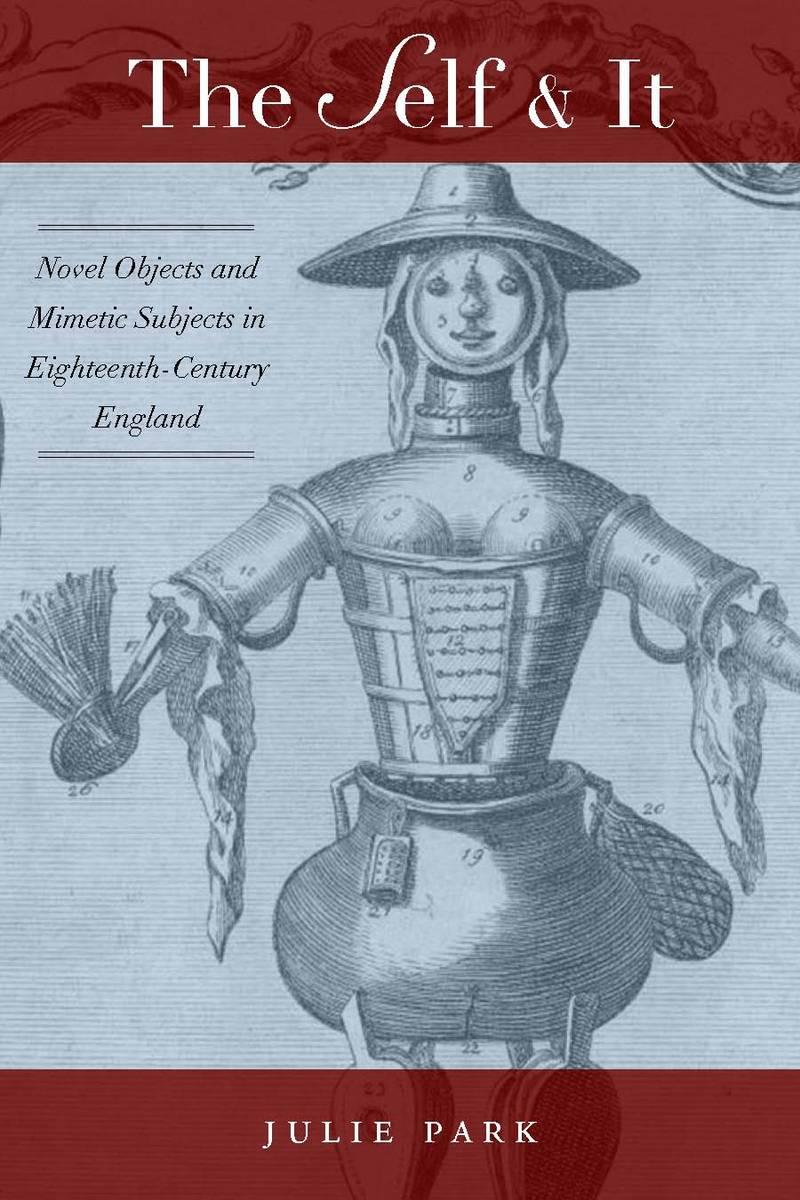
Objects we traditionally regard as "mere" imitations of the human—dolls, automata, puppets—proliferated in eighteenth-century England's rapidly expanding market culture. During the same period, there arose a literary genre called "the novel" that turned the experience of life into a narrated object of psychological plausibility. Park makes a bold intervention in histories of the rise of the novel by arguing that the material objects abounding in eighteenth-century England's consumer markets worked in conjunction with the novel, itself a commodity fetish, as vital tools for fashioning the modern self. As it constructs a history for the psychology of objects, The Self and It revises a story that others have viewed as originating later: in an age of Enlightenment, things have the power to move, affect people's lives, and most of all, enable a fictional genre of selfhood. The book demonstrates just how much the modern psyche—and its thrilling projections of "artificial life"—derive from the formation of the early novel, and the reciprocal activity between made things and invented identities that underlie it.
Betala smidigt med kort, Klarna, Apple Pay eller Google Pay. Är du inte nöjd har du alltid 14 dagars ångerrätt. Läs mer i våra villkor. Har du några frågor, mejla oss på hello@memmo.org.
Memmo gör det enklare att plugga – var du än är i världen. Hos oss samlar du kursböcker och smarta studieverktyg på ett och samma ställe: sammanfattningar, quiz, poddar och flashcards. Och så Ted, din studiekompis som svarar på allt du undrar. Över 50 000 studenter pluggar redan här – byggt för att du ska lära dig snabbare och stressa mindre.