
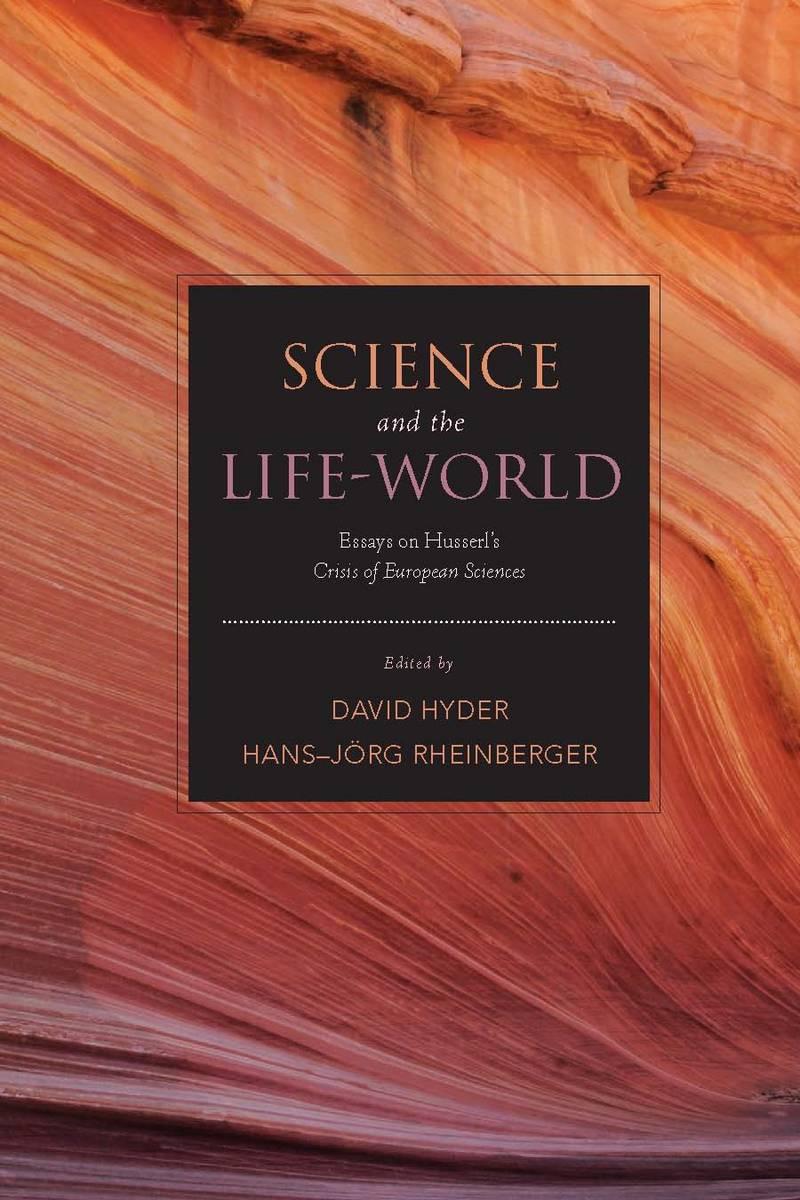
This book is a collection of essays on Husserl's Crisis of European Sciences by leading philosophers of science and scholars of Husserl. Published and ignored under the Nazi dictatorship, Husserl's last work has never received the attention its author's prominence demands. In the Crisis, Husserl considers the gap that has grown between the "life-world" of everyday human experience and the world of mathematical science. He argues that the two have become disconnected because we misunderstand our own scientific past—we confuse mathematical idealities with concrete reality and thereby undermine the validity of our immediate experience. The philosopher's foundational work in the theory of intentionality is relevant to contemporary discussions of qualia, naive science, and the fact-value distinction. The scholars included in this volume consider Husserl's diagnosis of this "crisis" and his proposed solution. Topics addressed include Husserl's late philosophy, the relation between scientific and everyday objects and "worlds," the history of Greek and Galilean science, the philosophy of history, and Husserl's influence on Foucault.
Betala smidigt med kort, Klarna, Apple Pay eller Google Pay. Är du inte nöjd har du alltid 14 dagars ångerrätt. Läs mer i våra villkor. Har du några frågor, mejla oss på hello@memmo.org.
Memmo gör det enklare att plugga – var du än är i världen. Hos oss samlar du kursböcker och smarta studieverktyg på ett och samma ställe: sammanfattningar, quiz, poddar och flashcards. Och så Ted, din studiekompis som svarar på allt du undrar. Över 50 000 studenter pluggar redan här – byggt för att du ska lära dig snabbare och stressa mindre.