
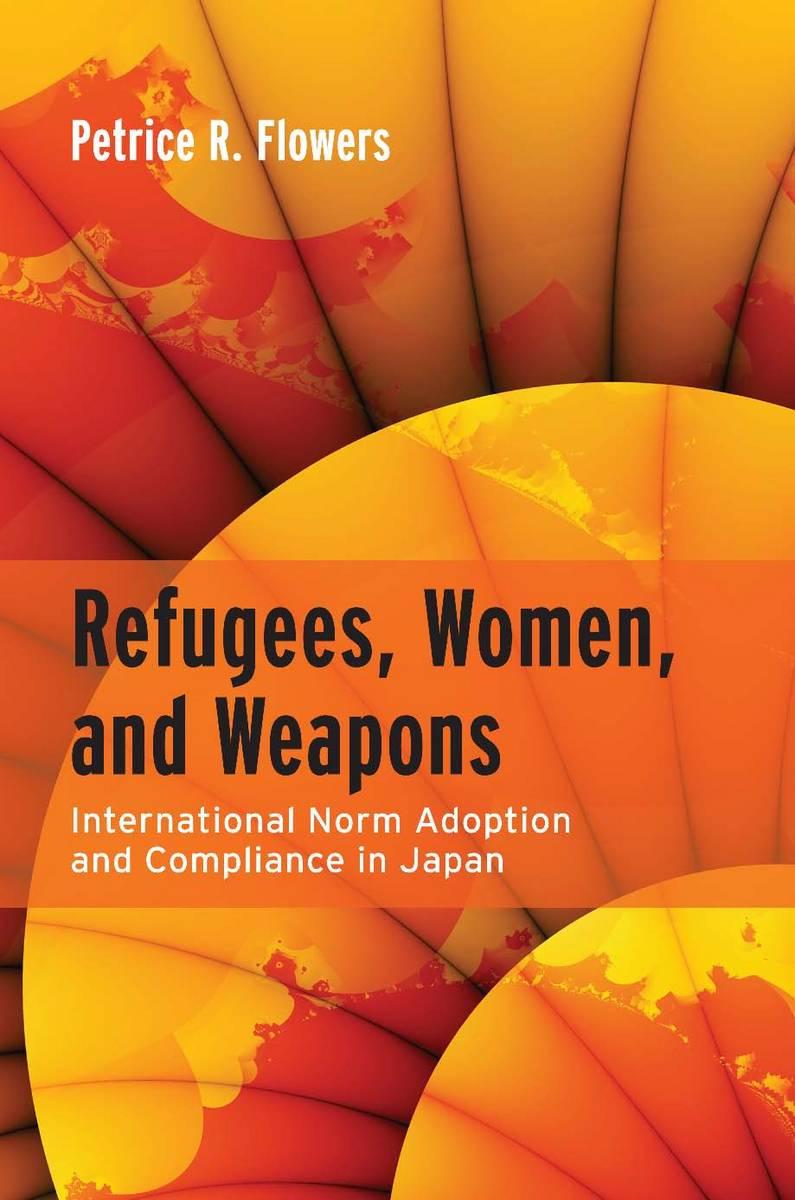
In a world dominated by considerations of material and security threats, Japan provides a fascinating case for why, and under what conditions, a state would choose to adopt international norms and laws that are seemingly in direct conflict with its domestic norms. Approaching compliance from within a constructivist framework, author Petrice R. Flowers analyzes three treaties—addressing refugee policy, women's employment, and the use of land mines—that Japan has adopted. Refugees, Women, and Weapons probes how international relations and domestic politics both play a role in constructing state identity, and how state identity in turn influences compliance.
Flowers argues that, although state desire for legitimacy is a key factor in norm adoption, to achieve anything other than a low level of compliance requires strong domestic advocacy. She offers a comprehensive theoretical model that tests the explanatory power of two understudied factors: the strength of nonstate actors and the degree to which international and domestic norms conflict. Flowers evaluates how these factors, typically studied and analyzed individually, interact and affect one another.
Betala smidigt med kort, Klarna, Apple Pay eller Google Pay. Är du inte nöjd har du alltid 14 dagars ångerrätt. Läs mer i våra villkor. Har du några frågor, mejla oss på hello@memmo.org.
Memmo gör det enklare att plugga – var du än är i världen. Hos oss samlar du kursböcker och smarta studieverktyg på ett och samma ställe: sammanfattningar, quiz, poddar och flashcards. Och så Ted, din studiekompis som svarar på allt du undrar. Över 50 000 studenter pluggar redan här – byggt för att du ska lära dig snabbare och stressa mindre.