
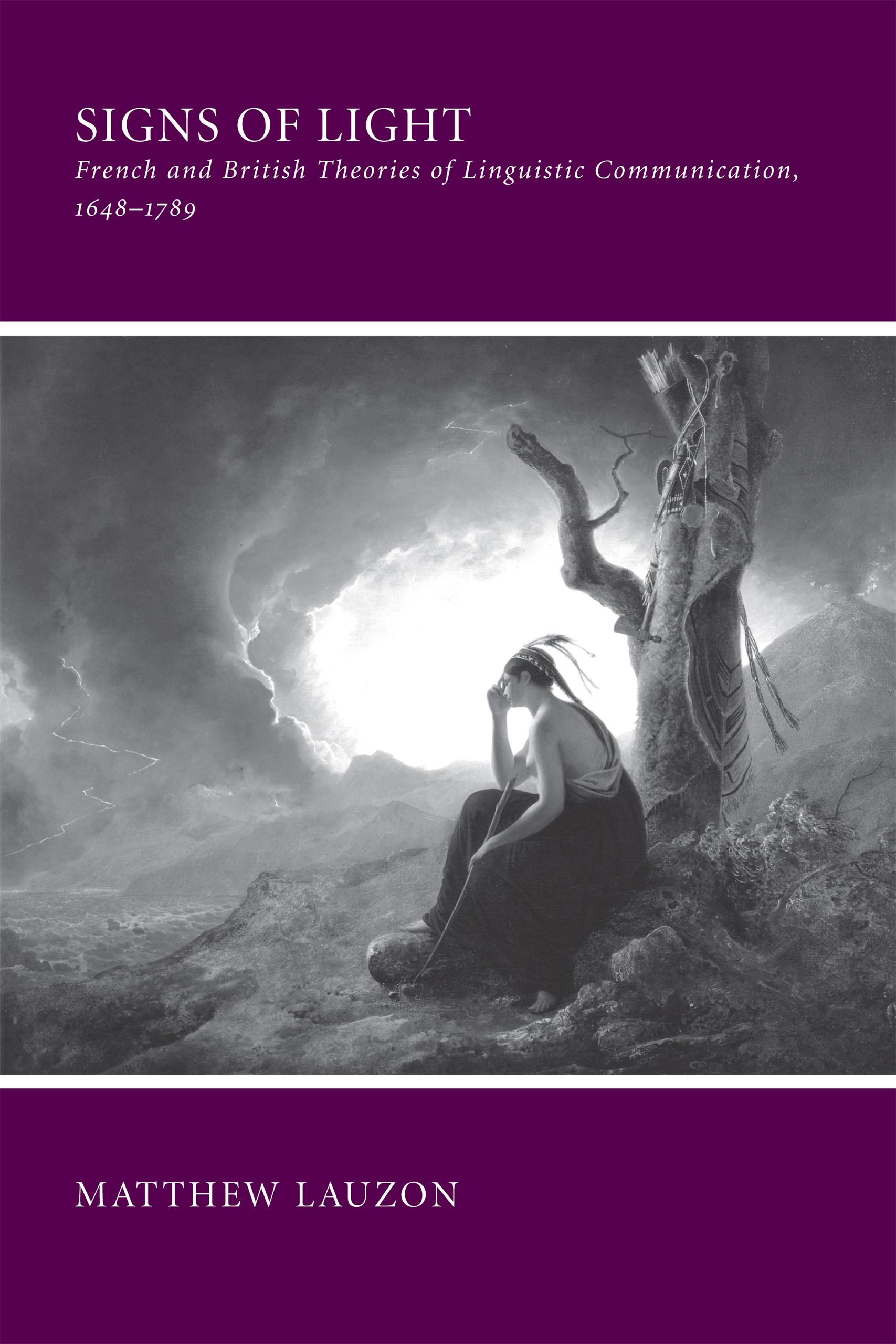
In Signs of Light, Matthew Lauzon traces the development of very different French and British ideas about language over the course of the late seventeenth and eighteenth centuries and demonstrates how important these ideas were to emerging notions of national character. Drawing examples from a variety of French and English language works in a wide range of areas, including language theory, philosophy, rhetoric, psychology, missionary tracts, and literary texts, Lauzon explores how French and British thinkers of the day developed arguments that certain kinds of languages are superior to others.
The nature of animal language and British and French understandings of the languages of North American Indians were vigorously debated. Theories of animal language juxtaposed the apparent virtues of transparency and wit; considerations of savage language resulted in eloquence being regarded as an even higher accomplishment. Eventually, the French language came to be prized for its wit and sociability and English for its simple clarity and vigor. Lauzon shows that, besides concerns about establishing the clarity of introspective representations, questions about the energetic communication of sincere emotion and about the sociable communication of wit were crucial to language theories during this period. A richly interdisciplinary work, Signs of Light is a compelling account of a formative period in language theory.
Betala smidigt med kort, Klarna, Apple Pay eller Google Pay. Är du inte nöjd har du alltid 14 dagars ångerrätt. Läs mer i våra villkor. Har du några frågor, mejla oss på hello@memmo.org.
Memmo gör det enklare att plugga – var du än är i världen. Hos oss samlar du kursböcker och smarta studieverktyg på ett och samma ställe: sammanfattningar, quiz, poddar och flashcards. Och så Ted, din studiekompis som svarar på allt du undrar. Över 50 000 studenter pluggar redan här – byggt för att du ska lära dig snabbare och stressa mindre.