
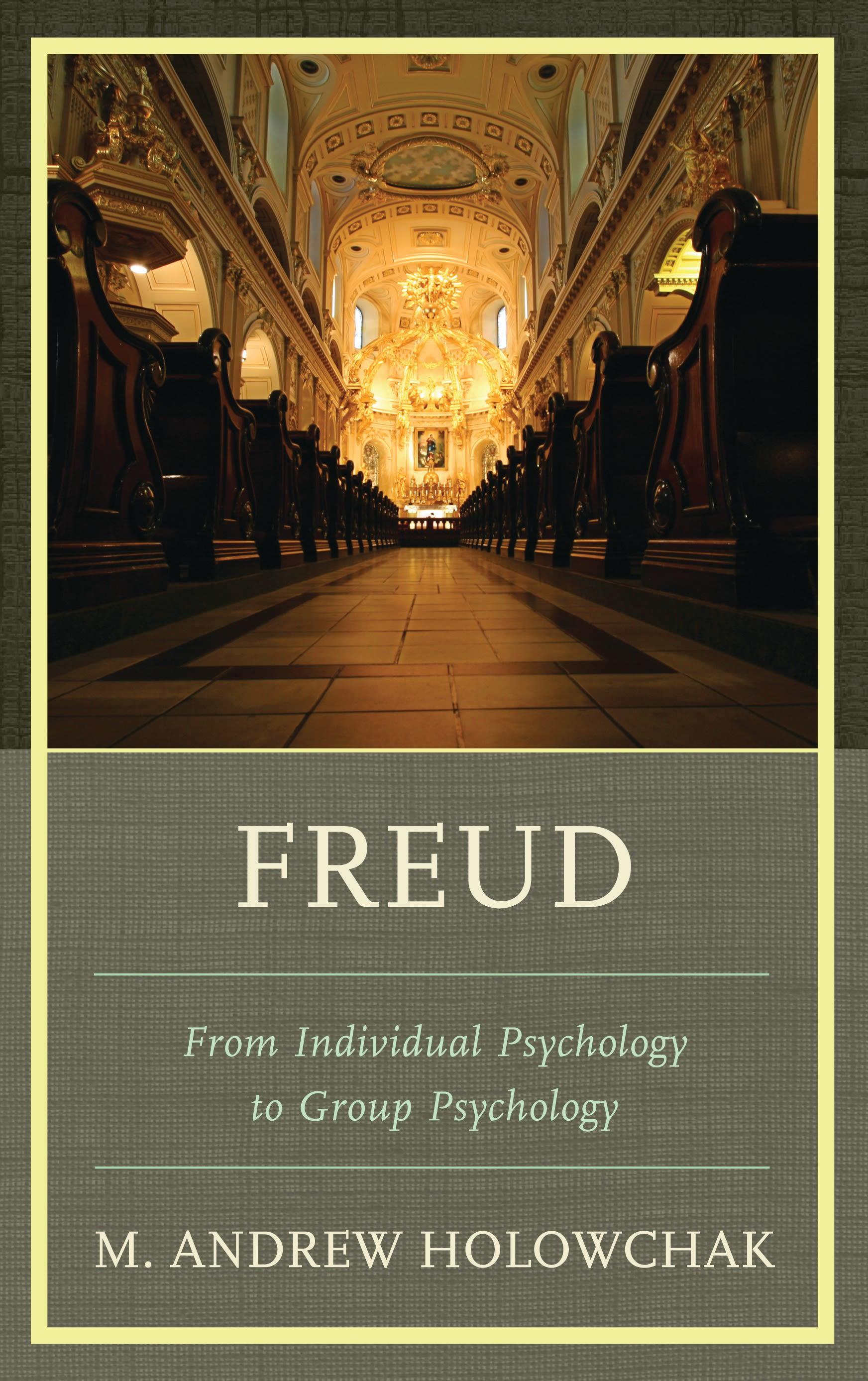
Freud: From Individual Psychology to Group Psychology, by M. Andrew Holowchak, explores Freudian psychoanalysis as a full-fledged science, as it relates psychoanalytically to issues of individual psychology (Individualpsychologie) and group psychology (Massenpsychologie). It answers questions such as “How effective did Freud perceive individual psychology to be?,” “What is group psychology?,” “To what extent did Freud think psychoanalytic investigation of group pathology could be curative of social ills?,” “How seriously did Freud take metapsychological explanation?,” and “How important were auxiliary hypotheses, borrowed (often uncritically) from other disciplines, in the formation of group psychology?” In sketching out the development of individual psychology and group psychology, Holowchak argues that for Freud, psychoanalysis was always essentially a procedure for investigating unconscious phenomena that allowed for explication and understanding of both individual and group issues.
Part I of Freud focuses on individual psychology, traces out the development of Freud’s thought on clinical therapy and analyzing the various clinical methods and theories Freud employed over the years. Holowchak critically examines the merit of Freudian psychoanalysis as a remedy for individual pathology. Part IIfocuses on group psychology, starting with an overview of the conditions influencing Freud’s shift to group-psychology issues and moving on to a psychoanalytic examination of other disciplines—non-sciences and sciences alike. Finally, Holowchak analyzes the worth of Freudian psychoanalysis as a remedy for group pathology.
Readers are given a comprehensive depiction as well as a critical analysis of the development of psychoanalysis in an easy-to-assimilate manner from Freud’s early days in analytic therapy, beginning with his stays with Charcot and Bernheim in France, to his mature thinking, where he develops notions such as the death drive and the structural model (id, ego, and super-ego) to compensate for theoretical defects in his earlier thinking.
Part I of Freud focuses on individual psychology, traces out the development of Freud’s thought on clinical therapy and analyzing the various clinical methods and theories Freud employed over the years. Holowchak critically examines the merit of Freudian psychoanalysis as a remedy for individual pathology. Part IIfocuses on group psychology, starting with an overview of the conditions influencing Freud’s shift to group-psychology issues and moving on to a psychoanalytic examination of other disciplines—non-sciences and sciences alike. Finally, Holowchak analyzes the worth of Freudian psychoanalysis as a remedy for group pathology.
Readers are given a comprehensive depiction as well as a critical analysis of the development of psychoanalysis in an easy-to-assimilate manner from Freud’s early days in analytic therapy, beginning with his stays with Charcot and Bernheim in France, to his mature thinking, where he develops notions such as the death drive and the structural model (id, ego, and super-ego) to compensate for theoretical defects in his earlier thinking.
Betala smidigt med kort, Klarna, Apple Pay eller Google Pay. Är du inte nöjd har du alltid 14 dagars ångerrätt. Läs mer i våra villkor. Har du några frågor, mejla oss på hello@memmo.org.
Memmo gör det enklare att plugga – var du än är i världen. Hos oss samlar du kursböcker och smarta studieverktyg på ett och samma ställe: sammanfattningar, quiz, poddar och flashcards. Och så Ted, din studiekompis som svarar på allt du undrar. Över 50 000 studenter pluggar redan här – byggt för att du ska lära dig snabbare och stressa mindre.