
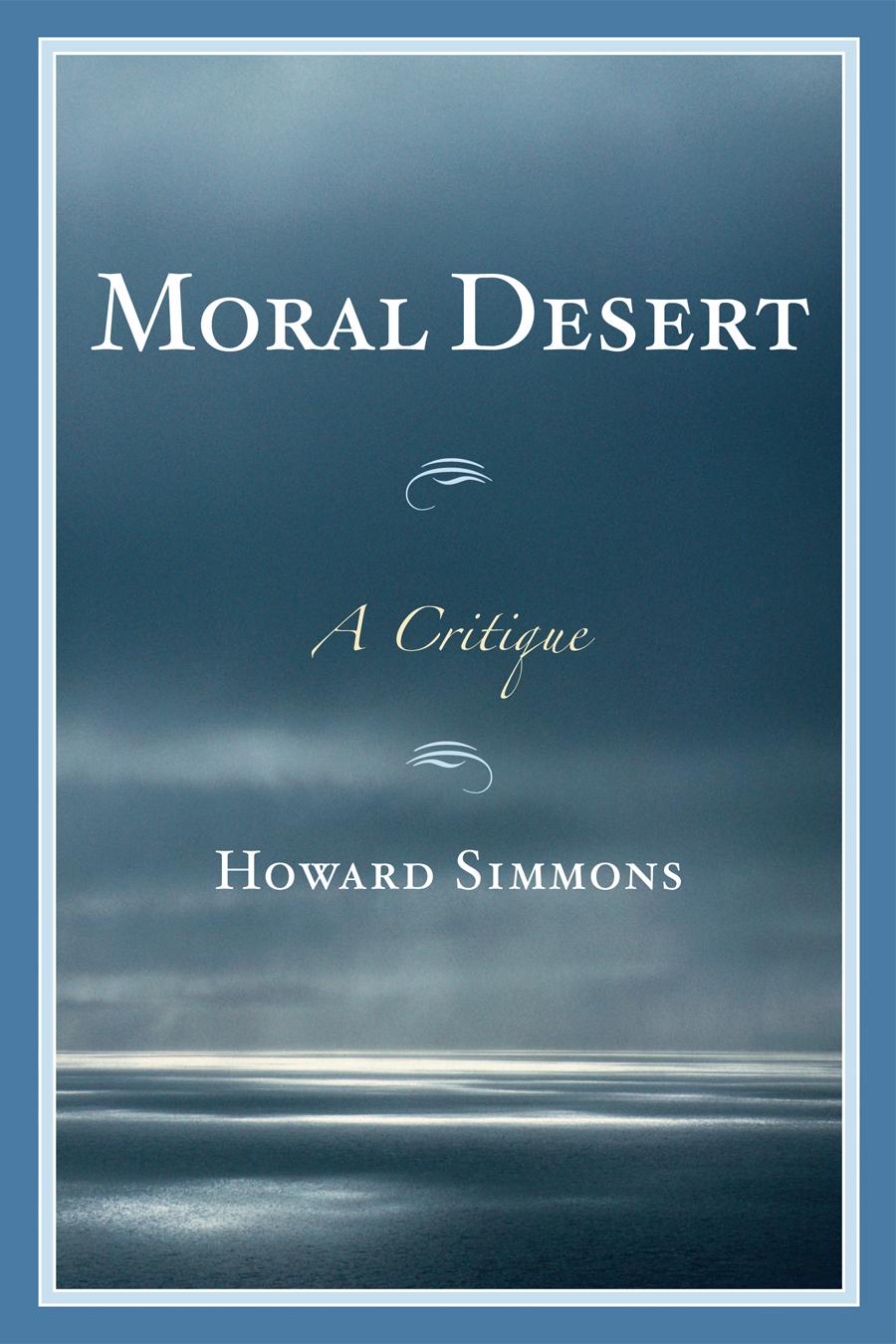
In Moral Desert, Howard Simmons notes that the idea that we deserve to be praised or rewarded for good behavior and blamed or punished when we act badly seems central to everyone's moral deliberation and practices. Simmons subjects this assumption to critical scrutiny. He argues that in a wide range of cases it is almost impossible to know the extent of people's moral responsibility, and indeed that it may be a complete delusion. He attacks the still-popular theory of retributive punishment, with special reference to the views of Peter French and J. Angelo Corlett. Simmons does not conclude that punishment is always unjustified, but insists that any justification should relate to its real world consequences. State punishment should be inflicted according to strict consequentialist precepts, and the author provides systematic principles for determining an appropriate sentence and for deciding when offenders should be excused. He also considers the implications of his views for distributive justice and personal morality.
Betala smidigt med kort, Klarna, Apple Pay eller Google Pay. Är du inte nöjd har du alltid 14 dagars ångerrätt. Läs mer i våra villkor. Har du några frågor, mejla oss på hello@memmo.org.
Memmo gör det enklare att plugga – var du än är i världen. Hos oss samlar du kursböcker och smarta studieverktyg på ett och samma ställe: sammanfattningar, quiz, poddar och flashcards. Och så Ted, din studiekompis som svarar på allt du undrar. Över 50 000 studenter pluggar redan här – byggt för att du ska lära dig snabbare och stressa mindre.