
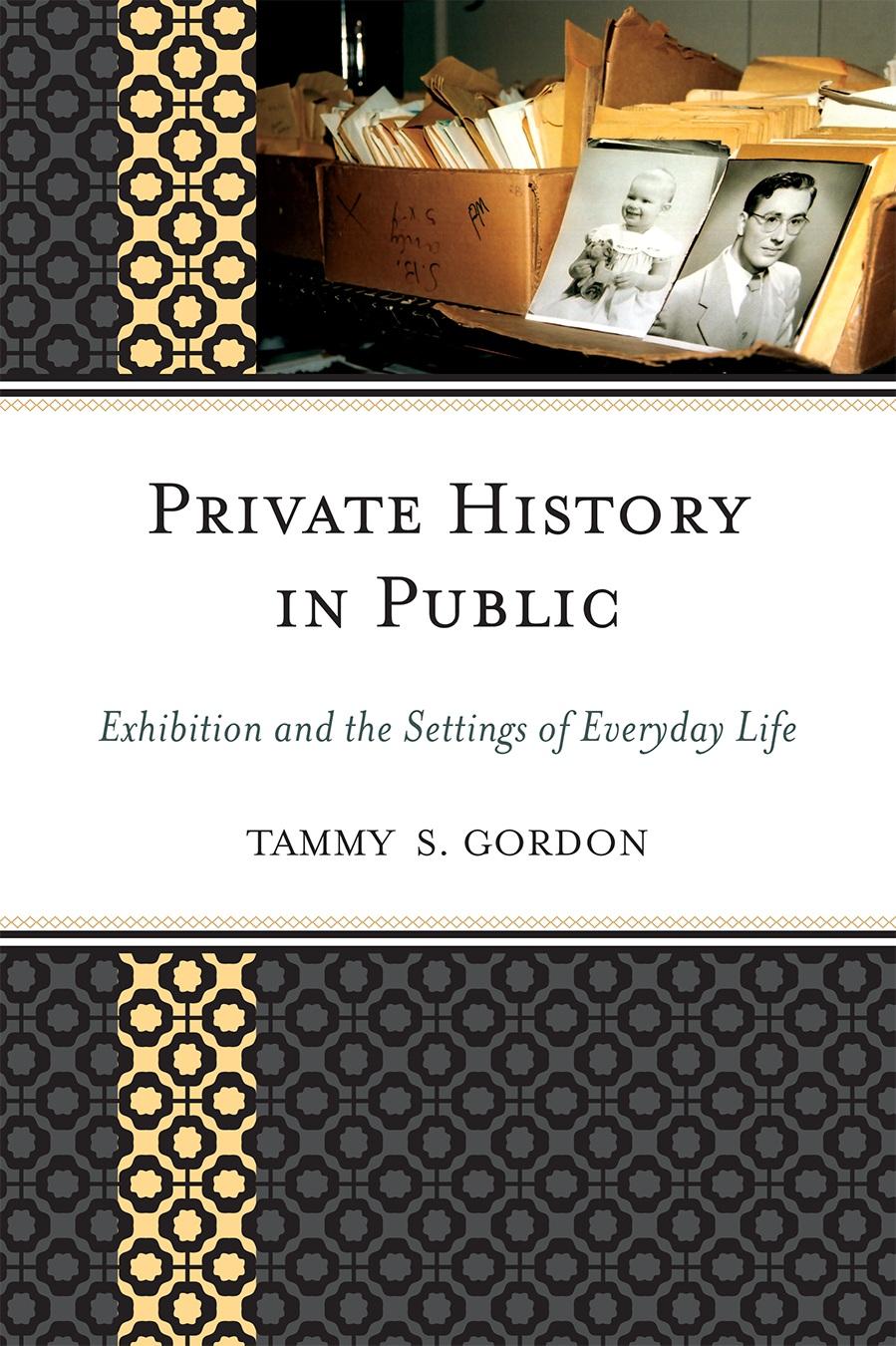
In small community museums, truck stops, restaurants, bars, barbershops, schools, and churches, people create displays to tell the histories that matter to them. Much of this history is personal: family history, community history, history of a trade, or the history of something considered less than genteel. It is often history based on the historical record, but also based on feelings, beliefs, and memory. It is neglected history.
Private History in Public is about those history exhibits that complicate the public/private dichotomy, exhibits that serve to explain communities, families, and individuals to outsiders and tie insiders together through a shared narrative of historical experience. Tammy S. Gordon looks beyond the large professionalized museum exhibits that have dominated scholarship in museum studies and public history and offers a new way of understanding the broad spectrum of exhibition types in the United States.
Private History in Public is about those history exhibits that complicate the public/private dichotomy, exhibits that serve to explain communities, families, and individuals to outsiders and tie insiders together through a shared narrative of historical experience. Tammy S. Gordon looks beyond the large professionalized museum exhibits that have dominated scholarship in museum studies and public history and offers a new way of understanding the broad spectrum of exhibition types in the United States.
Betala smidigt med kort, Klarna, Apple Pay eller Google Pay. Är du inte nöjd har du alltid 14 dagars ångerrätt. Läs mer i våra villkor. Har du några frågor, mejla oss på hello@memmo.org.
Memmo gör det enklare att plugga – var du än är i världen. Hos oss samlar du kursböcker och smarta studieverktyg på ett och samma ställe: sammanfattningar, quiz, poddar och flashcards. Och så Ted, din studiekompis som svarar på allt du undrar. Över 50 000 studenter pluggar redan här – byggt för att du ska lära dig snabbare och stressa mindre.