
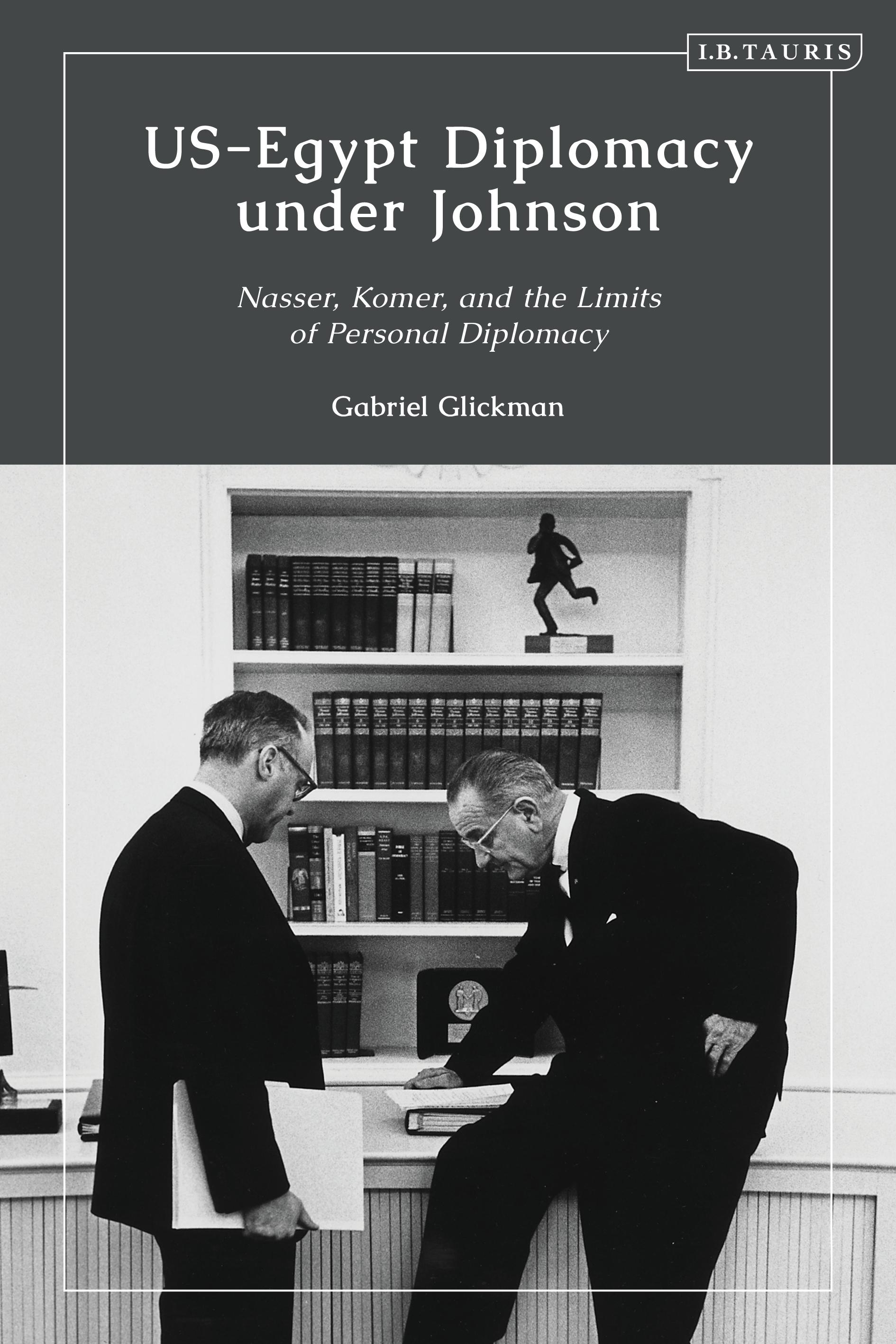
What happens to policies when a president dies in office? Do they get replaced by
the new president, or do advisers carry on with the status quo? In November 1963,
these were important questions for a Kennedy-turned-Johnson administration.
Among these officials was a driven National Security Council staffer named Robert
Komer, who had made it his personal mission to have the United States form better
relations with Egypt's Gamal Abdel Nasser after diplomatic relations were nearly
severed during the Eisenhower years. While Kennedy saw the benefit of having good,
personal relations with the most influential leader in the Middle East-believing
that it was the key to preventing a new front in the global Cold War-Johnson
did not share his predecessor's enthusiasm for influencing Nasser with aid.
In US-Egypt Diplomacy under Johnson, Glickman brings to light the diplomatic
efforts of Komer, a masterful strategist at navigating the bureaucratic
process. Appealing to scholars of Middle Eastern history and US foreign
policy, the book reveals a new perspective on the path to a war that was
to change the face of the Middle East, and provides an important “applied
history” case study for policymakers on the limits of personal diplomacy.
the new president, or do advisers carry on with the status quo? In November 1963,
these were important questions for a Kennedy-turned-Johnson administration.
Among these officials was a driven National Security Council staffer named Robert
Komer, who had made it his personal mission to have the United States form better
relations with Egypt's Gamal Abdel Nasser after diplomatic relations were nearly
severed during the Eisenhower years. While Kennedy saw the benefit of having good,
personal relations with the most influential leader in the Middle East-believing
that it was the key to preventing a new front in the global Cold War-Johnson
did not share his predecessor's enthusiasm for influencing Nasser with aid.
In US-Egypt Diplomacy under Johnson, Glickman brings to light the diplomatic
efforts of Komer, a masterful strategist at navigating the bureaucratic
process. Appealing to scholars of Middle Eastern history and US foreign
policy, the book reveals a new perspective on the path to a war that was
to change the face of the Middle East, and provides an important “applied
history” case study for policymakers on the limits of personal diplomacy.
Betala smidigt med kort, Klarna, Apple Pay eller Google Pay. Är du inte nöjd har du alltid 14 dagars ångerrätt. Läs mer i våra villkor. Har du några frågor, mejla oss på hello@memmo.org.
Memmo gör det enklare att plugga – var du än är i världen. Hos oss samlar du kursböcker och smarta studieverktyg på ett och samma ställe: sammanfattningar, quiz, poddar och flashcards. Och så Ted, din studiekompis som svarar på allt du undrar. Över 50 000 studenter pluggar redan här – byggt för att du ska lära dig snabbare och stressa mindre.