
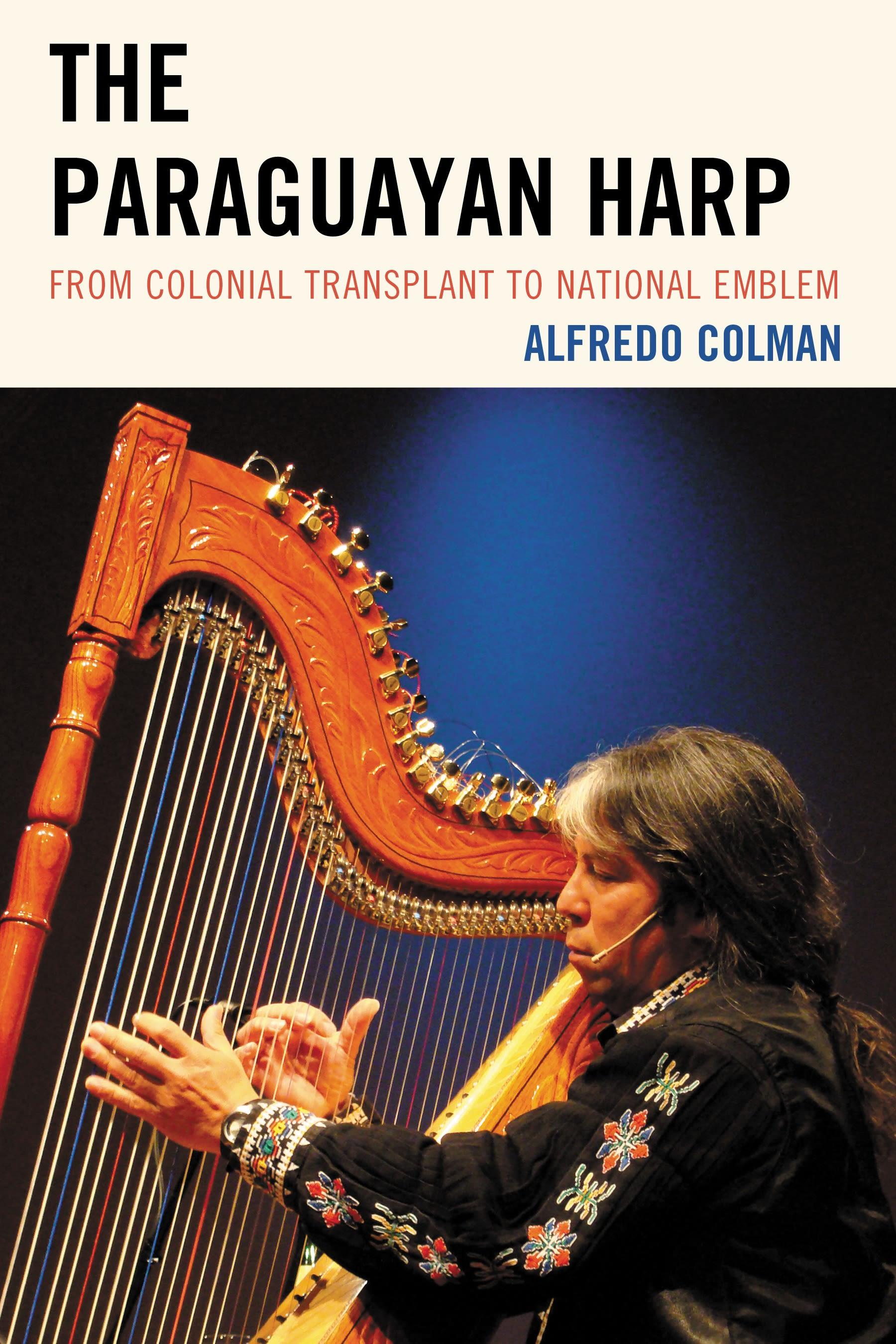
How did a music instrument transplated to South America by colonial Jesuit missionaries earn the official designation as Paraguay's cultural national symbol? This ethnomusicological and organological study of the Paraguayan diatonic harp in the twentieth century tells its story as an emblematic national musical instrument.
First used liturgically by Jesuit missions in colonial times, the transplanted European diatonic harp was transformed and adopted into the folk music vocabulary of Paraguay and the Río de la Plata region. Following the commercial success of Paraguayan harpist Félix Pérez Cardozo in the 1930s in Argentina, the instrument's symbolic value as an icon of social, cultural, and national identity was articulated in local traditions such as popular folk music festivals. It received designation of arpa paraguaya (Paraguayan harp) and, in 2010, official recognition as simbolo de la cultura nacional (cultural national symbol).
The author's fieldwork in Paraguay and continuous contact with composers, educators, festival organizers, harp performers, researchers, and festival organizers have provided unique insights into the development of the Paraguayan harp tradition as a cultural icon of the nation.
First used liturgically by Jesuit missions in colonial times, the transplanted European diatonic harp was transformed and adopted into the folk music vocabulary of Paraguay and the Río de la Plata region. Following the commercial success of Paraguayan harpist Félix Pérez Cardozo in the 1930s in Argentina, the instrument's symbolic value as an icon of social, cultural, and national identity was articulated in local traditions such as popular folk music festivals. It received designation of arpa paraguaya (Paraguayan harp) and, in 2010, official recognition as simbolo de la cultura nacional (cultural national symbol).
The author's fieldwork in Paraguay and continuous contact with composers, educators, festival organizers, harp performers, researchers, and festival organizers have provided unique insights into the development of the Paraguayan harp tradition as a cultural icon of the nation.
Betala smidigt med kort, Klarna, Apple Pay eller Google Pay. Är du inte nöjd har du alltid 14 dagars ångerrätt. Läs mer i våra villkor. Har du några frågor, mejla oss på hello@memmo.org.
Memmo gör det enklare att plugga – var du än är i världen. Hos oss samlar du kursböcker och smarta studieverktyg på ett och samma ställe: sammanfattningar, quiz, poddar och flashcards. Och så Ted, din studiekompis som svarar på allt du undrar. Över 50 000 studenter pluggar redan här – byggt för att du ska lära dig snabbare och stressa mindre.