
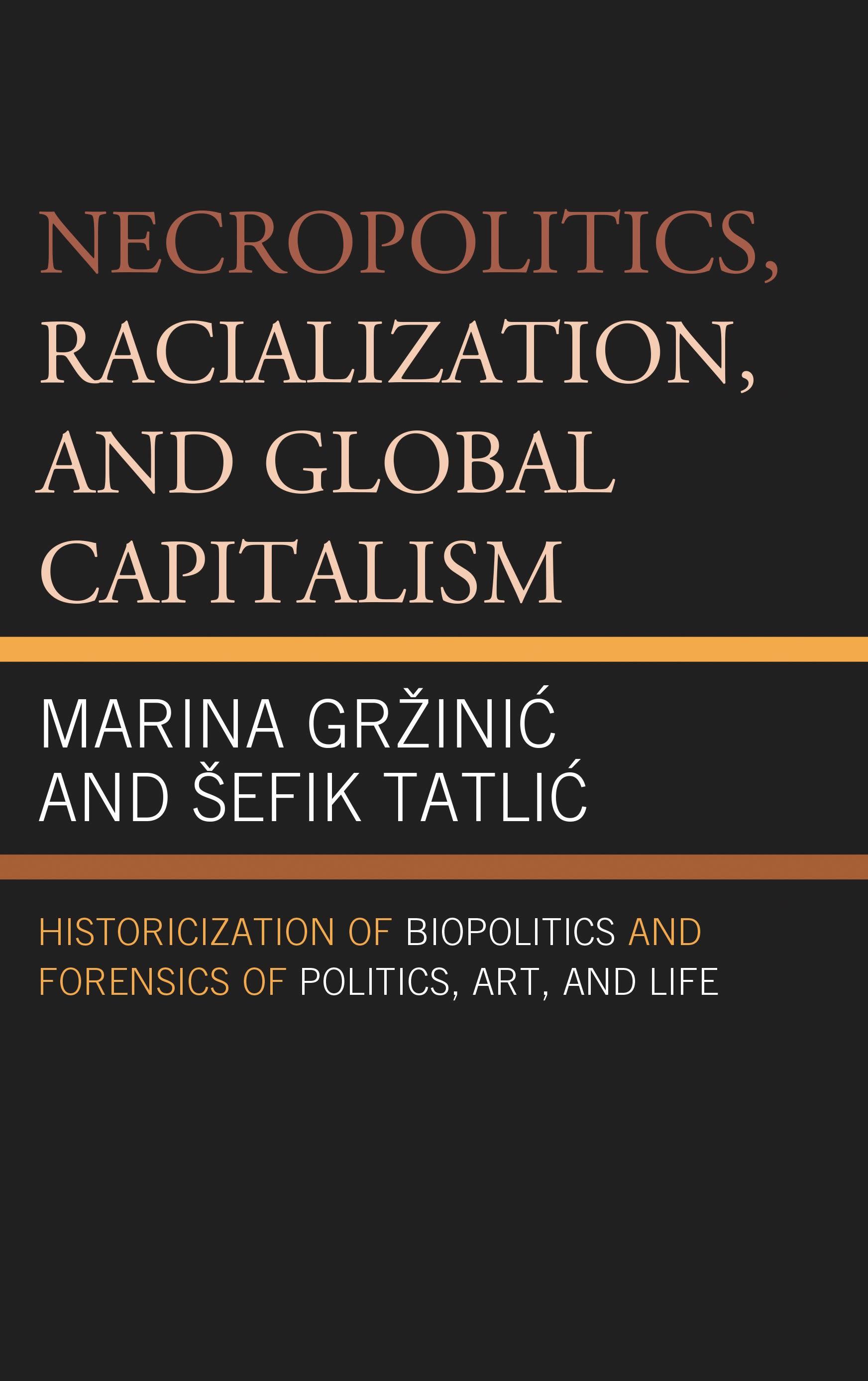
This book articulates a contemporary, globalized world as one in which radical disparities in distribution of wealth are being reproduced as the basis for depoliticized social, institutional, and ideological discourses. At its center is a reorientation of global capitalism from the management of life towards making a surplus value from death. This change is presented as a reorientation of biopolitics (bio meaning life) to necropolitics (necro meaning death). Therefore in the book we work with processes of change, of a historicization of biopolitics and its turn into necropolitics that leads to a theoretical trajectory from M. Foucault to A. Mbembe and beyond.
This book interprets the sustained perception of existence of dichotomy between these provisional extremes as a trademark of apolitical and/or post-political logics on which contemporary institutional, political, and social discourses tend to be structured upon. More, contrary to the majority of approaches that insists on a profound dichotomy between democracy and totalitarianism, between poverty and free market, and between democracy and capitalism, this book does not interpret these relations as dichotomous, but as mutually fulfilling.
The book elaborates, in the context of articulation of these logics, contemporary, imperial racism (racialization) as an ideology of capitalism and states that the First World’s monopoly on definition of modernity has its basis in contemporary reorganization of colonialism.
In the book, the authors trace a forensic methodology of global capitalism with which life, art, culture, economy, and the political are becoming part of a detailed system of scrutiny presented and framed in relation to criminal or civil law. Criminalization of each and every segment of our life is working hand in hand with a depoliticization of social conflicts and pacification of the relation between those who rules and those who are ruled. The outcome is a differentiation of every single concept that must from now bear the adjectives of the necropolitical or forensic; therefore we can talk about forensic images, art, projects, and necropolitical life, democracy, citizenship. This will change radically the perspectives of an emancipative project of politics (if it is any possible to be named as such) for the future.
This book interprets the sustained perception of existence of dichotomy between these provisional extremes as a trademark of apolitical and/or post-political logics on which contemporary institutional, political, and social discourses tend to be structured upon. More, contrary to the majority of approaches that insists on a profound dichotomy between democracy and totalitarianism, between poverty and free market, and between democracy and capitalism, this book does not interpret these relations as dichotomous, but as mutually fulfilling.
The book elaborates, in the context of articulation of these logics, contemporary, imperial racism (racialization) as an ideology of capitalism and states that the First World’s monopoly on definition of modernity has its basis in contemporary reorganization of colonialism.
In the book, the authors trace a forensic methodology of global capitalism with which life, art, culture, economy, and the political are becoming part of a detailed system of scrutiny presented and framed in relation to criminal or civil law. Criminalization of each and every segment of our life is working hand in hand with a depoliticization of social conflicts and pacification of the relation between those who rules and those who are ruled. The outcome is a differentiation of every single concept that must from now bear the adjectives of the necropolitical or forensic; therefore we can talk about forensic images, art, projects, and necropolitical life, democracy, citizenship. This will change radically the perspectives of an emancipative project of politics (if it is any possible to be named as such) for the future.
Sidor: 332
Kategori: Kultur-, Genus- & Postkoloniala studier
e-ISBN: 9780739191972
Fraktvikt: 1.2 kg
Skickas inom: 1-2 dagar
Betala smidigt med kort, Klarna, Apple Pay eller Google Pay. Är du inte nöjd har du alltid 14 dagars ångerrätt. Läs mer i våra villkor. Har du några frågor, mejla oss på hello@memmo.org.
Memmo gör det enklare att plugga – var du än är i världen. Hos oss samlar du kursböcker och smarta studieverktyg på ett och samma ställe: sammanfattningar, quiz, poddar och flashcards. Och så Ted, din studiekompis som svarar på allt du undrar. Över 50 000 studenter pluggar redan här – byggt för att du ska lära dig snabbare och stressa mindre.