
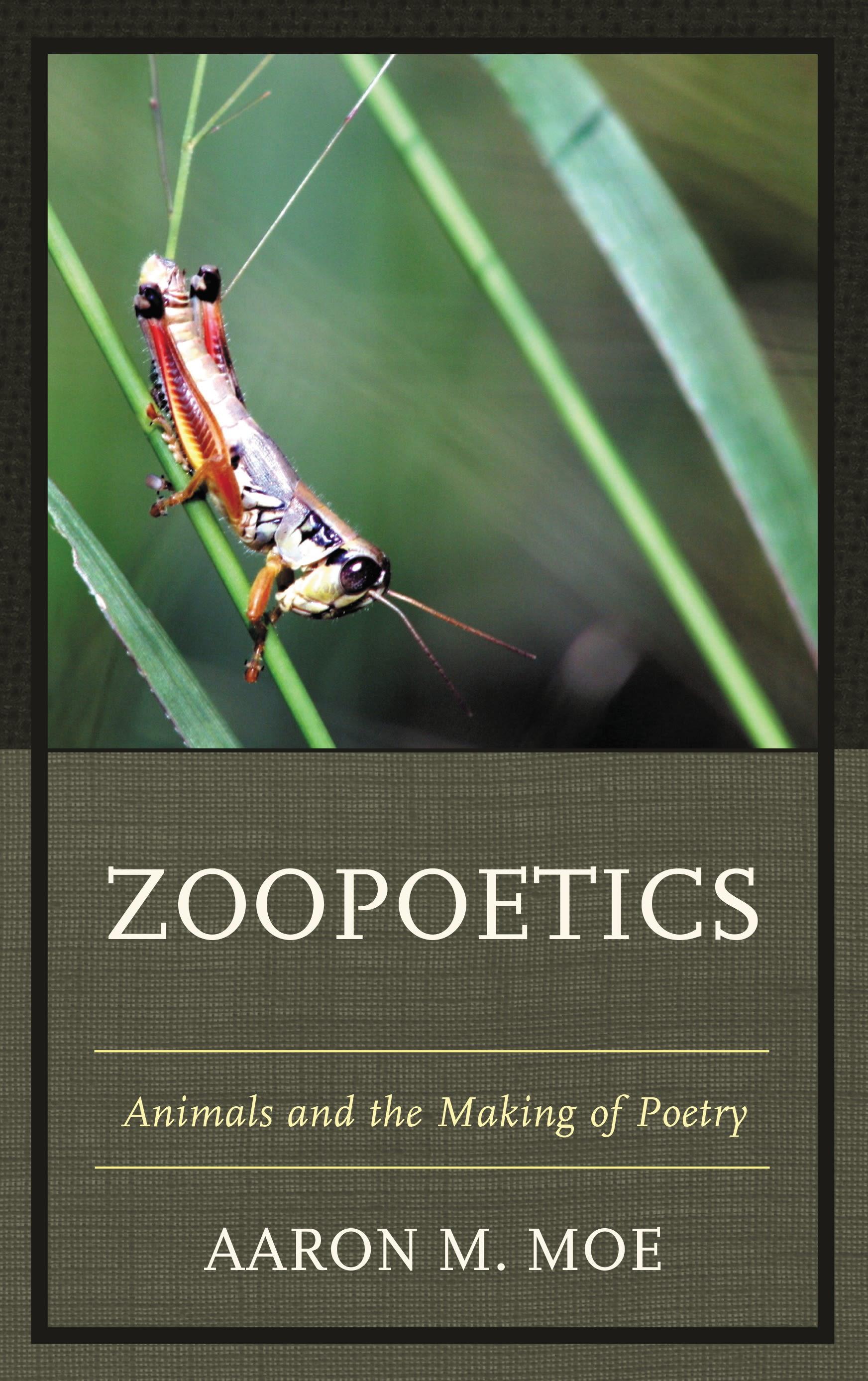
Zoopoetics assumes Aristotle was right. The general origin of poetry resides, in part, in the instinct to imitate. But it is an innovative imitation. An exploration of the oeuvres of Walt Whitman, E. E. Cummings, W. S. Merwin, and Brenda Hillman reveals the many places where an imitation of another species’ poiesis (Greek, makings) contributes to breakthroughs in poetic form. However, humans are not the only imitators in the animal kingdom. Other species, too, achieve breakthroughs in their makings through an attentiveness to the ways-of-being of other animals. For this reason, mimic octopi, elephants, beluga whales, and many other species join the exploration of what zoopoetics encompasses. Zoopoetics provides further traction for people interested in the possibilities when and where species meet.
Gestures are paramount to zoopoetics. Through the interplay of gestures, the human/animal/textual spheres merge making it possible to recognize how actual, biological animals impact the material makings of poetry. Moreover, as many species are makers, zoopoetics expands the poetic tradition to include nonhuman poiesis.
Gestures are paramount to zoopoetics. Through the interplay of gestures, the human/animal/textual spheres merge making it possible to recognize how actual, biological animals impact the material makings of poetry. Moreover, as many species are makers, zoopoetics expands the poetic tradition to include nonhuman poiesis.
Betala smidigt med kort, Klarna, Apple Pay eller Google Pay. Är du inte nöjd har du alltid 14 dagars ångerrätt. Läs mer i våra villkor. Har du några frågor, mejla oss på hello@memmo.org.
Memmo gör det enklare att plugga – var du än är i världen. Hos oss samlar du kursböcker och smarta studieverktyg på ett och samma ställe: sammanfattningar, quiz, poddar och flashcards. Och så Ted, din studiekompis som svarar på allt du undrar. Över 50 000 studenter pluggar redan här – byggt för att du ska lära dig snabbare och stressa mindre.