
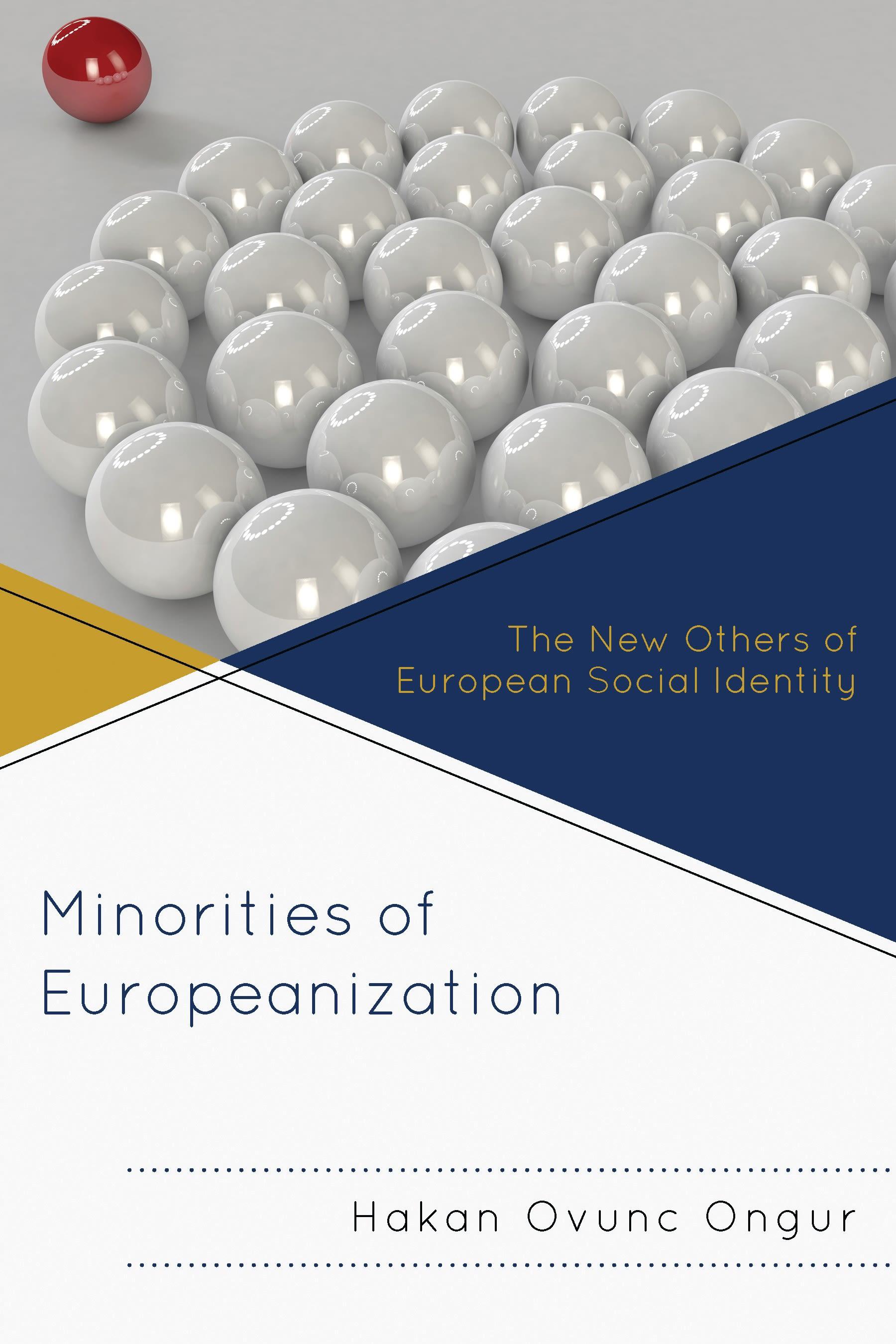
What are the societal effects of Europeanization? How successful is the EU’s project to create an overarching European identity representative of all its citizens, transcending national boundaries, and including those previously excluded as national minorities? This study addresses these questions by adapting the Social Identity Theory’s (SIT) concept of “social identity” to the discussions of “European identity,” offering a novel approach that remedies previous definitional and ontological problems of the term.
The conceptualization of a “European social identity” is generated here to invite a reconsideration of conventional understandings of how minorities’ group identities are formed. Presenting itself as a challenge to nations and nationality, the European integration process has yet to achieve its supra-national ideal, falling instead into the trap of nationalizing those who are subsumed under the category of minorities in practice—arguably because of a faulty theoretical understanding of the term. The new “Others” of Europeanization have been chosen specifically to emphasize, despite the EU’s “united in diversity” rhetoric, the marked lack of united destiny and common heritage of selected European nationals. Among these new Others, Russophones in the Baltic states, the Roma people, populations of the Western Balkans, immigrants and guest workers, and Muslims residing in European countries have all been excluded from Europe’s new social identity. Through in-depth historical analysis, this book aims to correct this problem, providing both European studies and broader political science literatures with a new understanding of minorities that is more dynamic both in practice and theory.
The conceptualization of a “European social identity” is generated here to invite a reconsideration of conventional understandings of how minorities’ group identities are formed. Presenting itself as a challenge to nations and nationality, the European integration process has yet to achieve its supra-national ideal, falling instead into the trap of nationalizing those who are subsumed under the category of minorities in practice—arguably because of a faulty theoretical understanding of the term. The new “Others” of Europeanization have been chosen specifically to emphasize, despite the EU’s “united in diversity” rhetoric, the marked lack of united destiny and common heritage of selected European nationals. Among these new Others, Russophones in the Baltic states, the Roma people, populations of the Western Balkans, immigrants and guest workers, and Muslims residing in European countries have all been excluded from Europe’s new social identity. Through in-depth historical analysis, this book aims to correct this problem, providing both European studies and broader political science literatures with a new understanding of minorities that is more dynamic both in practice and theory.
Sidor: 218
Kategori: Statsvetenskap & Politik
e-ISBN: 9780739181492
Fraktvikt: 1.2 kg
Skickas inom: 1-2 dagar
Betala smidigt med kort, Klarna, Apple Pay eller Google Pay. Är du inte nöjd har du alltid 14 dagars ångerrätt. Läs mer i våra villkor. Har du några frågor, mejla oss på hello@memmo.org.
Memmo gör det enklare att plugga – var du än är i världen. Hos oss samlar du kursböcker och smarta studieverktyg på ett och samma ställe: sammanfattningar, quiz, poddar och flashcards. Och så Ted, din studiekompis som svarar på allt du undrar. Över 50 000 studenter pluggar redan här – byggt för att du ska lära dig snabbare och stressa mindre.