
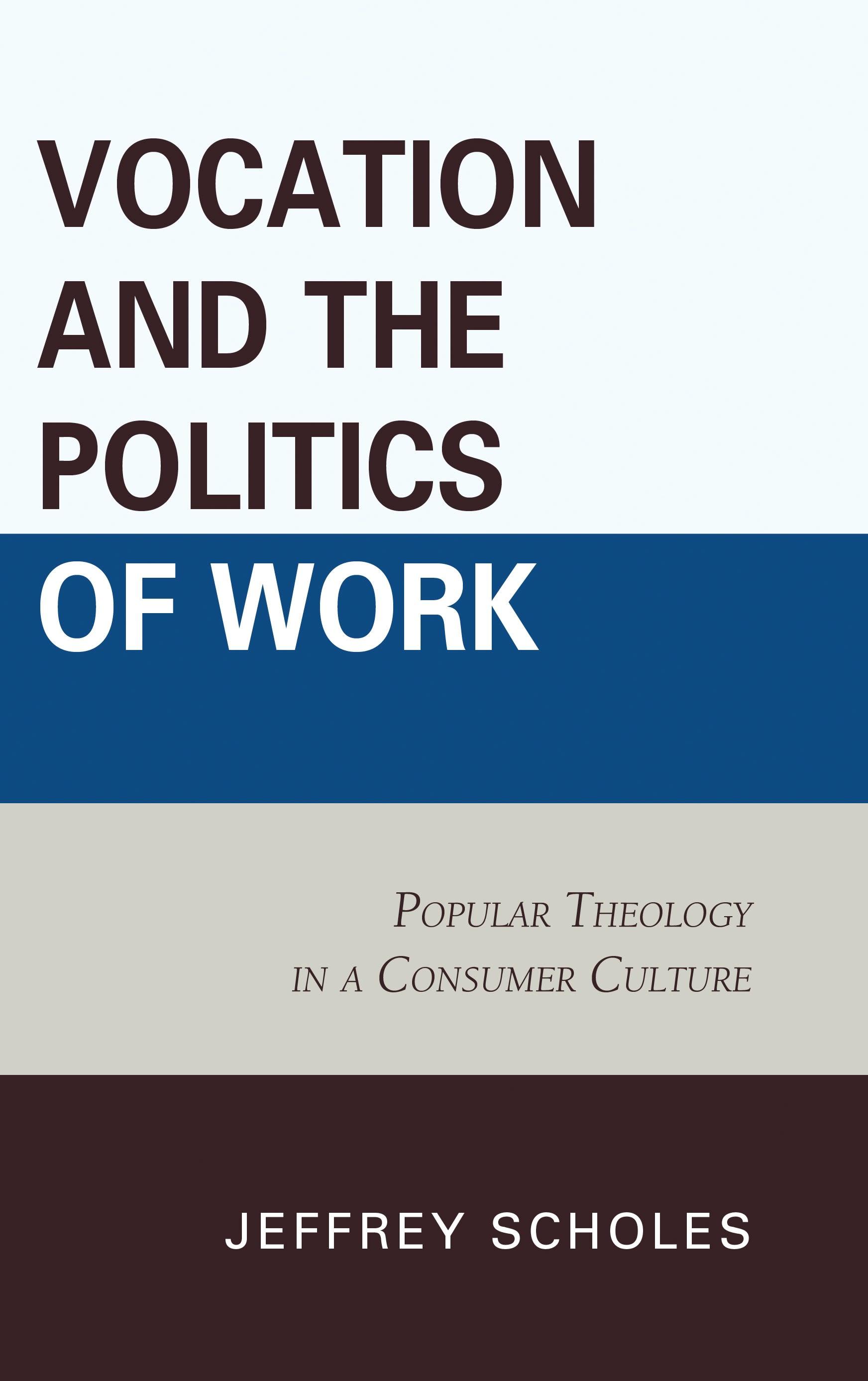
Since Martin Luther, vocations or callings have had a close relationship with daily work. It is a give-and-take relationship in which the meaning of a vocation typically negotiates with the kinds of work available (and vice-versa) at any given time. While “vocation language” still has currency in Western culture, today’s predominant meaning of vocation has little to do with the actual work performed on a job.
Jeffrey Scholes contends that recent theological treatments of the Protestant concept of vocation, both academic and popular, often unwittingly collude with consumer culture to circulate a concept of vocation that is detached from the material conditions of work. The result is a consumer-friendly vocation that is rendered impotent to inform and, if necessary, challenge the political norms of the workplace. For example, he classifies Rick Warren’s concept of “purpose” in his best-selling book, The Purpose-Driven Life, as a functional equivalent of vocation that acts in this way. Other popular uses of vocation along with insights culled from traditional theology and consumer culture studies help Scholes reveal the current state of vocations in the West. Using recent scholarship in the field of political theology, he argues that resisting commodification is a possibility and a prerequisite for a “political vocation,” if it is at all able to engage the norms that regulate and undermine the pursuit of justice in many modern workplaces.
Jeffrey Scholes contends that recent theological treatments of the Protestant concept of vocation, both academic and popular, often unwittingly collude with consumer culture to circulate a concept of vocation that is detached from the material conditions of work. The result is a consumer-friendly vocation that is rendered impotent to inform and, if necessary, challenge the political norms of the workplace. For example, he classifies Rick Warren’s concept of “purpose” in his best-selling book, The Purpose-Driven Life, as a functional equivalent of vocation that acts in this way. Other popular uses of vocation along with insights culled from traditional theology and consumer culture studies help Scholes reveal the current state of vocations in the West. Using recent scholarship in the field of political theology, he argues that resisting commodification is a possibility and a prerequisite for a “political vocation,” if it is at all able to engage the norms that regulate and undermine the pursuit of justice in many modern workplaces.
Betala smidigt med kort, Klarna, Apple Pay eller Google Pay. Är du inte nöjd har du alltid 14 dagars ångerrätt. Läs mer i våra villkor. Har du några frågor, mejla oss på hello@memmo.org.
Memmo gör det enklare att plugga – var du än är i världen. Hos oss samlar du kursböcker och smarta studieverktyg på ett och samma ställe: sammanfattningar, quiz, poddar och flashcards. Och så Ted, din studiekompis som svarar på allt du undrar. Över 50 000 studenter pluggar redan här – byggt för att du ska lära dig snabbare och stressa mindre.