
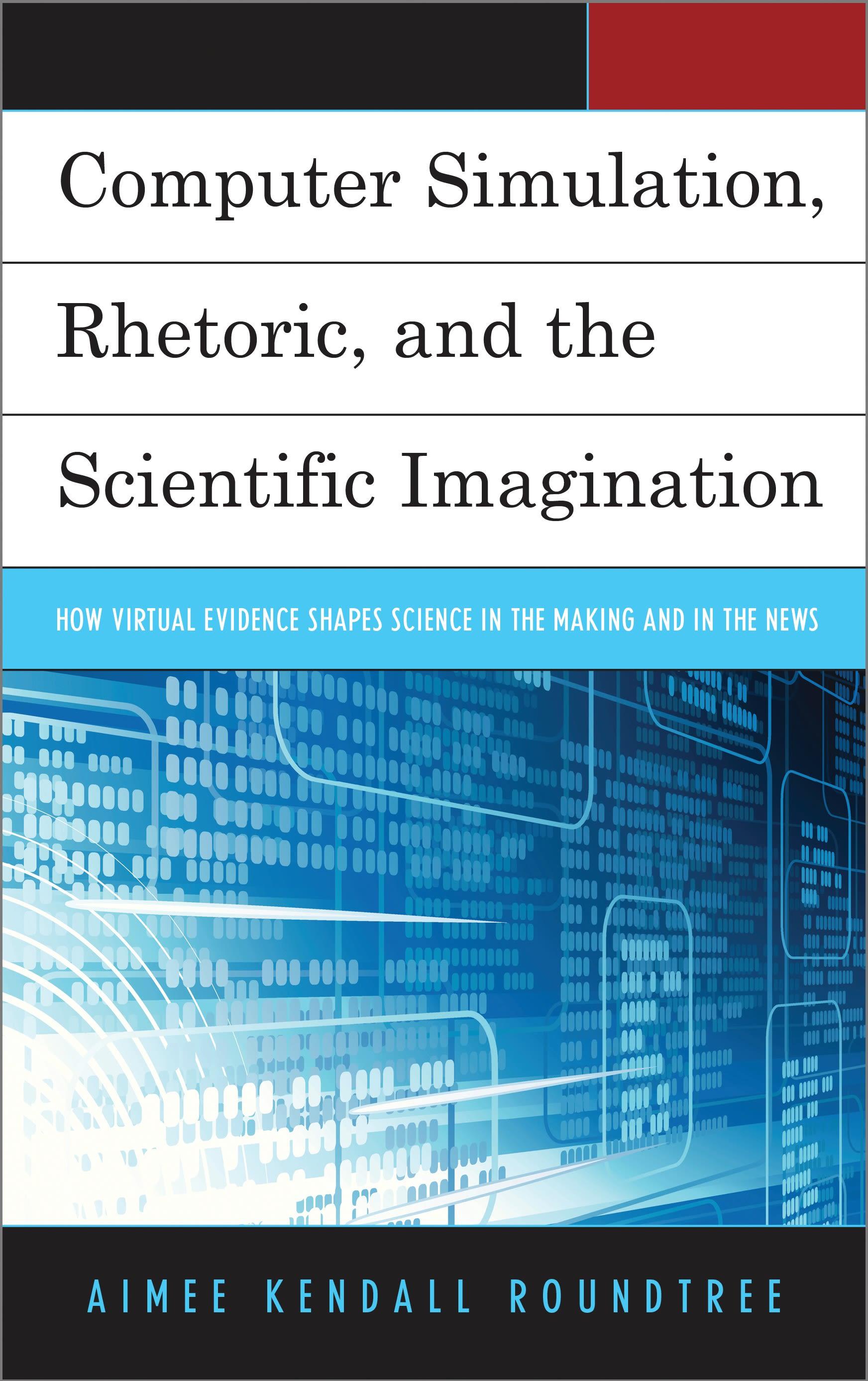
Computer simulations help advance climatology, astrophysics, and other scientific disciplines. They are also at the crux of several high-profile cases of science in the news. How do simulation scientists, with little or no direct observations, make decisions about what to represent? What is the nature of simulated evidence, and how do we evaluate its strength? Aimee Kendall Roundtree suggests answers in Computer Simulation, Rhetoric, and the Scientific Imagination. She interprets simulations in the sciences by uncovering the argumentative strategies that underpin the production and dissemination of simulated findings. She also explains how subjective and social influences do not diminish simulations’ virtue or power to represent the real thing. Along the way, Roundtree situates computer simulations within the scientific imagination alongside paradoxes, thought experiments, and metaphors. A cogent rhetorical analysis, Computer Simulation, Rhetoric, and the Scientific Imagination engages scholars of the rhetoric of science, technology, and new and digital media, but it is also accessible to the general public interested in debates over hurricane preparedness and climate change.
Betala smidigt med kort, Klarna, Apple Pay eller Google Pay. Är du inte nöjd har du alltid 14 dagars ångerrätt. Läs mer i våra villkor. Har du några frågor, mejla oss på hello@memmo.org.
Memmo gör det enklare att plugga – var du än är i världen. Hos oss samlar du kursböcker och smarta studieverktyg på ett och samma ställe: sammanfattningar, quiz, poddar och flashcards. Och så Ted, din studiekompis som svarar på allt du undrar. Över 50 000 studenter pluggar redan här – byggt för att du ska lära dig snabbare och stressa mindre.