
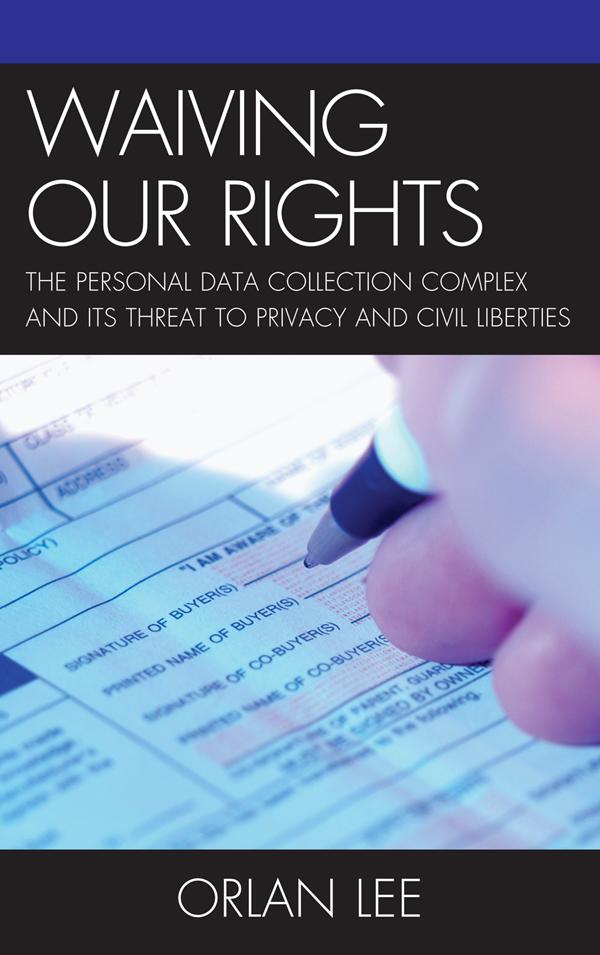
The United States is not a police state, but Congress is subject to special interests lobbying in pursuit of abusive commercial practices that leave a lot to be desired for transparency and accountability. It is illegal to data-mine personal files held by government agencies, schools and universities, or medical facilities. It is illegal to collect and publish defamatory gossip and hearsay about private citizens. But it is legal to oblige Americans to “waive” their rights to privacy and their right to sue for invasion of privacy for defamation by anonymous third-parties in order to receive essential services or apply for employment.
Americans are obliged to “waive” their rights in essentially all applications for employment, credit, housing, public utilities, telephone or mobile phone service, internet access, and even cable TV connection. The law requires “notice and consent” whenever such waivers are included in employment applications, but consumer reporting agencies have learned to use deceptive methods to avoid drawing the attention of applicants to the meaning and consequence of such language. Recent law dispenses with “notice and consent” for private-eye quasi-criminal investigations of “suspected misconduct” by an employee altogether. In effect, this bypasses "probable cause," "innocent until proven guilty," the "right to know the nature of an accusation," the "right to confront witnesses," the "rule against double jeopardy," and the "right to sue for defamation, and/or interference with employment." Orlan Lee questions the validity of any such "waivers," and seeks to alert Americans to the need to protect their fundamental rights.
Americans are obliged to “waive” their rights in essentially all applications for employment, credit, housing, public utilities, telephone or mobile phone service, internet access, and even cable TV connection. The law requires “notice and consent” whenever such waivers are included in employment applications, but consumer reporting agencies have learned to use deceptive methods to avoid drawing the attention of applicants to the meaning and consequence of such language. Recent law dispenses with “notice and consent” for private-eye quasi-criminal investigations of “suspected misconduct” by an employee altogether. In effect, this bypasses "probable cause," "innocent until proven guilty," the "right to know the nature of an accusation," the "right to confront witnesses," the "rule against double jeopardy," and the "right to sue for defamation, and/or interference with employment." Orlan Lee questions the validity of any such "waivers," and seeks to alert Americans to the need to protect their fundamental rights.
Betala smidigt med kort, Klarna, Apple Pay eller Google Pay. Är du inte nöjd har du alltid 14 dagars ångerrätt. Läs mer i våra villkor. Har du några frågor, mejla oss på hello@memmo.org.
Memmo gör det enklare att plugga – var du än är i världen. Hos oss samlar du kursböcker och smarta studieverktyg på ett och samma ställe: sammanfattningar, quiz, poddar och flashcards. Och så Ted, din studiekompis som svarar på allt du undrar. Över 50 000 studenter pluggar redan här – byggt för att du ska lära dig snabbare och stressa mindre.