
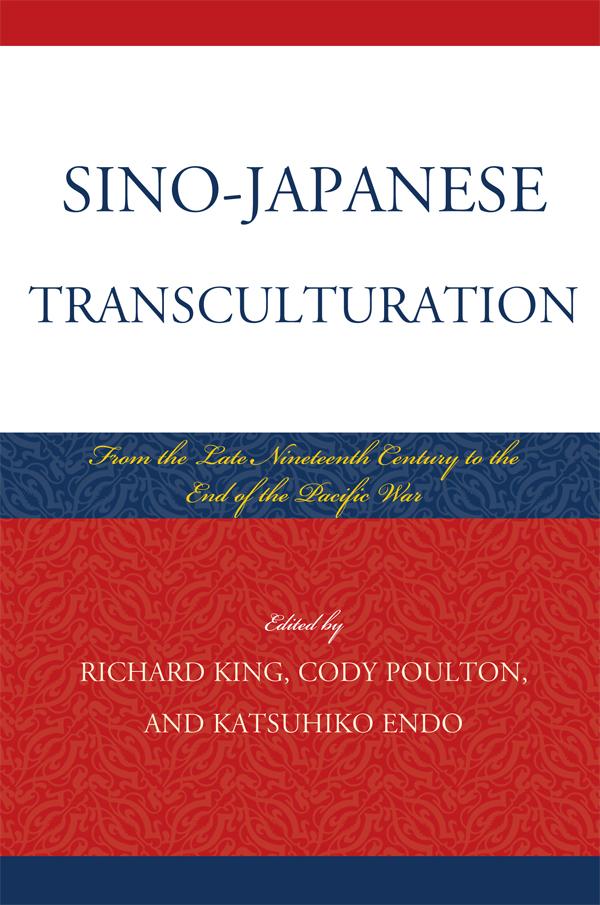
This is a multi-author work which examines the cultural dimensions of the relations between East Asia’s two great powers, China and Japan, in a period of change and turmoil, from the late nineteenth century to the end of the Second World War. This period saw Japanese invasion of China, the occupation of China’s North-east (Manchuria) and Taiwan, and war between the two nations from 1937-1945; the scars of that war are still evident in relations between the two countries today.
In their quest for modernity, the rulers and leading thinkers of China and Japan defined themselves in contradisctinction to the other, influenced both by traditional bonds of classical culture and by the influx of new Western ideas that flowed through Japan to China. The experiences of intellectual and cultural awakening in the two countries were inextricably linked, as our studies of poetry, fiction, philosophy, theatre, and popular culture demonstrate. The chapters explore this process of “transculturation” – the sharing and exchange of ideas and artistic expression – not only in Japan and China, but in the larger region which Joshua Fogel has called the “Sinosphere,” an area including Korea and parts of Southeast Asia with a shared heritage of Confucian statecraft and values underpinned by the classical Chinese language.
The authors of the chapters, who include established senior academics and younger scholars, and employ a range of disciplines and methodologies, were selected by the editors for their expertise in particular aspects of this rich and complex cultural relationship. As for the editors: Richard King and Cody Poulton are scholars and translators of Chinese literature and Japanese theatre respectively, each taking a historical and comparative perspective to the study of their subject; Katsuhiko Endo is an intellectual historian dealing with both Japan and China.
In their quest for modernity, the rulers and leading thinkers of China and Japan defined themselves in contradisctinction to the other, influenced both by traditional bonds of classical culture and by the influx of new Western ideas that flowed through Japan to China. The experiences of intellectual and cultural awakening in the two countries were inextricably linked, as our studies of poetry, fiction, philosophy, theatre, and popular culture demonstrate. The chapters explore this process of “transculturation” – the sharing and exchange of ideas and artistic expression – not only in Japan and China, but in the larger region which Joshua Fogel has called the “Sinosphere,” an area including Korea and parts of Southeast Asia with a shared heritage of Confucian statecraft and values underpinned by the classical Chinese language.
The authors of the chapters, who include established senior academics and younger scholars, and employ a range of disciplines and methodologies, were selected by the editors for their expertise in particular aspects of this rich and complex cultural relationship. As for the editors: Richard King and Cody Poulton are scholars and translators of Chinese literature and Japanese theatre respectively, each taking a historical and comparative perspective to the study of their subject; Katsuhiko Endo is an intellectual historian dealing with both Japan and China.
Sidor: 316
Kategori: Kultur-, Genus- & Postkoloniala studier
e-ISBN: 9780739171516
Fraktvikt: 1.2 kg
Skickas inom: 1-2 dagar
Betala smidigt med kort, Klarna, Apple Pay eller Google Pay. Är du inte nöjd har du alltid 14 dagars ångerrätt. Läs mer i våra villkor. Har du några frågor, mejla oss på hello@memmo.org.
Memmo gör det enklare att plugga – var du än är i världen. Hos oss samlar du kursböcker och smarta studieverktyg på ett och samma ställe: sammanfattningar, quiz, poddar och flashcards. Och så Ted, din studiekompis som svarar på allt du undrar. Över 50 000 studenter pluggar redan här – byggt för att du ska lära dig snabbare och stressa mindre.