
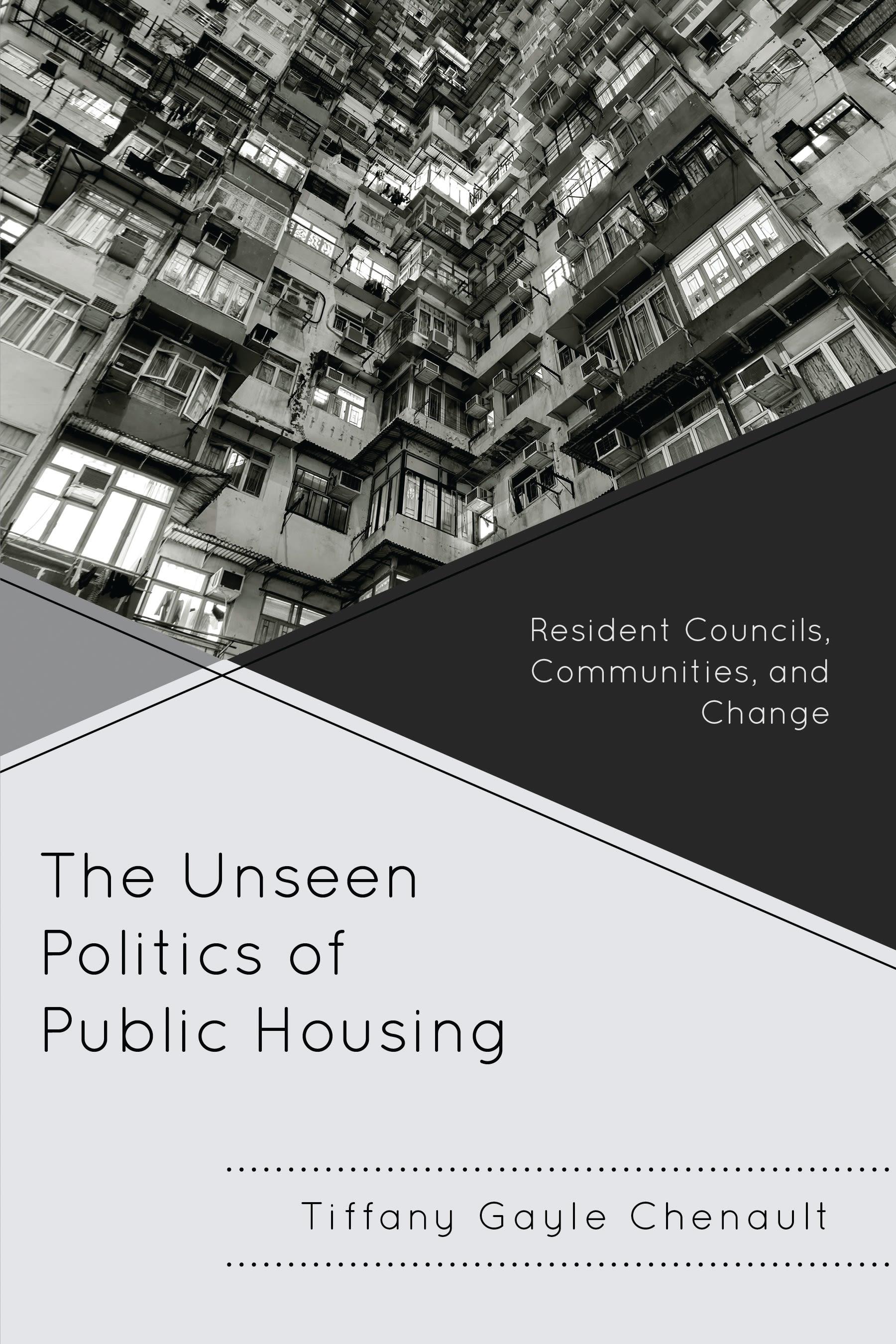
The Department of Housing and Urban Development (HUD) emphasizes the word “community” for building economic development, citizen participations, and revitalization of facilities and services in urban and rural areas. Resident Councils are one way to develop and build community among residents of public housing. Despite HUD stressing community building in public housing and investing money and policies around it, there are some resident councils that are not fulfilling the expectations of HUD.
This book is my attempt to describe and explain HUD’s expectations for the resident council as an active agent for community building and the actual practices of the resident council. I argue that policies and regulations of resident councils which exist to support the effectiveness of the resident council in creating and implementing community-building, self-sufficiency, and empowerment activities and goals in a public housing community may do more harm than good.
The Department of Housing and Urban Development invests and spends billions on Public Housing Programs (6.6 billion in 2013). The majority of the 1.2 million people who live in public housing do not live in large urban areas with thousands of people confined to a certain space. The majority of public housing units (90%) have fewer than 500 units. These smaller units and the people that live in them tend to go unnoticed.
This ethnographic case study focuses on explaining and understanding the factors and constraints that exist between HUD's expectations for the resident council as an active agent for community building and the actual practices of the resident council. To explain the disjunction—in fact, to determine if such disjunctions identified by Rivertown council members are real. Using the tenets of Critical Race Theory allows us to understand what forces—either real or imagined, structural or cultural—prevent the resident council from being an effective agent for change in the public housing community.
This book is my attempt to describe and explain HUD’s expectations for the resident council as an active agent for community building and the actual practices of the resident council. I argue that policies and regulations of resident councils which exist to support the effectiveness of the resident council in creating and implementing community-building, self-sufficiency, and empowerment activities and goals in a public housing community may do more harm than good.
The Department of Housing and Urban Development invests and spends billions on Public Housing Programs (6.6 billion in 2013). The majority of the 1.2 million people who live in public housing do not live in large urban areas with thousands of people confined to a certain space. The majority of public housing units (90%) have fewer than 500 units. These smaller units and the people that live in them tend to go unnoticed.
This ethnographic case study focuses on explaining and understanding the factors and constraints that exist between HUD's expectations for the resident council as an active agent for community building and the actual practices of the resident council. To explain the disjunction—in fact, to determine if such disjunctions identified by Rivertown council members are real. Using the tenets of Critical Race Theory allows us to understand what forces—either real or imagined, structural or cultural—prevent the resident council from being an effective agent for change in the public housing community.
Betala smidigt med kort, Klarna, Apple Pay eller Google Pay. Är du inte nöjd har du alltid 14 dagars ångerrätt. Läs mer i våra villkor. Har du några frågor, mejla oss på hello@memmo.org.
Memmo gör det enklare att plugga – var du än är i världen. Hos oss samlar du kursböcker och smarta studieverktyg på ett och samma ställe: sammanfattningar, quiz, poddar och flashcards. Och så Ted, din studiekompis som svarar på allt du undrar. Över 50 000 studenter pluggar redan här – byggt för att du ska lära dig snabbare och stressa mindre.