
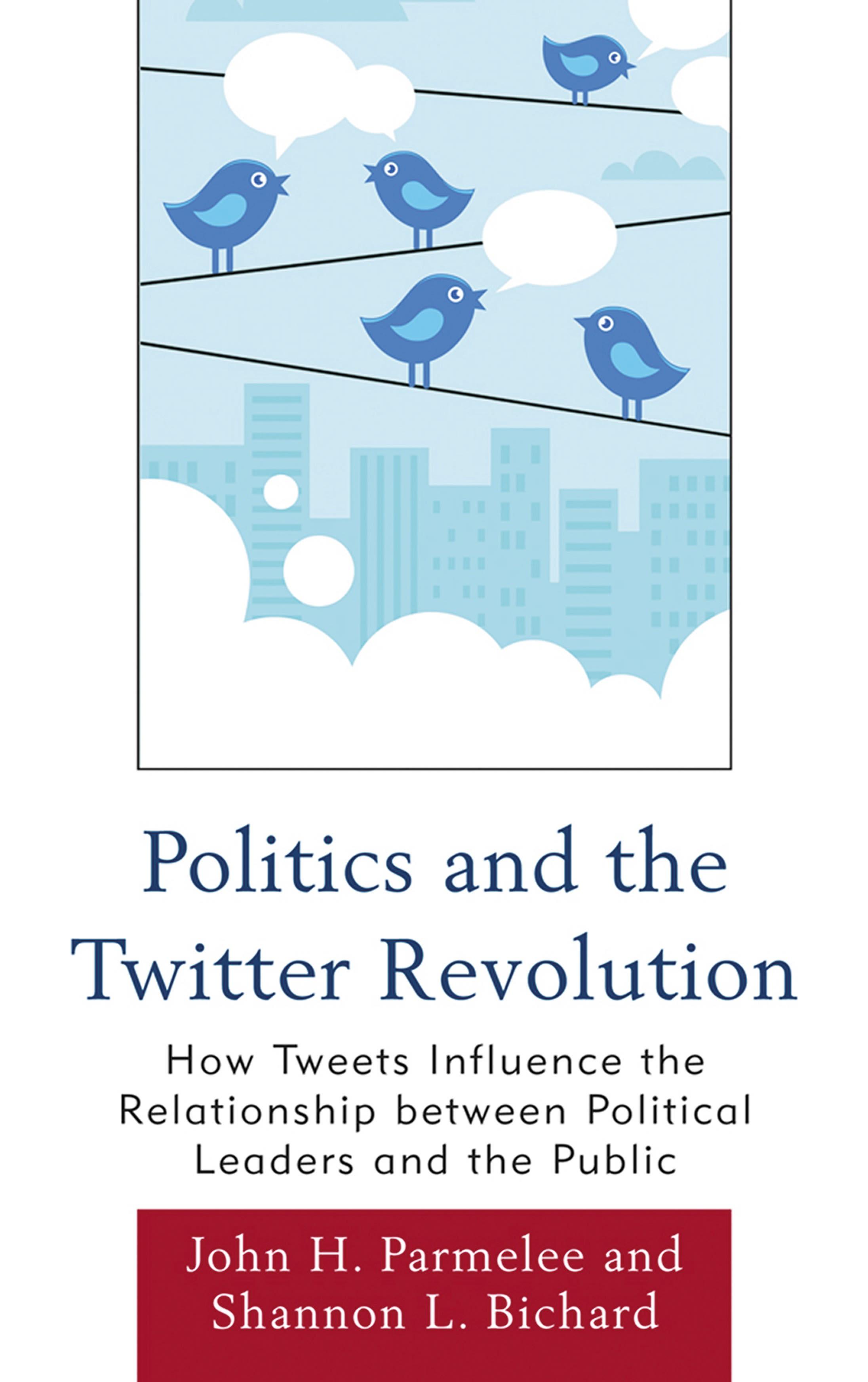
Politics and the Twitter Revolution: How Tweets Influence the Relationship between Political Leaders and the Public by John H. Parmelee and Shannon L. Bichard is the first comprehensive examination of how Twitter is used politically. Surveys and in-depth interviews with political Twitter users answer several important questions, including: Who follows the political leaders on Twitter, and why? How persuasive are political tweets? Is political Twitter use good for democracy?
These and other questions are answered from theoretical perspectives, such as uses and gratifications, word-of-mouth communication, selective exposure, innovation characteristics, and the continuity-discontinuity framework. In addition, content analysis and frame analysis illustrate how political leaders' tweets frame their policies and personalities. The findings in Politics and the Twitter Revolution show Twitter to be surprisingly influential on political discourse. Twitter has caused major changes in how people engage politically. Followers regularly take actions that are requested in leaders' tweets, and, in many cases, leaders' tweets shape followers' political views more than friends and family. Other findings raise concerns. For some, Twitter use contributes to political polarization, and there is frequently a disconnect between what followers expect from leaders on Twitter and what those leaders are giving them.
These and other questions are answered from theoretical perspectives, such as uses and gratifications, word-of-mouth communication, selective exposure, innovation characteristics, and the continuity-discontinuity framework. In addition, content analysis and frame analysis illustrate how political leaders' tweets frame their policies and personalities. The findings in Politics and the Twitter Revolution show Twitter to be surprisingly influential on political discourse. Twitter has caused major changes in how people engage politically. Followers regularly take actions that are requested in leaders' tweets, and, in many cases, leaders' tweets shape followers' political views more than friends and family. Other findings raise concerns. For some, Twitter use contributes to political polarization, and there is frequently a disconnect between what followers expect from leaders on Twitter and what those leaders are giving them.
Sidor: 282
Kategori: Statsvetenskap & Politik
e-ISBN: 9780739165027
Fraktvikt: 1.2 kg
Skickas inom: 1-2 dagar
Betala smidigt med kort, Klarna, Apple Pay eller Google Pay. Är du inte nöjd har du alltid 14 dagars ångerrätt. Läs mer i våra villkor. Har du några frågor, mejla oss på hello@memmo.org.
Memmo gör det enklare att plugga – var du än är i världen. Hos oss samlar du kursböcker och smarta studieverktyg på ett och samma ställe: sammanfattningar, quiz, poddar och flashcards. Och så Ted, din studiekompis som svarar på allt du undrar. Över 50 000 studenter pluggar redan här – byggt för att du ska lära dig snabbare och stressa mindre.