
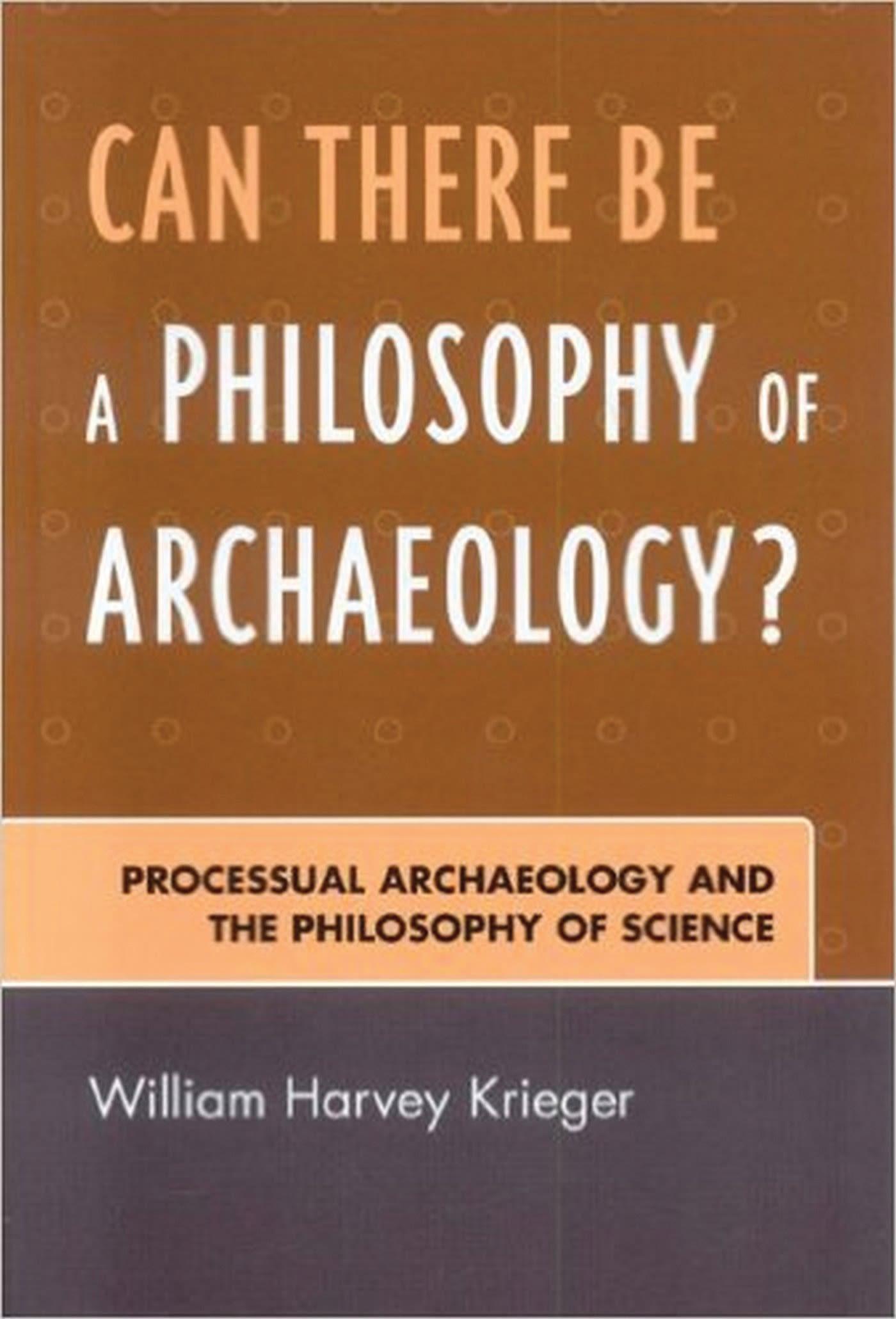
Can There Be a Philosophy of Archaeology? provides a historical and philosophical analysis of the rise and fall of the philosophical movement know as logical positivism, focusing on the effect of that movement on the budding science of archaeology. Significant problems resulted from the grafting of logical positivism onto what became known as processual, or new archaeology, and as a result of this failure, archaeologists distanced themselves from philosophers of science, believing that archaeology would be best served by a return to the dirt. By means of a thorough analysis of the real reasons for failures of logical empiricism and the new archaeology, as well as a series of archaeological case studies, Krieger shows the need for the resumption of dialogue and collaboration between the two groups. In an age where philosophers of science are just beginning to look beyond the standard examples of scientific practice, this book demonstrates that archaeological science can hold its own with other sciences and will be of interest to archaeologists and philosophers of science alike.
Betala smidigt med kort, Klarna, Apple Pay eller Google Pay. Är du inte nöjd har du alltid 14 dagars ångerrätt. Läs mer i våra villkor. Har du några frågor, mejla oss på hello@memmo.org.
Memmo gör det enklare att plugga – var du än är i världen. Hos oss samlar du kursböcker och smarta studieverktyg på ett och samma ställe: sammanfattningar, quiz, poddar och flashcards. Och så Ted, din studiekompis som svarar på allt du undrar. Över 50 000 studenter pluggar redan här – byggt för att du ska lära dig snabbare och stressa mindre.