
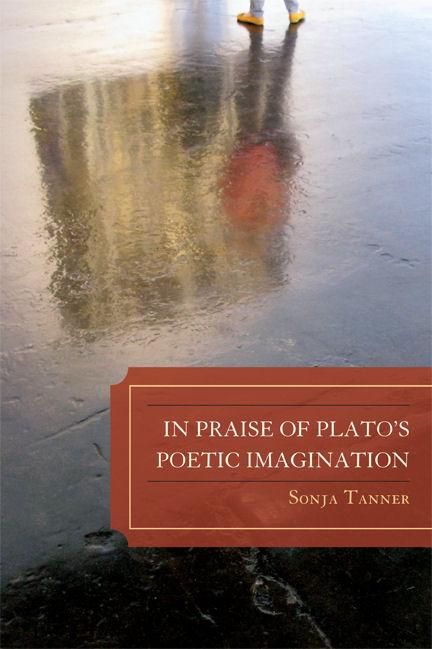
Plato has often been read as denigrating the cognitive and ethical value of poetry. In his dialogues, the faculty that corresponds to the poetic—the imagination—is located at the lowest level of human intelligence, and so it is furthest from true understanding. Simultaneously, the Platonic dialogues violate Plato’s own alleged prohibitions against quoting and imitating poets, and much of the writing in the dialogues is poetic. All too often, the voluminous literature on Plato dismisses Plato’s poetic formulations as merely the unintended contradictions of an otherwise meticulous author.
In Praise of Plato’s Poetic Imagination asks whether this ubiquitous reading misses something truly significant in Plato’s understanding of the cognitive and ethical dimensions of human existence. Throughout the dialogues, Plato formulates ideas so precisely, utilizing carefully crafted images and structures, that we must question whether his flagrant and performative poetics can be mere mistakes, and inquire into how the poetic and creative arts contribute to true understanding. This book approaches the latter question by analyzing the role of the imagination in Platonic dialogues. It argues that critiquing poetry by poetic means, just as arguing against mimêsis mimetically in the Republic or writing against the written word in the Phaedrus, constitute performative contradictions that bear significant philosophical meaning on further examination. The book suggests that the elusive examples of dialectic referred to in the divided line are the dialogues themselves—the putting into practice of ethical ideals. If so, the role of the imagination is to be sought in the unfolding of the dialogues themselves, not simply in what is said, but also in what takes place within the dialogues.
In Praise of Plato’s Poetic Imagination asks whether this ubiquitous reading misses something truly significant in Plato’s understanding of the cognitive and ethical dimensions of human existence. Throughout the dialogues, Plato formulates ideas so precisely, utilizing carefully crafted images and structures, that we must question whether his flagrant and performative poetics can be mere mistakes, and inquire into how the poetic and creative arts contribute to true understanding. This book approaches the latter question by analyzing the role of the imagination in Platonic dialogues. It argues that critiquing poetry by poetic means, just as arguing against mimêsis mimetically in the Republic or writing against the written word in the Phaedrus, constitute performative contradictions that bear significant philosophical meaning on further examination. The book suggests that the elusive examples of dialectic referred to in the divided line are the dialogues themselves—the putting into practice of ethical ideals. If so, the role of the imagination is to be sought in the unfolding of the dialogues themselves, not simply in what is said, but also in what takes place within the dialogues.
Betala smidigt med kort, Klarna, Apple Pay eller Google Pay. Är du inte nöjd har du alltid 14 dagars ångerrätt. Läs mer i våra villkor. Har du några frågor, mejla oss på hello@memmo.org.
Memmo gör det enklare att plugga – var du än är i världen. Hos oss samlar du kursböcker och smarta studieverktyg på ett och samma ställe: sammanfattningar, quiz, poddar och flashcards. Och så Ted, din studiekompis som svarar på allt du undrar. Över 50 000 studenter pluggar redan här – byggt för att du ska lära dig snabbare och stressa mindre.