
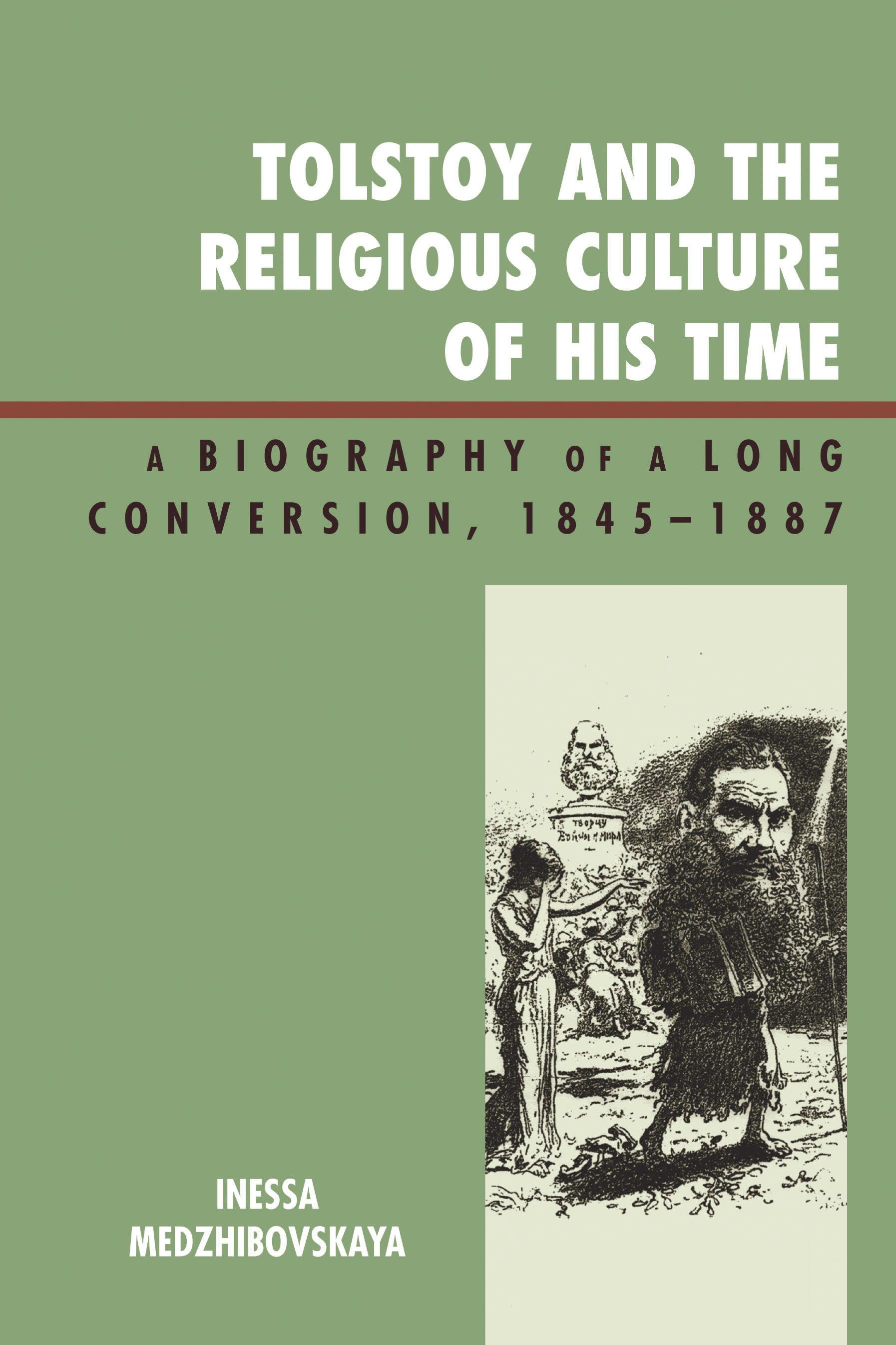
The first book-length study on the subject in any language, Tolstoy and the Religious Culture of His Time treats Tolstoy's experience as a massive philosophical and religious project rather than a crisis-laden tragedy. Inessa Medzhibovskaya explains the evolution of Tolstoy's religious outlook based on his ongoing dialogue with the tradition of conversion in Europe and Russia, as well as on the demands of his own heart, mind, and spirit. The author contextualizes Tolstoy's conversion, comparing his pattern of religious conversion with that of other notable religious converts-Saint Paul, Saint Augustine, Luther, Pascal, Rousseau-as well with that of Tolstoy's countrymen-Pushkin, Gogol, Chaadaev, Stankevich, Belinsky, Herzen, and Dostoevsky.
Stressing the importance of the religious culture of his time for Tolstoy, this study investigates the nineteenth century debates that inspired and repelled Tolstoy as he weighed arguments for or against faith in his dialogues with the culture of his time, covering widely differing fields and disciplines of experimental knowledge. The author considers German Romantic philosophy, the natural sciences, pragmatist religious solutions, theories of social progress and evolution, and the historical school of Christianity. Medzhibovskaya stresses the fact that influential intellectual currents were as important to Tolstoy as believers and nonbelievers were from and beyond his immediate environment.
The author argues that, in this sense, Tolstoy's conversion emerges as deeply intertextual, and this surprising discovery should not diminish our trust in Tolstoy's sincerity during his religious evolution, which occurred both spontaneously as well as deliberately. The polyphony of discreet spiritual moments that Tolstoy created by fusing in his narratives of conversion religious and artistic realms is arguably his greatest contribution to spiritual autobiography.
Stressing the importance of the religious culture of his time for Tolstoy, this study investigates the nineteenth century debates that inspired and repelled Tolstoy as he weighed arguments for or against faith in his dialogues with the culture of his time, covering widely differing fields and disciplines of experimental knowledge. The author considers German Romantic philosophy, the natural sciences, pragmatist religious solutions, theories of social progress and evolution, and the historical school of Christianity. Medzhibovskaya stresses the fact that influential intellectual currents were as important to Tolstoy as believers and nonbelievers were from and beyond his immediate environment.
The author argues that, in this sense, Tolstoy's conversion emerges as deeply intertextual, and this surprising discovery should not diminish our trust in Tolstoy's sincerity during his religious evolution, which occurred both spontaneously as well as deliberately. The polyphony of discreet spiritual moments that Tolstoy created by fusing in his narratives of conversion religious and artistic realms is arguably his greatest contribution to spiritual autobiography.
Betala smidigt med kort, Klarna, Apple Pay eller Google Pay. Är du inte nöjd har du alltid 14 dagars ångerrätt. Läs mer i våra villkor. Har du några frågor, mejla oss på hello@memmo.org.
Memmo gör det enklare att plugga – var du än är i världen. Hos oss samlar du kursböcker och smarta studieverktyg på ett och samma ställe: sammanfattningar, quiz, poddar och flashcards. Och så Ted, din studiekompis som svarar på allt du undrar. Över 50 000 studenter pluggar redan här – byggt för att du ska lära dig snabbare och stressa mindre.