
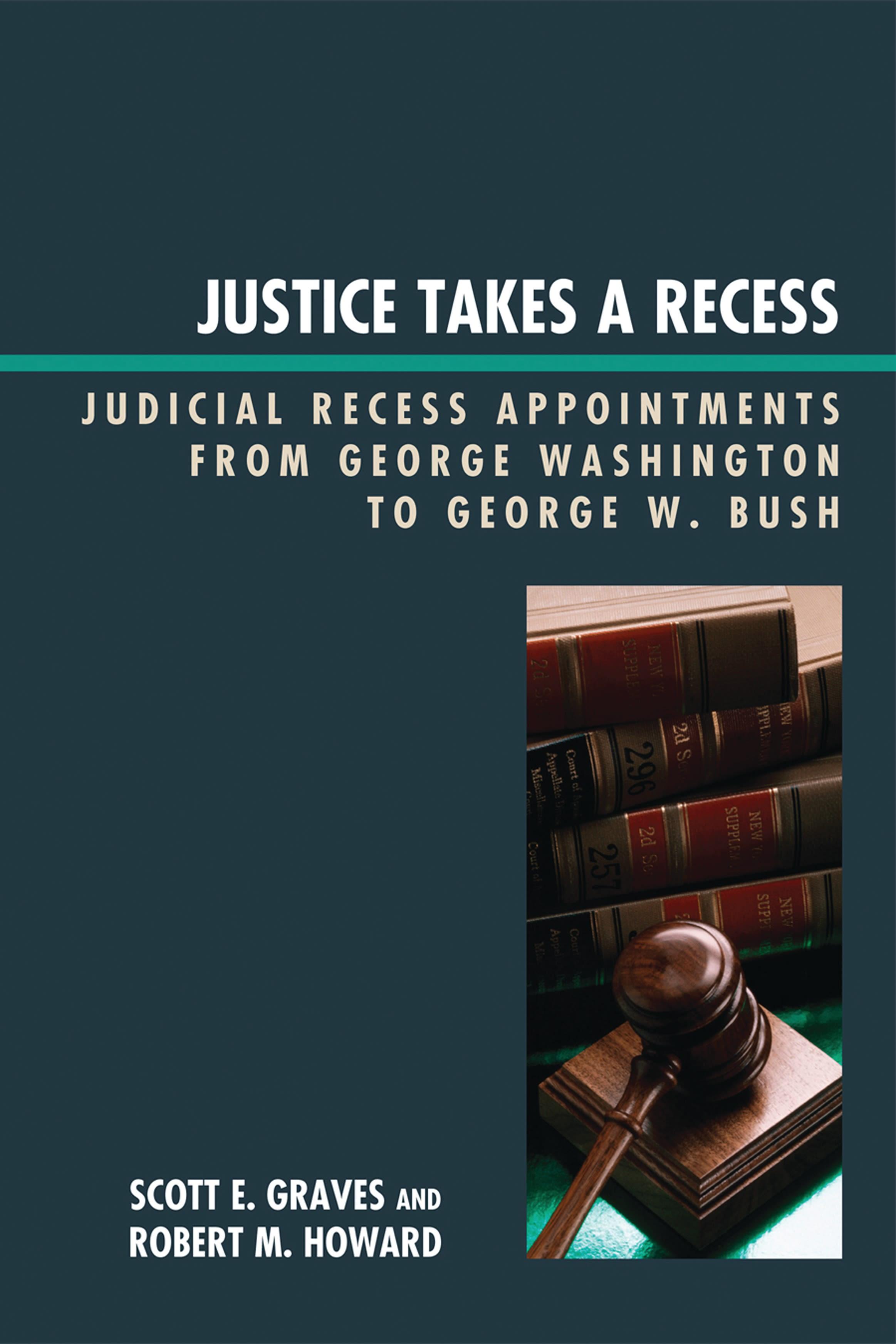
The Constitution allows the president to “fill up all Vacancies that may happen during the Recess of the Senate, by granting Commissions which shall expire at the End of their next Session.” In Justice Takes a Recess, Scott E. Graves and Robert M. Howard address how presidents have used recess appointments over time and whether the independence of judicial recess appointees is compromised. They argue that these appointments can upset the separation of powers envisioned by the Framers, shifting power away from one branch of government and toward another.
Examining every judicial recess appointment from 1789 to 2005, the authors discover that presidents are conditionally strategic when they unilaterally appoint federal judges during Senate recesses. Such appointments were made cautiously for most of the twentieth century, leading to a virtual moratorium for several decades, until three recent recess appointments to the courts in the face of Senate obstruction revived the controversy. These appointments suggest the beginning of a more assertive use of recess appointments in the increasingly politicized activity of staffing the federal courts. The authors argue that the recess appointment clause, as it pertains to the judiciary, is no longer necessary or desirable. The strategic use of such appointments by strong presidents to shift judicial ideology, combined with the lack of independence exhibited by judicial recess appointments, results in recess power that threatens constitutional features of the judicial branch.
Examining every judicial recess appointment from 1789 to 2005, the authors discover that presidents are conditionally strategic when they unilaterally appoint federal judges during Senate recesses. Such appointments were made cautiously for most of the twentieth century, leading to a virtual moratorium for several decades, until three recent recess appointments to the courts in the face of Senate obstruction revived the controversy. These appointments suggest the beginning of a more assertive use of recess appointments in the increasingly politicized activity of staffing the federal courts. The authors argue that the recess appointment clause, as it pertains to the judiciary, is no longer necessary or desirable. The strategic use of such appointments by strong presidents to shift judicial ideology, combined with the lack of independence exhibited by judicial recess appointments, results in recess power that threatens constitutional features of the judicial branch.
Betala smidigt med kort, Klarna, Apple Pay eller Google Pay. Är du inte nöjd har du alltid 14 dagars ångerrätt. Läs mer i våra villkor. Har du några frågor, mejla oss på hello@memmo.org.
Memmo gör det enklare att plugga – var du än är i världen. Hos oss samlar du kursböcker och smarta studieverktyg på ett och samma ställe: sammanfattningar, quiz, poddar och flashcards. Och så Ted, din studiekompis som svarar på allt du undrar. Över 50 000 studenter pluggar redan här – byggt för att du ska lära dig snabbare och stressa mindre.