
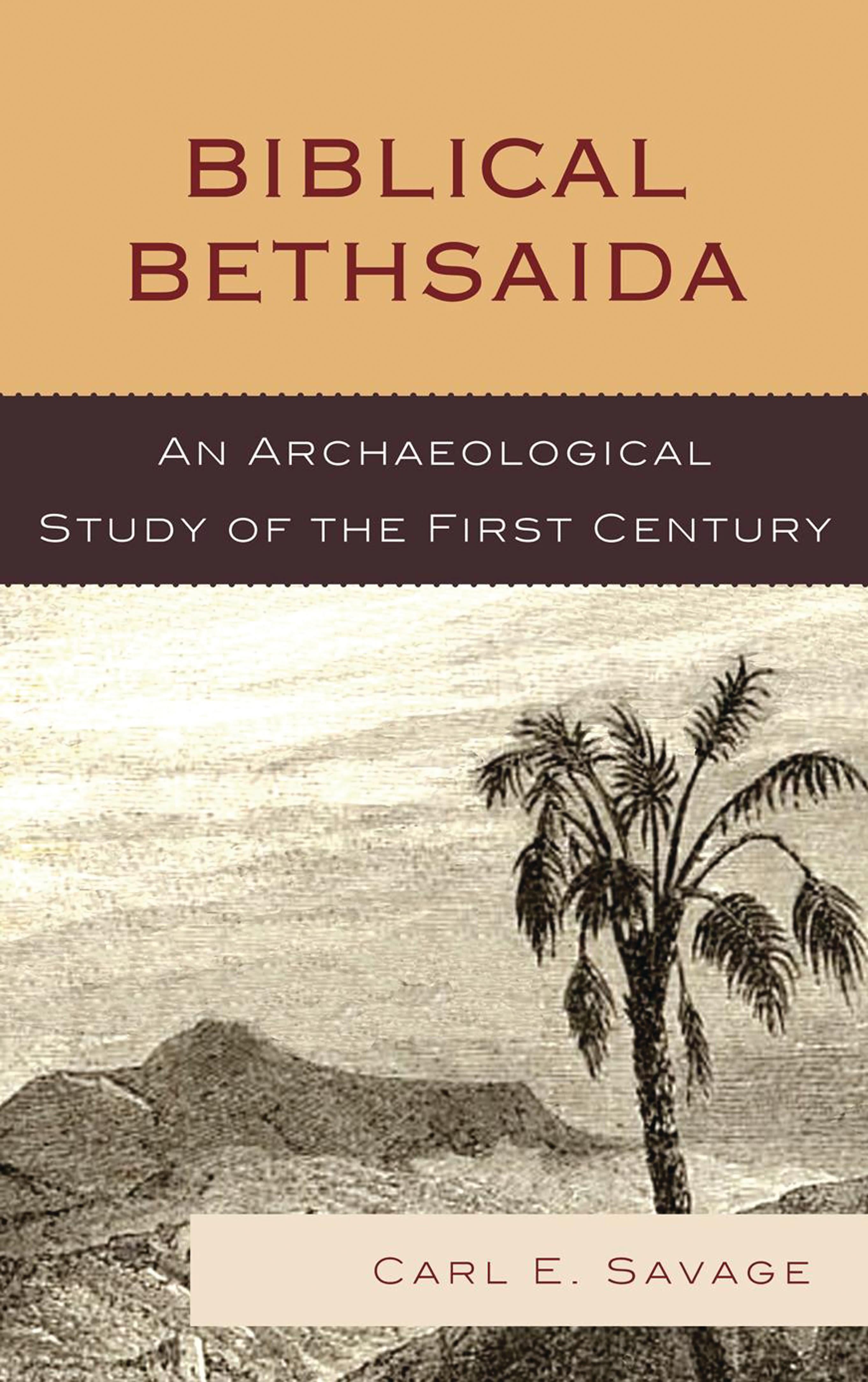
In his illuminating, well-researched book examining the site of Et-Tell, also known as Bethsaida, Carl E. Savage explores archaeological evidence to offer readers a portrait of the religious beliefs and practices of the community living near the north shore of the Sea of Galilee during the first century CE. In the study of the cultural and social matrix of the first century in the Galilee, scholars have commonly prioritized written sources over archaeological evidence because written sources seem to contribute more directly to an understanding of the religious beliefs and practices of a community. However, there exist many competing views of the landscape during that time due to the varying interpretations of the textual sources. Using archaeological data from Bethsaida itself, Savage investigates the material practices of Bethsaida's ancient inhabitants, describing these practices as significant indicators of their sense of place both ideologically and geographically. He evaluates the historical plausibility of various social reconstructions for the region, and finds that the image that emerges of first-century Bethsaida is one similar to those of other Jewish communities in the Galilee.
Betala smidigt med kort, Klarna, Apple Pay eller Google Pay. Är du inte nöjd har du alltid 14 dagars ångerrätt. Läs mer i våra villkor. Har du några frågor, mejla oss på hello@memmo.org.
Memmo gör det enklare att plugga – var du än är i världen. Hos oss samlar du kursböcker och smarta studieverktyg på ett och samma ställe: sammanfattningar, quiz, poddar och flashcards. Och så Ted, din studiekompis som svarar på allt du undrar. Över 50 000 studenter pluggar redan här – byggt för att du ska lära dig snabbare och stressa mindre.