
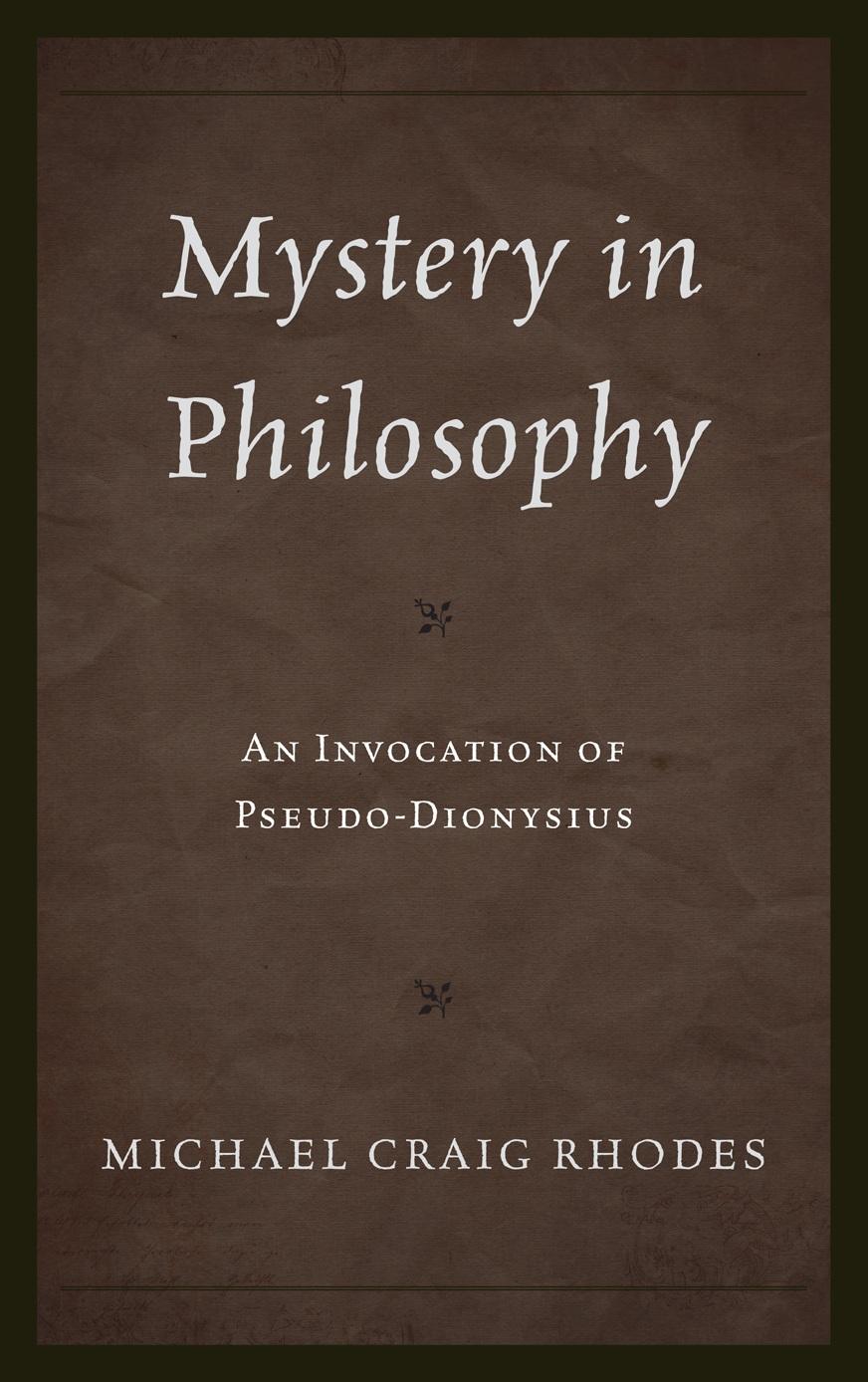
Typically, mystery does not receive much attention in philosophy. Although Heidegger and other key philosophers have made a place for mystery in philosophy, many find such philosophizing suspect and unconvincing. As a general rule, contemporary philosophers have taken a different approach, and, thus, there has been very little discussion of mystery in philosophy. As a study of mystery in philosophy, this book is therefore somewhat unique. Moreover, it is also distinctive in the way it approaches the subject, tuning to an unpopular figure—Dionysius the Areopagite (c. 500)—in contemporary philosophy in effort to make connections between that form of thought and various claims and indications of mystery. Thus, the book is unconventional in terms of both its subject matter and its methodology.
Betala smidigt med kort, Klarna, Apple Pay eller Google Pay. Är du inte nöjd har du alltid 14 dagars ångerrätt. Läs mer i våra villkor. Har du några frågor, mejla oss på hello@memmo.org.
Memmo gör det enklare att plugga – var du än är i världen. Hos oss samlar du kursböcker och smarta studieverktyg på ett och samma ställe: sammanfattningar, quiz, poddar och flashcards. Och så Ted, din studiekompis som svarar på allt du undrar. Över 50 000 studenter pluggar redan här – byggt för att du ska lära dig snabbare och stressa mindre.