
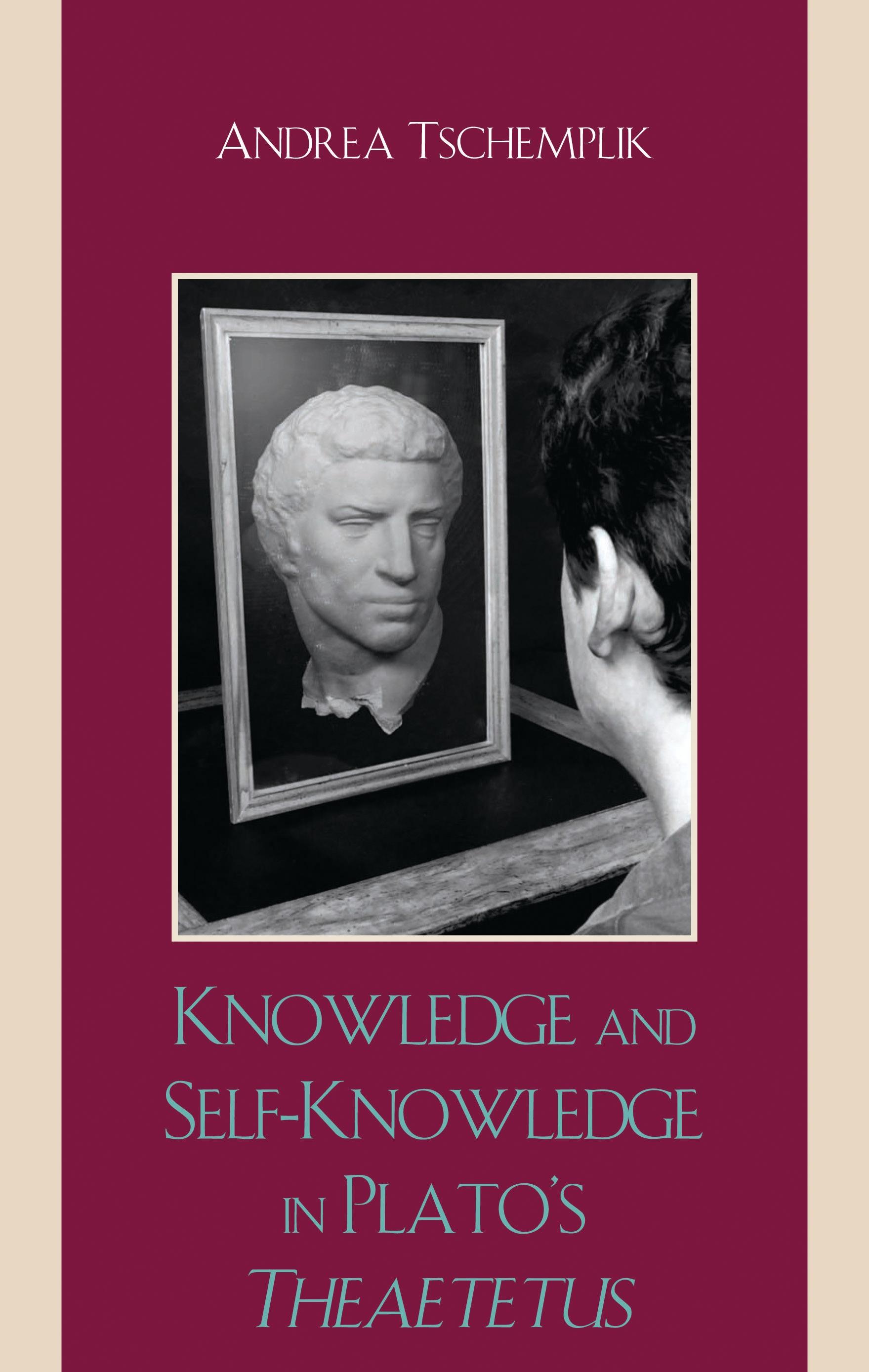
Knowledge and Self-Knowledge in Plato's Theaetetus advances a new explanation for the apparent failure of the Theaetetus to come to a satisfactory conclusion about the definition of knowledge. Tschemplik argues that understanding this aporetic dialogue in light of the fact that it was conducted with two noted mathematicians shows that for Plato, mathematics was not the paradigm for philosophy. She points out that, although mathematics is clearly an important part of the philosopher's training, as the educational outline of the Republic makes clear, the point on which the mathematician falls short is the central role that self-knowledge plays in philosophical investigation. Theaetetus betrays this deficiency and is led by Socrates to an understanding of the benefits of self-knowledge understood as the knowledge of ignorance. Tschemplik concludes that it is the absence of self-knowledge in the Theaetetus which leads to its closing impasse regarding knowledge.
This book will be of interest to scholars and graduate students in the history of philosophy with a special interest in ancient philosophy, and will also be accessible to upper-level undergraduates in ancient philosophy.
This book will be of interest to scholars and graduate students in the history of philosophy with a special interest in ancient philosophy, and will also be accessible to upper-level undergraduates in ancient philosophy.
Betala smidigt med kort, Klarna, Apple Pay eller Google Pay. Är du inte nöjd har du alltid 14 dagars ångerrätt. Läs mer i våra villkor. Har du några frågor, mejla oss på hello@memmo.org.
Memmo gör det enklare att plugga – var du än är i världen. Hos oss samlar du kursböcker och smarta studieverktyg på ett och samma ställe: sammanfattningar, quiz, poddar och flashcards. Och så Ted, din studiekompis som svarar på allt du undrar. Över 50 000 studenter pluggar redan här – byggt för att du ska lära dig snabbare och stressa mindre.