
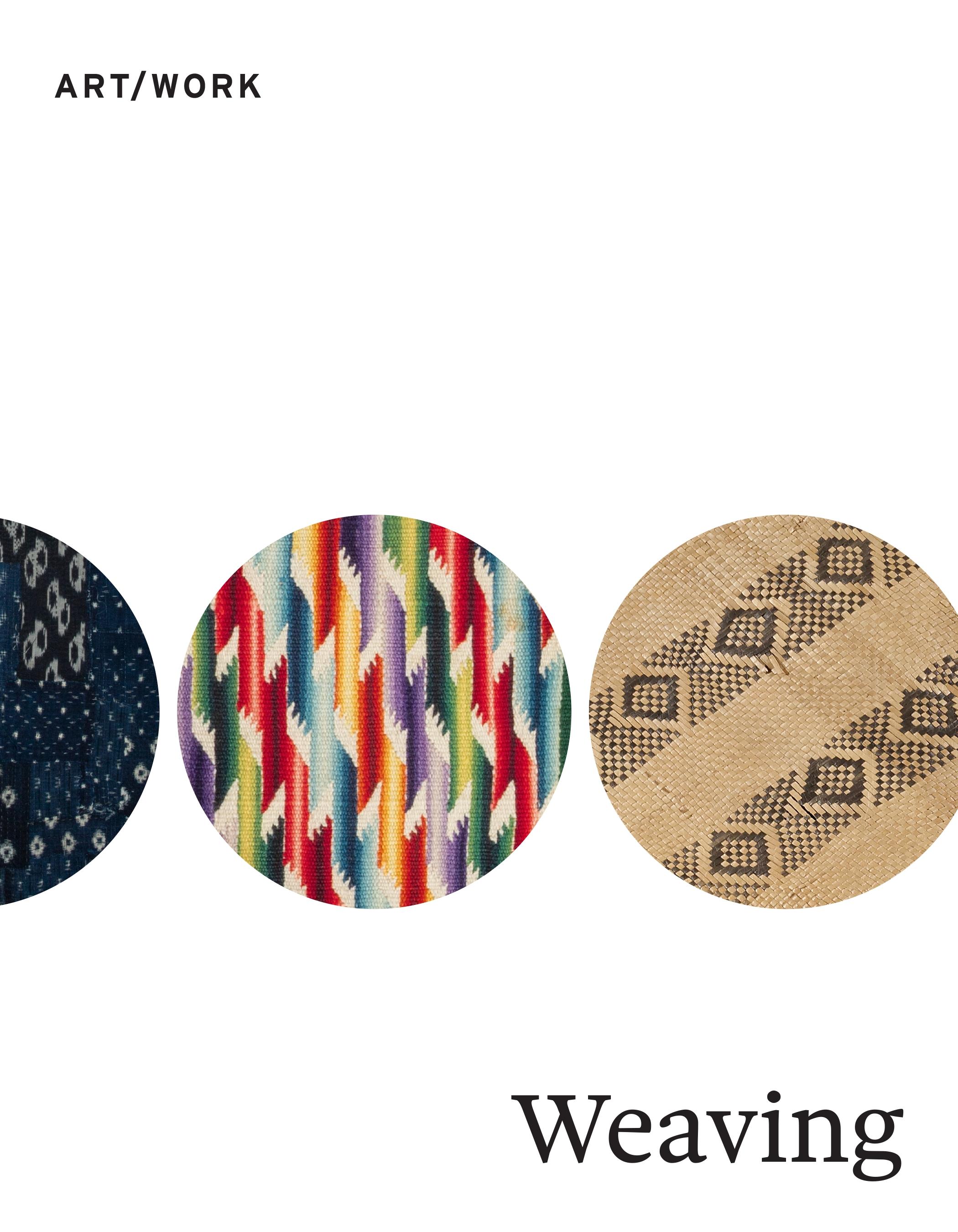
Weaving
A beautifully illustrated look at how weaving has influenced art, industry, and society worldwide
Weaving is one of humanity’s oldest technologies and remains central to our global economies. Yet because of the fragility of textiles and their association with women’s labor and craft, they have often been marginalized in art history. From the early-modern Andes to the contemporary artist’s studio, weaving has shaped artistic practice and raised important questions for conservators and museums responsible for preserving these delicate materials.
At its core, weaving is an act of material transformation in which discrete threads are organized into coherent cloth. This book brings together some of today’s leading conservationists and art historians to examines this process, highlighting the structural principles that underlie an art often assumed to be intuitive. The contributors explore how weaving reshaped material production and social life across cultures and historical periods, creating networks of skilled makers and new forms of exchange and shared knowledge.
Taking readers from the human labor of the handloom to the mechanized production of the industrial age, Weaving demonstrates how a practice at the intersection of art, science, and community has shaped social, technological, and economic histories around the globe.
Betala smidigt med kort, Klarna, Apple Pay eller Google Pay. Är du inte nöjd har du alltid 14 dagars ångerrätt. Läs mer i våra villkor. Har du några frågor, mejla oss på hello@memmo.org.
Memmo gör det enklare att plugga – var du än är i världen. Hos oss samlar du kursböcker och smarta studieverktyg på ett och samma ställe: sammanfattningar, quiz, poddar och flashcards. Och så Ted, din studiekompis som svarar på allt du undrar. Över 75 000 studenter pluggar redan här – byggt för att du ska lära dig snabbare och stressa mindre.