
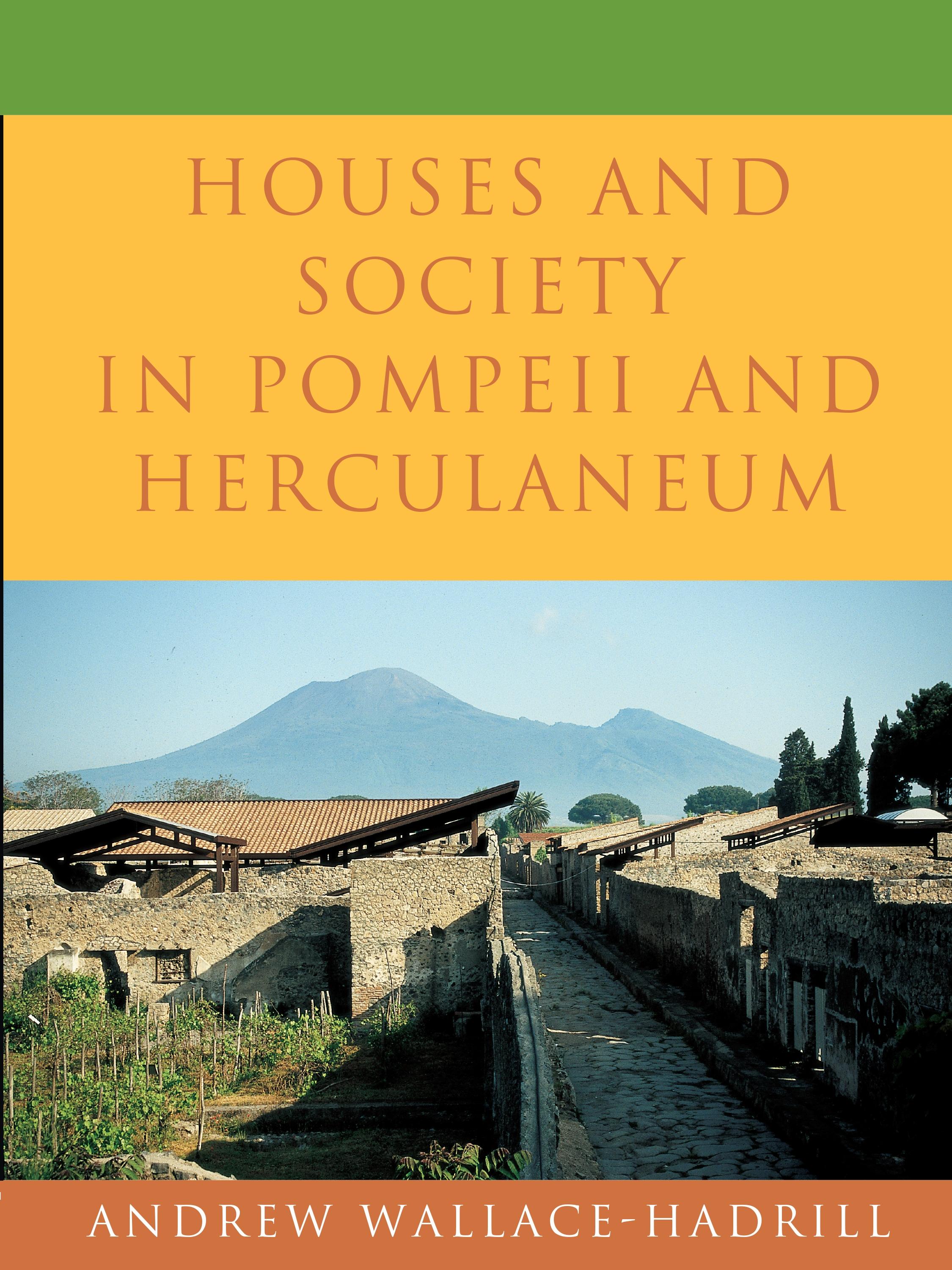
Few sources reveal the life of the ancient Romans as vividly as do the houses preserved by the eruption of Vesuvius. Wealthy Romans lavished resources on shaping their surroundings to impress their crowds of visitors. The fashions they set were taken up and imitated by ordinary citizens. In this illustrated book, Andrew Wallace-Hadrill explores the rich potential of the houses of Pompeii and Herculaneum to offer new insights into Roman social life. Exposing misconceptions derived from contemporary culture, he shows the close interconnection of spheres we take as discrete: public and private, family and outsiders, work and leisure.
Combining archaeological evidence with Roman texts and comparative material from other cultures, Wallace-Hadrill raises a range of new questions. How did the organization of space and the use of decoration help to structure social encounters between owner and visitor, man and woman, master and slave? What sort of "households" did the inhabitants of the Roman house form? How did the world of work relate to that of entertainment and leisure? How widely did the luxuries of the rich spread among the houses of craftsmen and shopkeepers? Through analysis of the remains of over two hundred houses, Wallace-Hadrill reveals the remarkably dynamic social environment of early imperial Italy, and the vital part that houses came to play in defining what it meant "to live as a Roman."
Betala smidigt med kort, Klarna, Apple Pay eller Google Pay. Är du inte nöjd har du alltid 14 dagars ångerrätt. Läs mer i våra villkor. Har du några frågor, mejla oss på hello@memmo.org.
Memmo gör det enklare att plugga – var du än är i världen. Hos oss samlar du kursböcker och smarta studieverktyg på ett och samma ställe: sammanfattningar, quiz, poddar och flashcards. Och så Ted, din studiekompis som svarar på allt du undrar. Över 50 000 studenter pluggar redan här – byggt för att du ska lära dig snabbare och stressa mindre.