
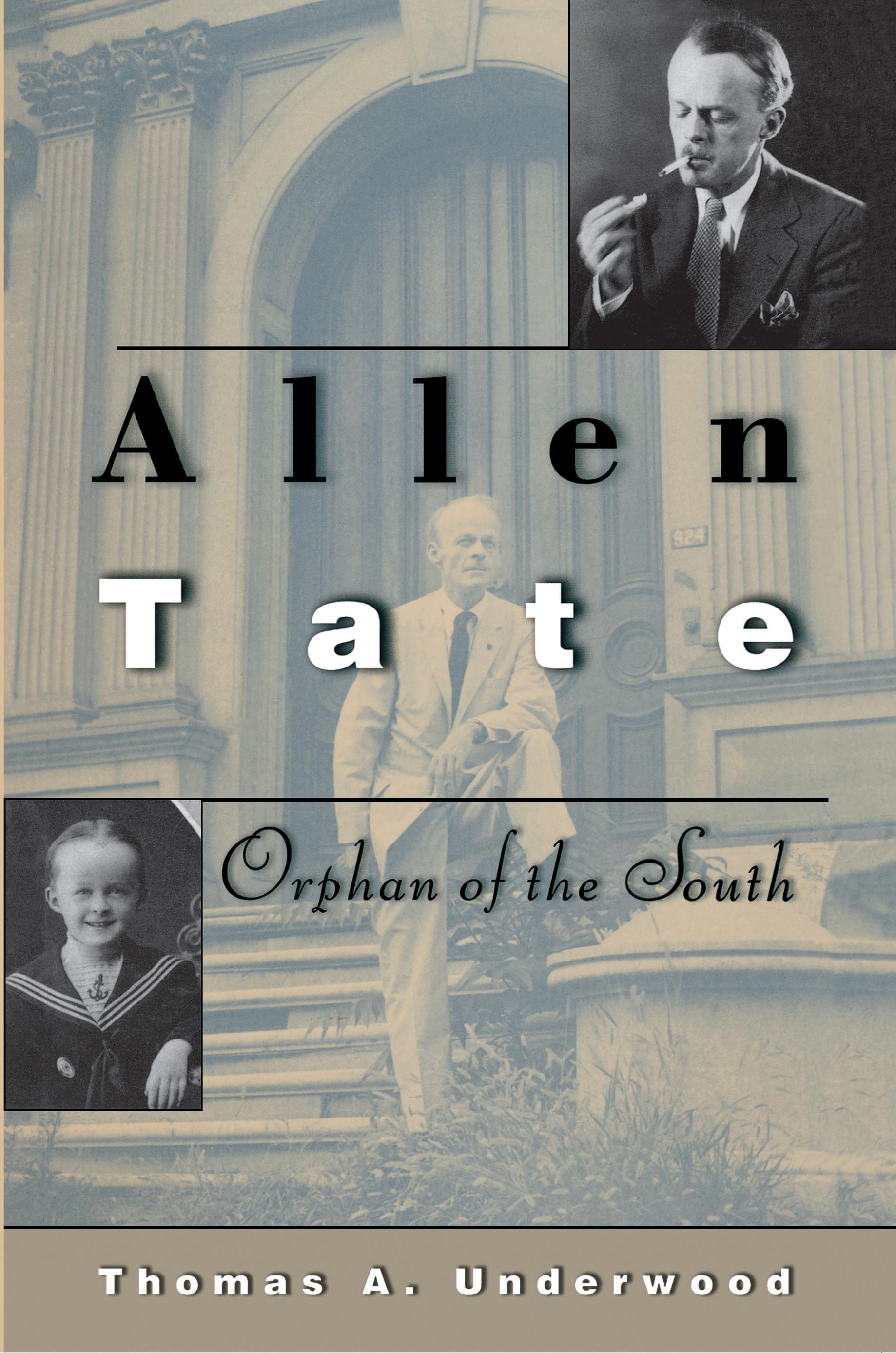
Despite his celebrity and his fame, a series of literary feuds and the huge volume of sources have, until now, precluded a satisfying biography of Allen Tate. Anyone interested in the literature and history of the American South, or in modern letters, will be fascinated by his life. Poetry readers recognize Tate, whom T. S. Eliot once called the best poet writing in America, as the author of some of the twentieth century's most powerful modernist verse. Others know him as a founder of The Fugitive, the first significant poetry journal to emerge from the South. Tate joined William Faulkner and others in launching what came to be known as the Southern Literary Renaissance. In 1930, he became a leader of the Southern Agrarian movement, perhaps America's final potent critique of industrial capitalism. By 1938, Tate had departed politics and written The Fathers, a critically acclaimed novel about the dissolution of the antebellum South. He went on to earn almost every honor available to an American poet. His fatherly mentoring of younger poets, from Robert Penn Warren to Robert Lowell, and of southern novelists--including his first wife, Caroline Gordon--elicited as much rebellion as it did loyalty.
Long-awaited and based on the author's unprecedented access to Tate's personal papers and surviving relatives, Orphan of the South brings Tate to 1938. It explores his attempt, first through politics and then through art, to reconcile his fierce talent and ambition with the painful history of his family and of the South.
Tate was subjected to, and also perpetuated, fictional interpretations of his ancestry. He alternately abandoned and championed Southern culture. Viewing himself as an orphan from a region where family history is identity, he developed a curious blend of spiritual loneliness and ideological assuredness. His greatest challenge was transforming his troubled genealogy into a meaningful statement about himself and Southern culture as a whole. It was this problem that consumed Tate for the first half of his life, the years recorded here.
This portrait of a man who both made and endured American literary history depicts the South through the story of one of its treasured, ambivalent, and sometimes wayward sons. Readers will gain a fertile understanding of the Southern upbringing, education, and literary battles that produced the brilliant poet who was Allen Tate.
Betala smidigt med kort, Klarna, Apple Pay eller Google Pay. Är du inte nöjd har du alltid 14 dagars ångerrätt. Läs mer i våra villkor. Har du några frågor, mejla oss på hello@memmo.org.
Memmo gör det enklare att plugga – var du än är i världen. Hos oss samlar du kursböcker och smarta studieverktyg på ett och samma ställe: sammanfattningar, quiz, poddar och flashcards. Och så Ted, din studiekompis som svarar på allt du undrar. Över 75 000 studenter pluggar redan här – byggt för att du ska lära dig snabbare och stressa mindre.