
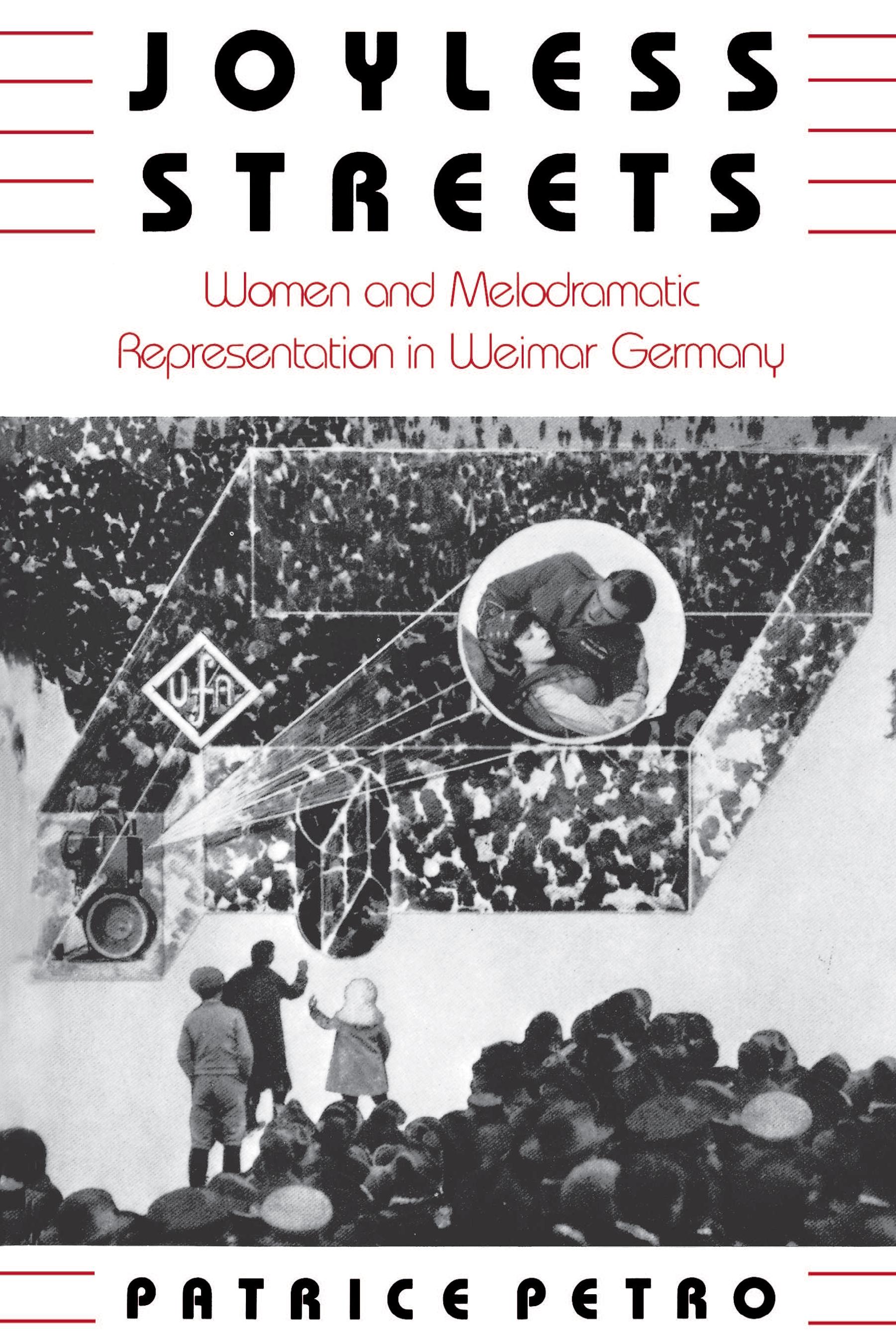
Patrice Petro challenges the conventional assessment of German film history, which sees classical films as responding solely to male anxieties and fears. Exploring the address made to women in melodramatic films and in popular illustrated magazines, she shows how Weimar Germany had a commercially viable female audience, fascinated with looking at images that called traditional representations of gender into question.
Interdisciplinary in her approach, Petro interweaves archival research with recent theoretical debates to offer not merely another view of the Weimar cinema but also another way of looking at Weimar film culture. Women's modernity, she suggests, was not the same as men's modernism, and the image of the city street in film and photojournalism reveals how women responded differently from men to the political, economic, and psychic upheaval of their times.
Betala smidigt med kort, Klarna, Apple Pay eller Google Pay. Är du inte nöjd har du alltid 14 dagars ångerrätt. Läs mer i våra villkor. Har du några frågor, mejla oss på hello@memmo.org.
Memmo gör det enklare att plugga – var du än är i världen. Hos oss samlar du kursböcker och smarta studieverktyg på ett och samma ställe: sammanfattningar, quiz, poddar och flashcards. Och så Ted, din studiekompis som svarar på allt du undrar. Över 50 000 studenter pluggar redan här – byggt för att du ska lära dig snabbare och stressa mindre.