
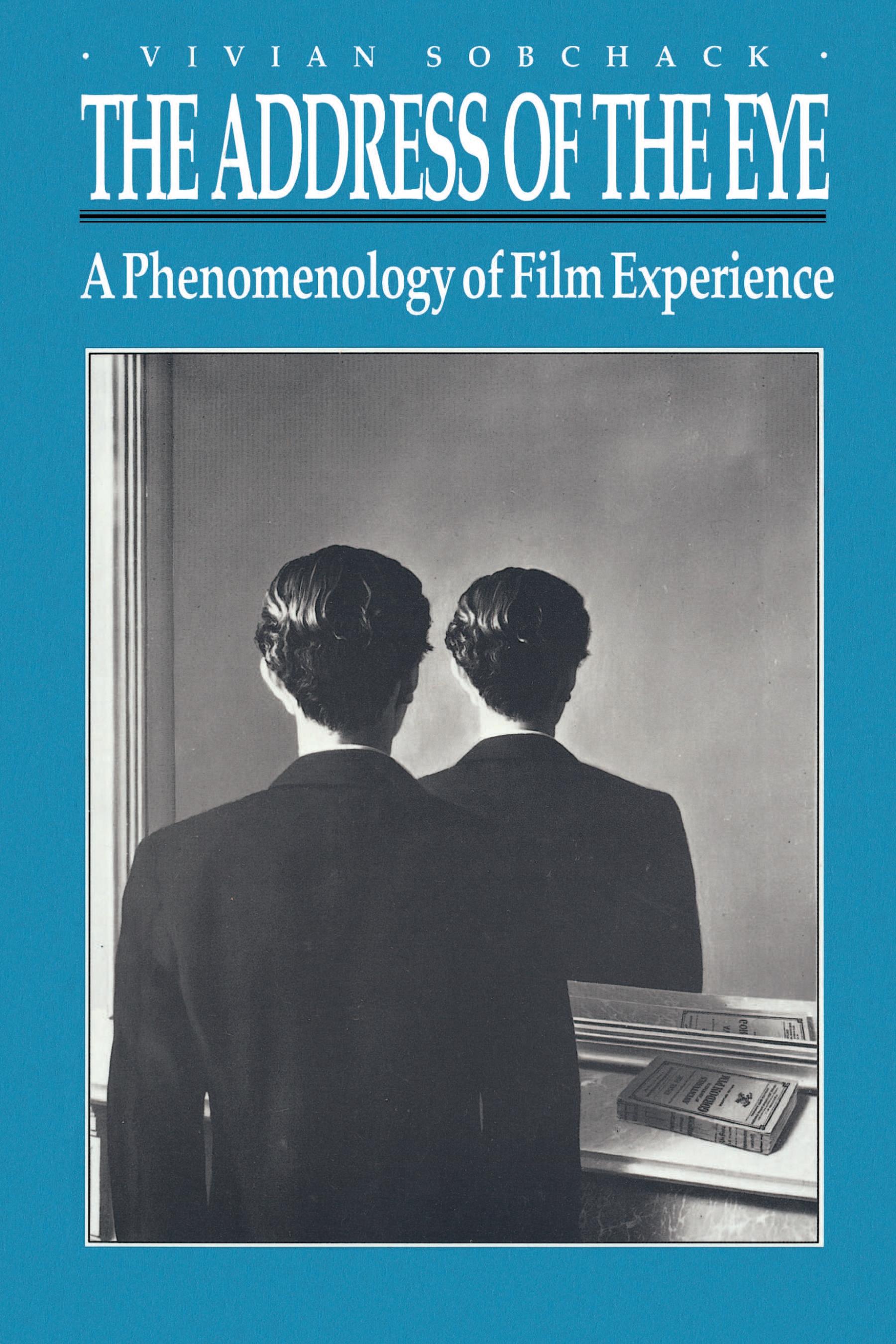
Cinema is a sensuous object, but in our presence it becomes also a sensing, sensual, sense-making subject. Thus argues Vivian Sobchack as she challenges basic assumptions of current film theory that reduce film to an object of vision and the spectator to a victim of a deterministic cinematic apparatus. Maintaining that these premises ignore the material and cultural-historical situations of both the spectator and the film, the author makes the radical proposal that the cinematic experience depends on two "viewers" viewing: the spectator and the film, each existing as both subject and object of vision. Drawing on existential and semiotic phenomenology, and particularly on the work of Merleau-Ponty, Sobchack shows how the film experience provides empirical insight into the reversible, dialectical, and signifying nature of that embodied vision we each live daily as both "mine" and "another's." In this attempt to account for cinematic intelligibility and signification, the author explores the possibility of human choice and expressive freedom within the bounds of history and culture.
Betala smidigt med kort, Klarna, Apple Pay eller Google Pay. Är du inte nöjd har du alltid 14 dagars ångerrätt. Läs mer i våra villkor. Har du några frågor, mejla oss på hello@memmo.org.
Memmo gör det enklare att plugga – var du än är i världen. Hos oss samlar du kursböcker och smarta studieverktyg på ett och samma ställe: sammanfattningar, quiz, poddar och flashcards. Och så Ted, din studiekompis som svarar på allt du undrar. Över 50 000 studenter pluggar redan här – byggt för att du ska lära dig snabbare och stressa mindre.