
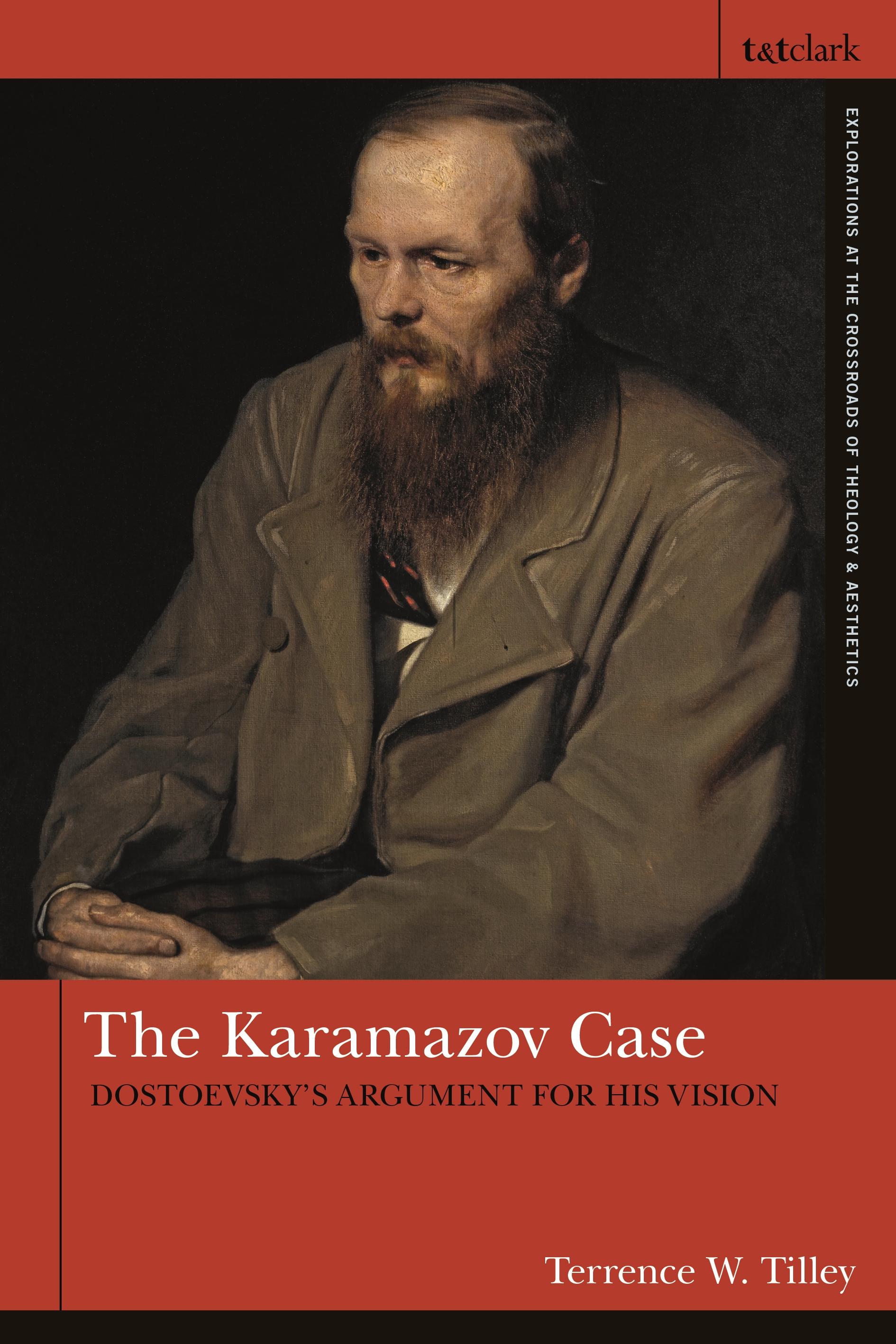
This is a new interpretation of Dostoevsky's novel The Brothers Karamazov that scrutinizes it as a performative event (the “polyphony” of the novel) revealing its religious, philosophical, and social meanings through the interplay of mentalités or worldviews that constitute an aesthetic whole. This way of discerning the novel's social vision of sobornost' (a unity between harmony and freedom), its vision of hope, and its more subtle sacramental presuppositions, raises Tilley's interpretation beyond the standard “theology and literature” treatments of the novel and interpretations that treat the novel as providing solutions to philosophical problems.
Tilley develops Bakhtin's thoughtful analysis of the polyphony of the novel using communication theory and readers/hearer response criticism, and by using Bakhtin's operatic image of polyphony to show the error of taking "faith vs. reason", argues that at the end of the novel, the characters learned to carry on, in a quiet shared commitment to memory and hope.
Tilley develops Bakhtin's thoughtful analysis of the polyphony of the novel using communication theory and readers/hearer response criticism, and by using Bakhtin's operatic image of polyphony to show the error of taking "faith vs. reason", argues that at the end of the novel, the characters learned to carry on, in a quiet shared commitment to memory and hope.
Betala smidigt med kort, Klarna, Apple Pay eller Google Pay. Är du inte nöjd har du alltid 14 dagars ångerrätt. Läs mer i våra villkor. Har du några frågor, mejla oss på hello@memmo.org.
Memmo gör det enklare att plugga – var du än är i världen. Hos oss samlar du kursböcker och smarta studieverktyg på ett och samma ställe: sammanfattningar, quiz, poddar och flashcards. Och så Ted, din studiekompis som svarar på allt du undrar. Över 50 000 studenter pluggar redan här – byggt för att du ska lära dig snabbare och stressa mindre.