
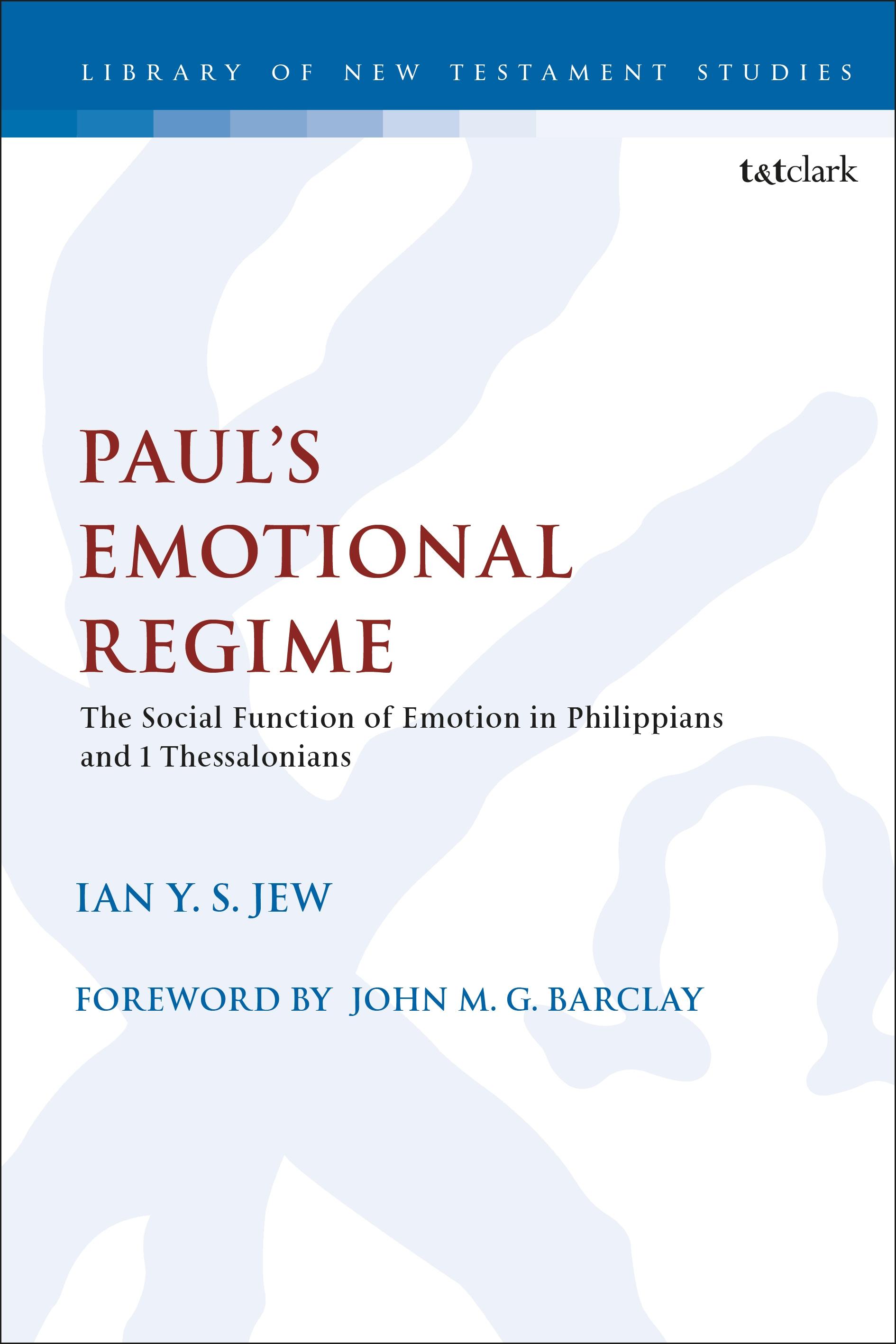
In his letters Paul speaks often of his emotions, and also promotes certain feelings while banishing others. This indicates that for Paul, emotion is vital. However, in New Testament studies, the study of emotions is still nascent; current research in the social sciences highlights its cognitive and social dimensions. Ian Y. S. Jew combines rigorous social-scientific analysis and exegetical enquiry to argue that emotions are intrinsic to the formation of the Pauline communities, as they encode belief structures and influence patterns of social experience.
By taking joy in Philippians and grief in 1 Thessalonians as representative emotions, and contrasting Paul's approach with that of his Stoic contemporaries, Jew demonstrates that authorized feelings have socially integrating and differentiating functions; by reinforcing the shared theological realities upon which emotional norms are based, group belonging is bolstered. Simultaneously, authorized emotions fortify the theological boundaries between Christians and others, which strengthens group solidarity in the Church by accentuating its members' insider status. Using this framework heuristically, Jew explores how the interplay of symbolic, ritual, and social elements within Paul's eschatological worldview reinforces emotional norms, and demonstrates that attention to emotion can only deepen our understanding of the social formation of the early believers.
By taking joy in Philippians and grief in 1 Thessalonians as representative emotions, and contrasting Paul's approach with that of his Stoic contemporaries, Jew demonstrates that authorized feelings have socially integrating and differentiating functions; by reinforcing the shared theological realities upon which emotional norms are based, group belonging is bolstered. Simultaneously, authorized emotions fortify the theological boundaries between Christians and others, which strengthens group solidarity in the Church by accentuating its members' insider status. Using this framework heuristically, Jew explores how the interplay of symbolic, ritual, and social elements within Paul's eschatological worldview reinforces emotional norms, and demonstrates that attention to emotion can only deepen our understanding of the social formation of the early believers.
Betala smidigt med kort, Klarna, Apple Pay eller Google Pay. Är du inte nöjd har du alltid 14 dagars ångerrätt. Läs mer i våra villkor. Har du några frågor, mejla oss på hello@memmo.org.
Memmo gör det enklare att plugga – var du än är i världen. Hos oss samlar du kursböcker och smarta studieverktyg på ett och samma ställe: sammanfattningar, quiz, poddar och flashcards. Och så Ted, din studiekompis som svarar på allt du undrar. Över 50 000 studenter pluggar redan här – byggt för att du ska lära dig snabbare och stressa mindre.