
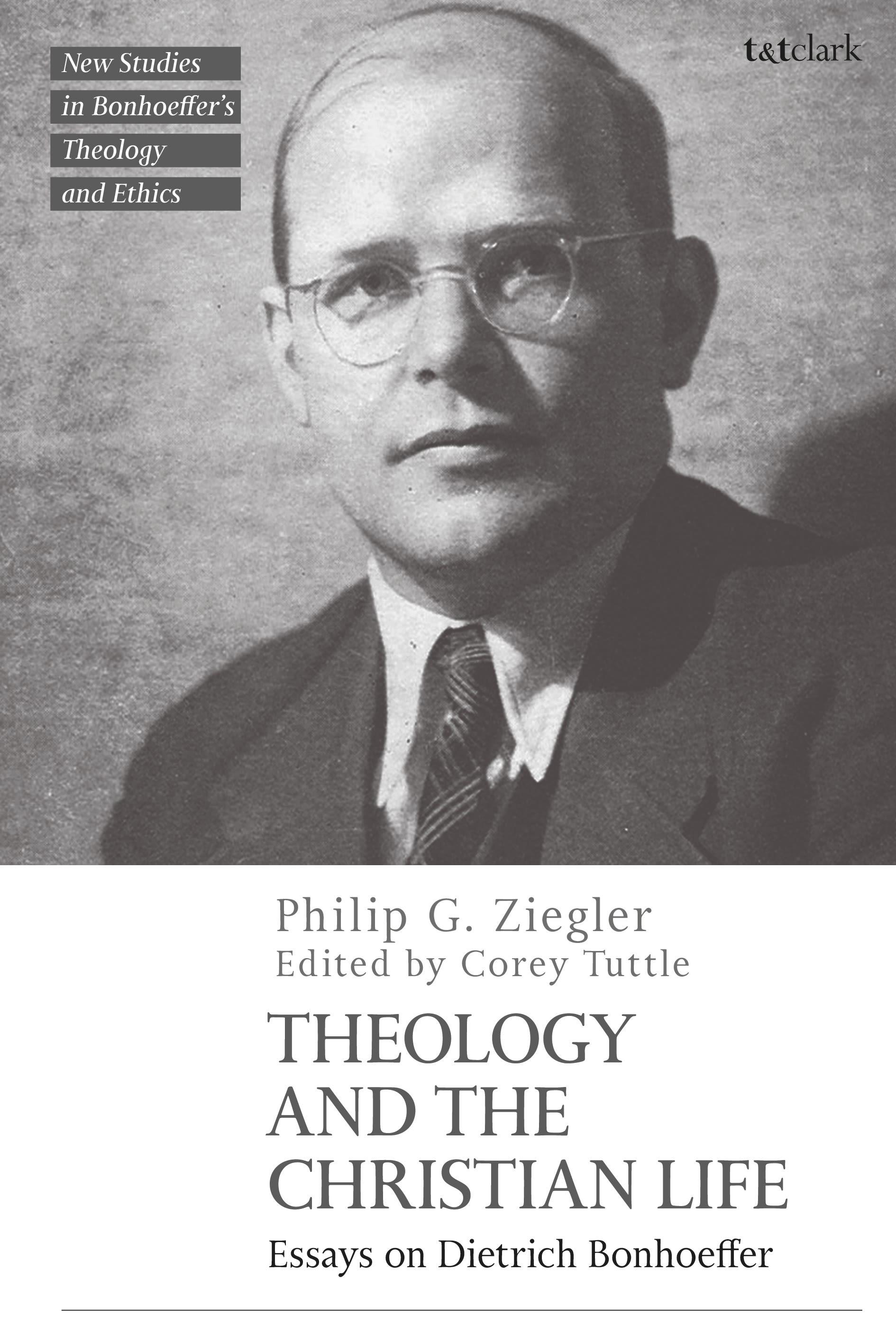
Offering a series of studies on key aspects of the Bonhoeffer's theology, this book emphasizes the biblical texture and dogmatic depth of his work and its continuing legacy.
The first part of the volume explores Bonhoeffer's work in Christology, Theology proper, and related doctrines. Ziegler argues that Bonhoeffer's fundamental orientation in theology and ethics is best captured and expressed when he is understood as theology of the Word of God. He offers an exposition of the commonly neglected Part II of Nachfolge, in its treatment of Pauline New Testament texts, as well as Bonhoeffer's promeity compared with the work of Kierkegaard. Ziegler examines Bonhoeffer's extended essay and biblical study on the theme of temptation, and concentrates on the role of eschatological concepts and themes in the Letters and Papers from Prison.
In its second part, the book explores elements of Bonhoeffer's ethical and political thinking, emphasizing throughout the deeply dogmatic substance and orientation of his work in these fields. This part offers explicit discussion of Bonhoeffer's ethics and his interpretation of soteriology, his reading and understanding of the Decalogue for Christian life and ethics, his views of the political service of the church and of Christians; and sustained reading and reflection on one of Bonhoeffer's final prison poems, Voices in the Night.
The first part of the volume explores Bonhoeffer's work in Christology, Theology proper, and related doctrines. Ziegler argues that Bonhoeffer's fundamental orientation in theology and ethics is best captured and expressed when he is understood as theology of the Word of God. He offers an exposition of the commonly neglected Part II of Nachfolge, in its treatment of Pauline New Testament texts, as well as Bonhoeffer's promeity compared with the work of Kierkegaard. Ziegler examines Bonhoeffer's extended essay and biblical study on the theme of temptation, and concentrates on the role of eschatological concepts and themes in the Letters and Papers from Prison.
In its second part, the book explores elements of Bonhoeffer's ethical and political thinking, emphasizing throughout the deeply dogmatic substance and orientation of his work in these fields. This part offers explicit discussion of Bonhoeffer's ethics and his interpretation of soteriology, his reading and understanding of the Decalogue for Christian life and ethics, his views of the political service of the church and of Christians; and sustained reading and reflection on one of Bonhoeffer's final prison poems, Voices in the Night.
Betala smidigt med kort, Klarna, Apple Pay eller Google Pay. Är du inte nöjd har du alltid 14 dagars ångerrätt. Läs mer i våra villkor. Har du några frågor, mejla oss på hello@memmo.org.
Memmo gör det enklare att plugga – var du än är i världen. Hos oss samlar du kursböcker och smarta studieverktyg på ett och samma ställe: sammanfattningar, quiz, poddar och flashcards. Och så Ted, din studiekompis som svarar på allt du undrar. Över 50 000 studenter pluggar redan här – byggt för att du ska lära dig snabbare och stressa mindre.