
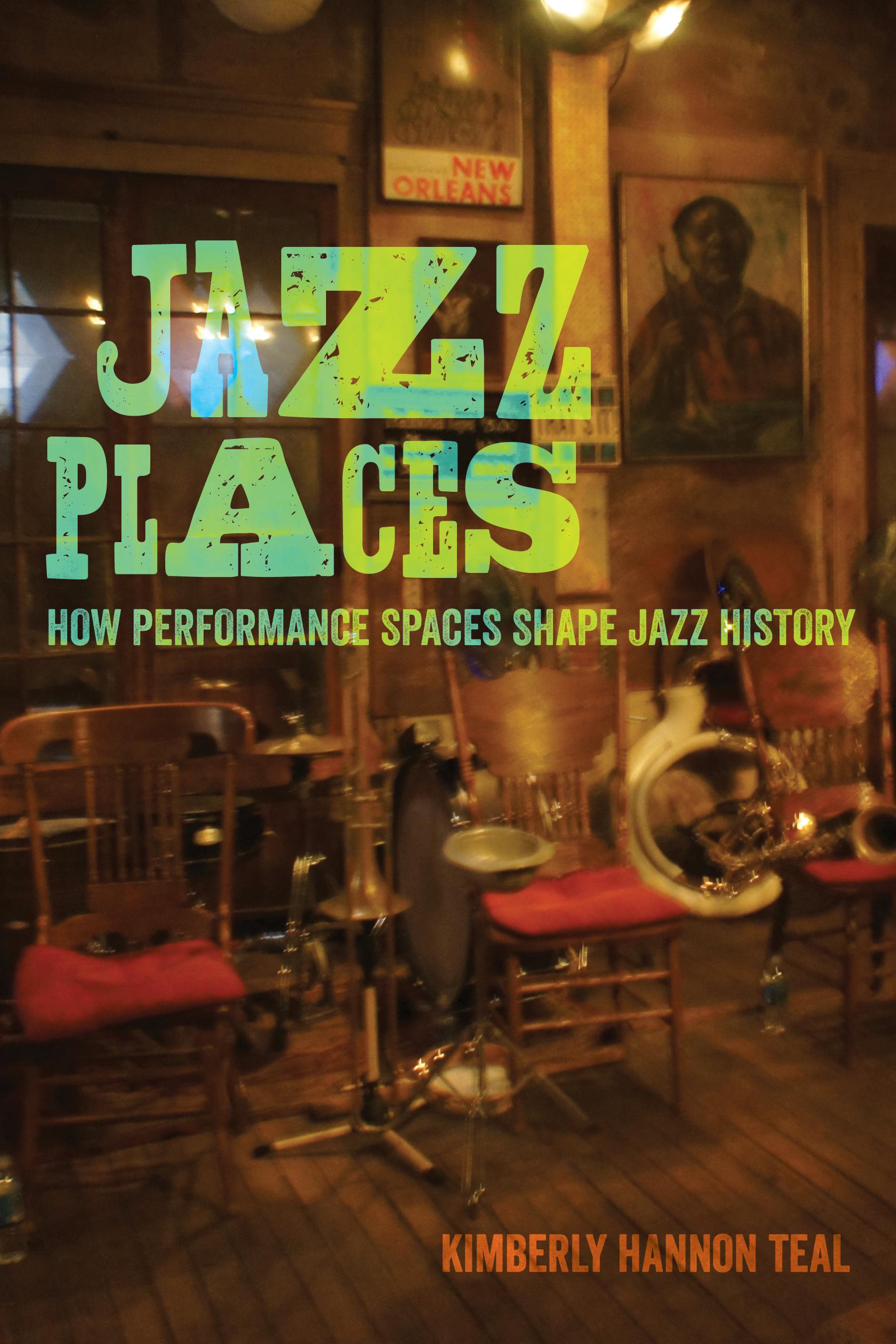
The social connotation of jazz in American popular culture has shifted dramatically since its emergence in the early twentieth century. Once considered youthful and even rebellious, jazz music is now a firmly established American artistic tradition. As jazz in American life has shifted, so too has the kind of venue in which it is performed. In Jazz Places, Kimberly Hannon Teal traces the history of jazz performance from private jazz clubs to public, high-art venues often associated with charitable institutions. As live jazz performance has become more closely tied to nonprofit institutions, the music's heritage has become increasingly important, serving as a means of defining jazz as a social good worthy of charitable support. Though different jazz spaces present jazz and its heritage in various and sometimes conflicting terms, ties between the music and the past play an important role in defining the value of present-day music in a diverse range of jazz venues, from the Village Vanguard in New York to SFJazz on the West Coast to Preservation Hall in New Orleans.
Betala smidigt med kort, Klarna, Apple Pay eller Google Pay. Är du inte nöjd har du alltid 14 dagars ångerrätt. Läs mer i våra villkor. Har du några frågor, mejla oss på hello@memmo.org.
Memmo gör det enklare att plugga – var du än är i världen. Hos oss samlar du kursböcker och smarta studieverktyg på ett och samma ställe: sammanfattningar, quiz, poddar och flashcards. Och så Ted, din studiekompis som svarar på allt du undrar. Över 50 000 studenter pluggar redan här – byggt för att du ska lära dig snabbare och stressa mindre.
Du kanske också gillar
Köp boken0