
At publication date, a free book version of this title will be available through Luminos, University of California Press's Open Access publishing program. Visit www.luminosoa.org to learn more.
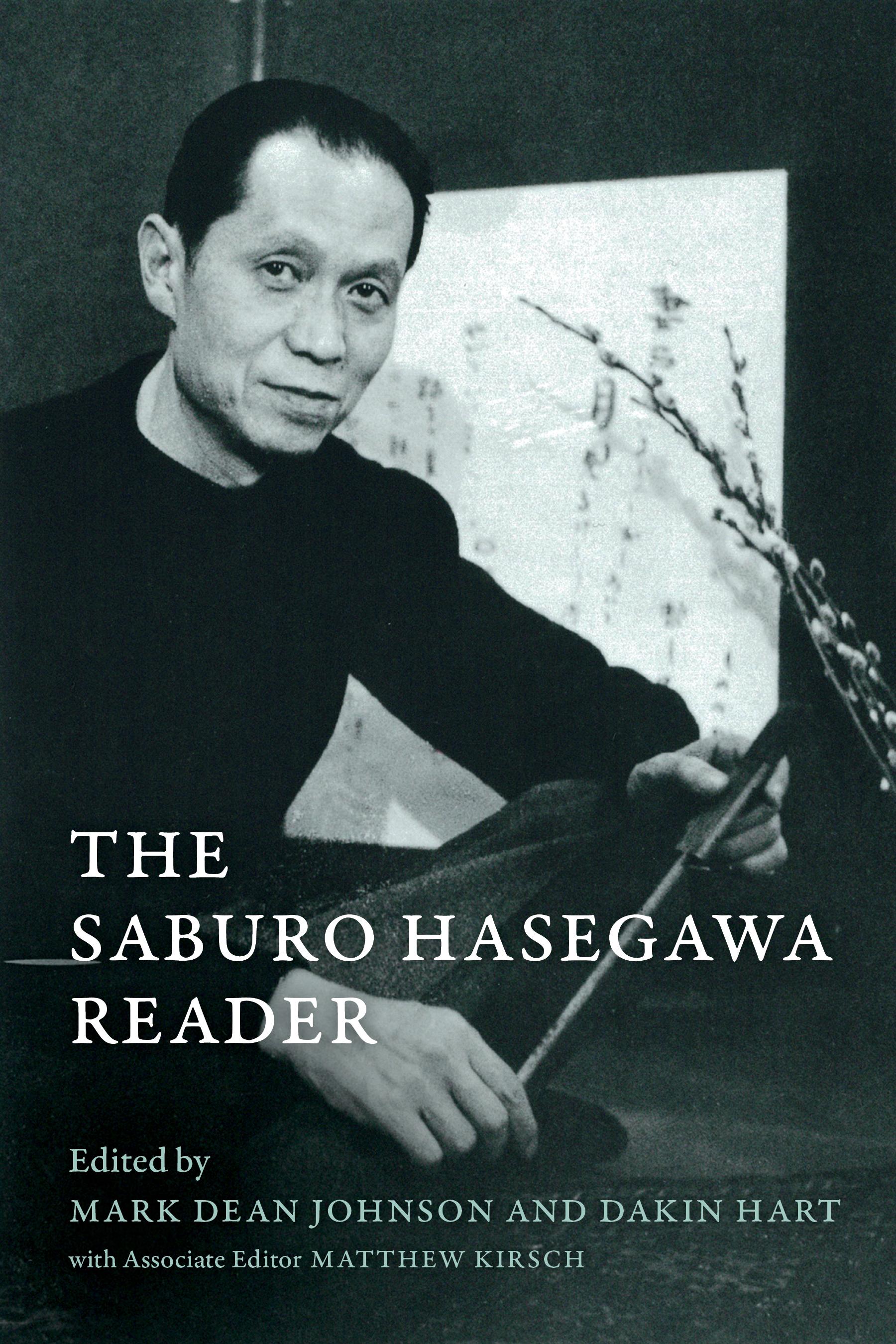
The Hasegawa Reader is an open access companion to the bilingual catalogue copublished with The Noguchi Museum to accompany an international touring exhibition, Changing and Unchanging Things: Noguchi and Hasegawa in Postwar Japan. The exhibition features the work of two artists who were friends and contemporaries: Isamu Noguchi and Saburo Hasegawa. This volume is intended to give scholars and general readers access to a wealth of archival material and writings by and about Saburo Hasegawa. While Noguchi’s reputation as a preeminent American sculptor of the twentieth century only grows stronger, Saburo Hasegawa is less well known, despite being considered the most literate artist in Japan during his lifetime (1906–1957). Hasegawa is credited with introducing abstraction in Japan in the mid 1930s, and he worked as an artist in diverse media including oil and ink painting, photography, and printmaking. He was also a theorist and widely published essayist, curator, teacher, and multilingual conversationalist.
This valuable trove of Hasegawa material includes the entire manuscript for a 1957 Hasegawa memorial volume, with its beautiful essays by philosopher Alan Watts, Oakland Museum Director Paul Mills, and Japan Times art writer Elise Grilli, as well as various unpublished writings by Hasegawa. The book edition will also include a dozen essays by Hasegawa from the postwar period, and one prewar essay, professionally translated for this publication to give a sense of Hasegawa’s voice. This resource will be an invaluable tool for scholars and students interested in midcentury East Asian and American art and tracing the emergence of contemporary issues of hybridity, transnationalism, and notions of a “global Asia."
The Hasegawa Reader is an open access companion to the bilingual catalogue copublished with The Noguchi Museum to accompany an international touring exhibition, Changing and Unchanging Things: Noguchi and Hasegawa in Postwar Japan. The exhibition features the work of two artists who were friends and contemporaries: Isamu Noguchi and Saburo Hasegawa. This volume is intended to give scholars and general readers access to a wealth of archival material and writings by and about Saburo Hasegawa. While Noguchi’s reputation as a preeminent American sculptor of the twentieth century only grows stronger, Saburo Hasegawa is less well known, despite being considered the most literate artist in Japan during his lifetime (1906–1957). Hasegawa is credited with introducing abstraction in Japan in the mid 1930s, and he worked as an artist in diverse media including oil and ink painting, photography, and printmaking. He was also a theorist and widely published essayist, curator, teacher, and multilingual conversationalist.
This valuable trove of Hasegawa material includes the entire manuscript for a 1957 Hasegawa memorial volume, with its beautiful essays by philosopher Alan Watts, Oakland Museum Director Paul Mills, and Japan Times art writer Elise Grilli, as well as various unpublished writings by Hasegawa. The book edition will also include a dozen essays by Hasegawa from the postwar period, and one prewar essay, professionally translated for this publication to give a sense of Hasegawa’s voice. This resource will be an invaluable tool for scholars and students interested in midcentury East Asian and American art and tracing the emergence of contemporary issues of hybridity, transnationalism, and notions of a “global Asia."
Betala smidigt med kort, Klarna, Apple Pay eller Google Pay. Är du inte nöjd har du alltid 14 dagars ångerrätt. Läs mer i våra villkor. Har du några frågor, mejla oss på hello@memmo.org.
Memmo gör det enklare att plugga – var du än är i världen. Hos oss samlar du kursböcker och smarta studieverktyg på ett och samma ställe: sammanfattningar, quiz, poddar och flashcards. Och så Ted, din studiekompis som svarar på allt du undrar. Över 75 000 studenter pluggar redan här – byggt för att du ska lära dig snabbare och stressa mindre.
Du kanske också gillar
Köp boken0