
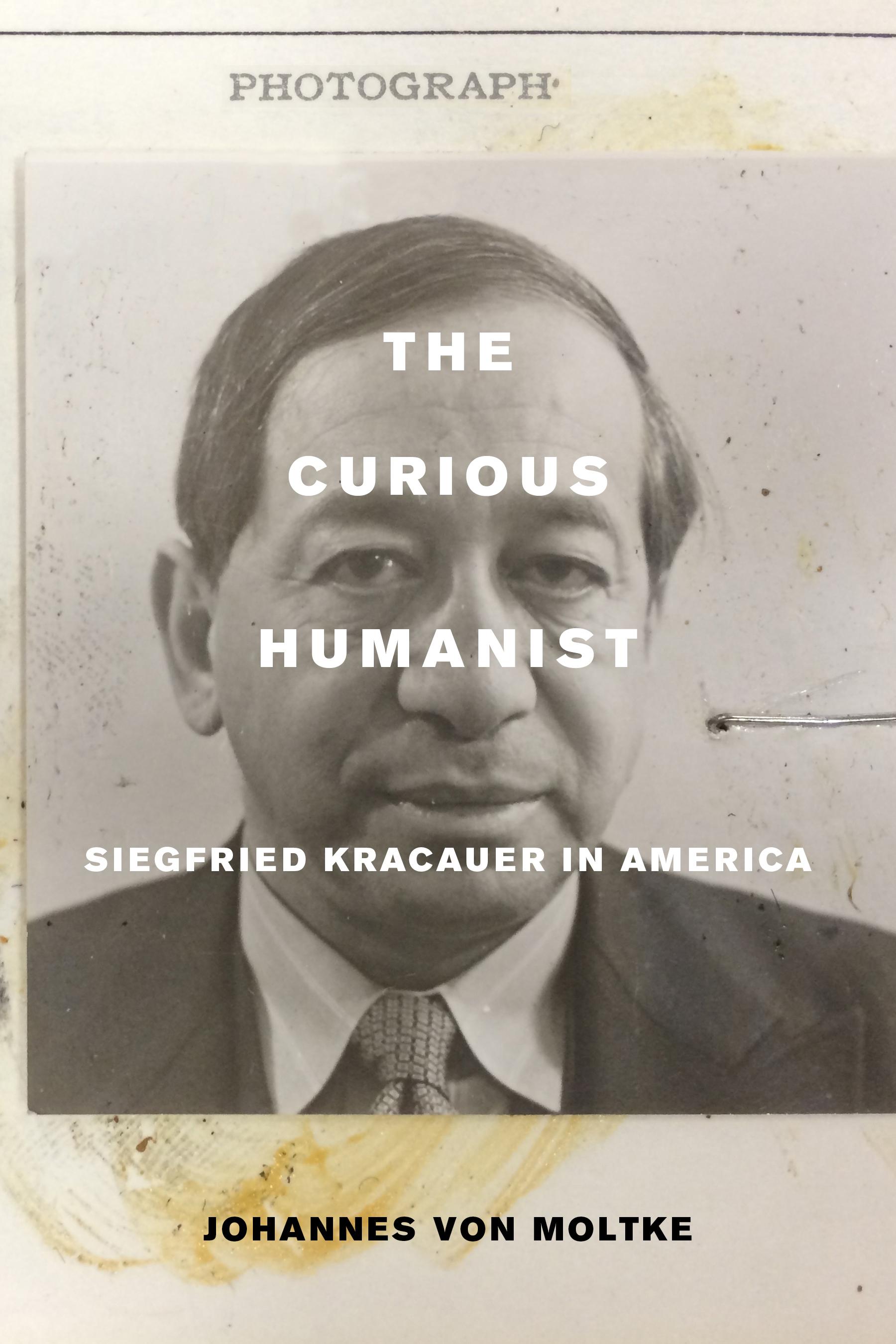
During the Weimar Republic, Siegfried Kracauer established himself as a trenchant theorist of film, culture, and modernity, and he is now considered one of the key thinkers of the twentieth century. When he arrived in Manhattan aboard a crowded refugee ship in 1941, however, he was virtually unknown in the United States and had yet to write his best-known books, From Caligari to Hitler and Theory of Film. Johannes von Moltke details the intricate ways in which the American intellectual and political context shaped Kracauer’s seminal contributions to film studies and shows how, in turn, Kracauer’s American writings helped shape the emergent discipline. Using archival sources and detailed readings, von Moltke asks what it means to consider Kracauer as the New York Intellectual he became in the last quarter century of his life. Adopting a transatlantic perspective on Kracauer’s work, von Moltke demonstrates how he pursued questions in conversation with contemporary critics from Theodor Adorno to Hannah Arendt, from Clement Greenberg to Robert Warshow: questions about the origins of totalitarianism and the authoritarian personality; about high and low culture; about liberalism, democracy, and what it means to be human. From these wide-flung debates, Kracauer’s own voice emerges as that of an incisive cultural critic invested in a humanist understanding of the cinema.
Betala smidigt med kort, Klarna, Apple Pay eller Google Pay. Är du inte nöjd har du alltid 14 dagars ångerrätt. Läs mer i våra villkor. Har du några frågor, mejla oss på hello@memmo.org.
Memmo gör det enklare att plugga – var du än är i världen. Hos oss samlar du kursböcker och smarta studieverktyg på ett och samma ställe: sammanfattningar, quiz, poddar och flashcards. Och så Ted, din studiekompis som svarar på allt du undrar. Över 50 000 studenter pluggar redan här – byggt för att du ska lära dig snabbare och stressa mindre.
Du kanske också gillar
Köp boken0